We unleash your business potential by maximize the business innovation.
Send EmailVinasse, Stillage, Spent wash, Borlando, Silempe
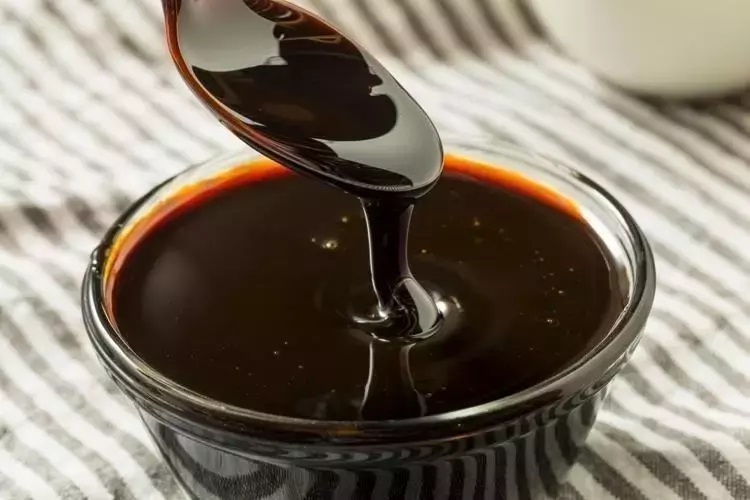
VINASSE (SILEMPE, STILLAGE, SPENT WASH, BORLANDO)
| Property | Value / Description |
|---|---|
| Product Name | Vinasse (also called Silempe, Stillage, Spent Wash, Borlando) |
| CAS Number | Not defined (commonly referred to as Vinasse) |
| E Code | None – Not used as a food additive |
| Physical Appearance | Slightly viscous liquid |
| Color | Dark brown |
| Odor | Burnt sugar smell |
| Density | ~1.35 g/cm³ |
| pH Value | ~5.5 |
| Dry Matter | 65% |
| Organic Matter | 55% |
| Nitrogen (N) | 2% |
| Potassium (K) | 9% |
| Solubility | Completely soluble in water |
PRODUCT DEFINITION
Vinasse is the liquid by-product remaining after the fermentation and distillation of molasses (obtained from sugar beet) for alcohol production. Compared to molasses, it has a lower sugar content, is more fluid, and is rich in organic matter. It is primarily used as a main carrier in organic fertilizer production.
PRODUCTION PROCESS
-
Sugar beet is processed to obtain molasses.
-
Molasses undergoes alcoholic fermentation.
-
After the alcohol is distilled off, the remaining liquid is called vinasse (silempe).
-
The liquid is filtered and stabilized to make it suitable for agricultural and industrial applications.
USAGE AREAS AND APPLICATION RECIPES
Vinasse is most commonly used in agriculture as an organic fertilizer and soil conditioner.
Soil Application Recipe (per decare = 1000 m²)
The dosages below are general recommendations for soils with average requirements. They should be adjusted according to plant type, existing soil organic matter, and potassium levels.
| Crop Group | Application Dose (Liters / decare) | Application Period and Frequency |
|---|---|---|
| Greenhouse Crops | 2 – 3 L | Weekly from transplanting until the end of harvest. |
| Open Field Vegetables | 3 – 4 L | Weekly from planting until the end of harvest. |
| Fruit Trees | 6 – 10 L | Every 21 days, depending on soil organic matter needs. |
| Vineyards | 4 – 5 L | 1st application: before bud break; 2nd: flowering; 3rd: fruit set. |
| Banana | 4 – 5 L | Weekly throughout the season. |
| Field Crops | 4 – 5 L | 1 – 2 applications during the growing period. |
| Lawns and Green Areas | 3 – 4 L | Every 20 days. |
Foliar Application Recipe (per 100 liters of water or per decare)
Foliar application allows plants to absorb nutrients quickly. It can generally be mixed with herbicides or other foliar fertilizers.
| Crop Group | Application Timing | Dose (cc per 100 L water / decare) |
|---|---|---|
| Cereals (Wheat, Barley, etc.) | Tillering and beginning of heading | 300 – 350 cc |
| Industrial Crops (Sugar Beet, Carrot, Onion) | When 2-3 leaves appear; repeat 3-4 times every 15 days | 300 – 350 cc |
| Legumes (Beans, Peas) | 3 weeks after sowing; repeat 3-4 times every 10 days | 300 – 350 cc |
| Summer Vegetables (Tomato, Pepper, Cucumber) | At first bud, flowering, and fruit set; repeat 3-4 times | 300 – 350 cc |
| Fruit Trees (Peach, Apple, Cherry, etc.) | Before flowering, at flowering, and 3-4 times at 10-15 day intervals | 300 – 350 cc |
| Cotton | At boll formation, flowering, and fruit stage | 300 – 350 cc |
| Cabbage, Cauliflower | 4-6 weeks after transplanting; repeat 3-4 times every 7-10 days | 300 – 350 cc |
Important Preparation Notes:
-
Dilution: Vinasse is generally applied diluted with water at a ratio of 1:1 or 1:2. It can also be directly injected into drip irrigation systems.
-
Mixing: The diluted solution can be enriched with urea or other NPK fertilizers according to crop needs.
-
Other Sectors: Used as a feed additive in animal husbandry (energy support), a binder for coal dust in industry, and an additive for weak adhesive production in construction.
ALTERNATIVES AND COMPARISON: VINASSE VS. MOLASSES
Vinasse and molasses are two often-confused by-products. Although both originate from sugar beet, their production processes and properties differ. The table below summarizes the key differences.
| Property | Vinasse (Silempe) | Molasses |
|---|---|---|
| Production Stage | Waste product after molasses fermentation and distillation for alcohol. | Syrup obtained at the final stage of sugar production. |
| Sugar Content | Low (sugars consumed during alcohol production). | High (contains unrecovered sugars). |
| Organic Matter | 55% (high). | Relatively lower. |
| Energy (Animal Feed) | Moderate energy source. | High energy source, improves digestibility. |
| Main Use | Primarily organic fertilizer and soil conditioner. | Primarily animal feed, silage additive, fermentation raw material. |
| Physical Consistency | More fluid liquid. | Denser, more viscous liquid. |
Brief Comment: Molasses is a fast-fermenting sugar source with high energy, while Vinasse offers high organic matter and potassium, making it more suitable for soil reclamation and plant nutrition. Scientific studies have proven both outperform chemical fertilizers in appropriate agricultural applications.
OTHER NAMES
The product is known under various names in global trade and different languages.
| Language / Terminology | Alternative Names |
|---|---|
| Turkish | Silempe, Alkol sonrası melas türevi |
| English | Vinasse, Stillage, Spent wash |
| Other (Commercial) | Borlando (used by some producers), Slop |
IMPORTANT NOTES AND STORAGE CONDITIONS
-
Hazard: Generally does not cause skin irritation.
-
Storage: Keep in a cool, dry place in closed containers.
-
Application Warning: It is strongly recommended to perform a soil analysis before application to adjust dosages and avoid over-fertilization. Avoid contact with leaves during soil application.
Disclaimer: The information in this sheet has been compiled from current data published by manufacturers and scientific sources. It does not constitute an exact and binding specification. For detailed information, the supplier's certificate of analysis should be examined.