We unleash your business potential by maximize the business innovation.
Send EmailHydroxy Ethyl Cellulose, E1525, HEC, 9004-62-0
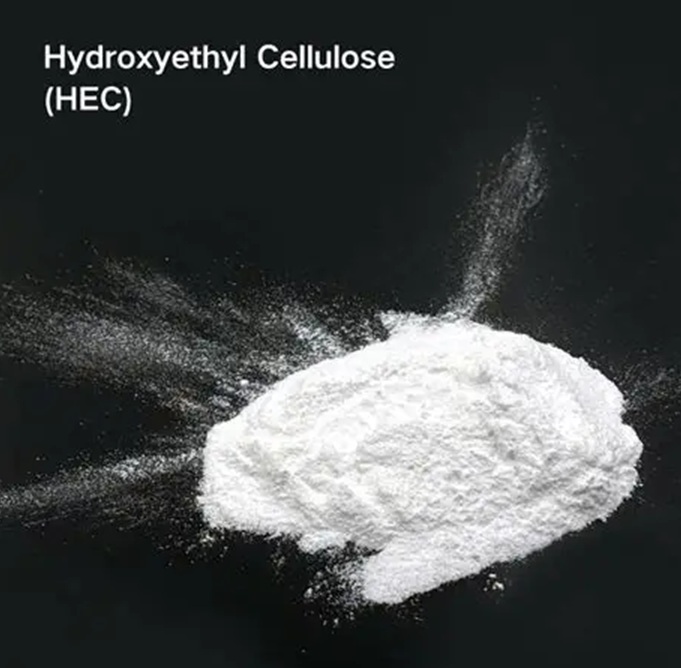
Hydroxy Ethyl Cellulose (HEC)
CAS No: 9004-62-0
E Code: E1525
🔹 Product Properties
-
CAS No: 9004-62-0
-
Appearance/Structure/Odor: Powder, yellowish to pale white, odorless
-
pH (2% aqueous solution): 6.0–8.5
-
Density: 1.38 g/cm³
-
E Code: E1525
🔹 Physicochemical Properties
-
Appearance: White to pale yellow fibrous or solid powder; non-toxic and odorless
-
Solubility: Soluble in water; insoluble in common organic solvents
-
pH Stability: Stable viscosity between pH 2–12; viscosity decreases outside this range
-
Functional Properties:
-
Thickening
-
Suspension
-
Adhesion
-
Emulsion & dispersion stabilization
-
Water retention
-
Protective colloid performance
-
-
Activity: Stable at normal temperature and pressure
-
Salt Tolerance: Excellent solubility in saline systems; maintains stable performance in high salt concentrations
-
Precautions: Avoid high temperature, humidity, and direct heat
🔹 Applications
HEC is widely used across multiple industries due to its versatile properties:
| Industry | Application |
|---|---|
| Pharmaceuticals | Binder in tablets/capsules; viscosity enhancer in ophthalmic formulations |
| Food | Thickener, stabilizer, and water retainer in soups, sauces, ice cream |
| Cosmetics & Personal Care | Thickener and stabilizer in shampoos, lotions, hair gels |
| Paints & Coatings | Rheology modifier in water-based paints; improves adhesion and coating quality |
| Construction | Water retention and rheology control in cement-based materials; enhances durability |
| Other Industries | Oil drilling, inks, fiber/dyeing, papermaking, pesticides, minerals |
🔹 Packaging, Storage & Transportation
-
Packaging: 25 kg per bag
-
Storage:
-
Store in a dry, ventilated area
-
Protect from moisture, rain, sunlight, and humidity
-
Reseal immediately after opening to prevent wetting
-
-
Transportation:
-
Stable during transport
-
Ensure protection against environmental exposure
-
HEC – Sectoral Suitability & Usage Intensity
| Industry | Suitability Level | Usage Intensity | Critical Functions of HEC |
|---|---|---|---|
| 💊 Pharmaceuticals | ⭐⭐⭐⭐☆ (Very High) | Tablets, capsules, ophthalmic products | Binder, viscosity enhancer |
| 🍲 Food | ⭐⭐⭐⭐☆ (High) | Soups, sauces, ice cream, beverages | Thickener, stabilizer, water retention |
| 💇 Cosmetics & Personal Care | ⭐⭐⭐⭐☆ (High) | Shampoos, lotions, hair gels, toothpaste | Thickener, stabilizer, film-former |
| 🎨 Paints & Coatings | ⭐⭐⭐⭐⭐ (Critical) | Water-based paints, industrial coatings | Rheology modifier, dispersion stabilizer |
| 🏗️ Construction | ⭐⭐⭐⭐⭐ (Critical) | Cement, gypsum, adhesives, mortars | Water retention, rheology control |
| 🛢️ Oil Drilling | ⭐⭐⭐⭐☆ (High) | Drilling fluids, suspension systems | Thickener, suspension agent |
| 🖋️ Inks & Textile Dyeing | ⭐⭐⭐☆ (Medium) | Pigment dispersions, textile dyeing | Dispersion stabilizer, emulsifier |
| 📄 Papermaking | ⭐⭐⭐☆ (Medium) | Pulp processing, durability enhancement | Thickener, water retention |
| 🌱 Pesticides & Minerals | ⭐⭐⭐☆ (Medium) | Active ingredient distribution, mineral slurries | Stabilizer, dispersant |
🔹 Summary:
-
Critical Use Areas (⭐⭐⭐⭐⭐): 🎨 Paints & Coatings, 🏗️ Construction → HEC is indispensable for formulation stability and performance.
-
High Use Areas (⭐⭐⭐⭐): 💊 Pharmaceuticals, 🍲 Food, 💇 Cosmetics, 🛢️ Oil Drilling → HEC is essential for product quality and consistency.
-
Medium Use Areas (⭐⭐⭐): 🖋️ Inks, 📄 Papermaking, 🌱 Pesticides & Minerals → HEC improves performance but alternatives may exist.
🔹 Pharmaceutical Suitability
-
Toxicological Profile: Hydroxy Ethyl Cellulose (HEC) is non-toxic and biocompatible, making it safe for pharmaceutical use.
-
Regulatory Compliance: Recognized as an excipient in major pharmacopeias such as the USP (United States Pharmacopeia) and Ph. Eur. (European Pharmacopoeia).
-
Stability: Stable under normal temperature and pressure; viscosity remains consistent within a pH range of 2–12.
-
Compatibility: Non-ionic nature ensures minimal chemical interaction with active pharmaceutical ingredients (APIs), which enhances formulation safety.
-
Applications: Suitable for oral, ophthalmic, and topical dosage forms.
🔹 Usage Forms in Pharmaceuticals
HEC is widely applied in different dosage forms due to its versatile properties:
| Dosage Form | HEC Function |
|---|---|
| Tablets & Capsules | Acts as a binder, ensuring cohesion of active ingredients and excipients |
| Ophthalmic Products | Used as a viscosity enhancer in eye drops, prolonging retention on the eye surface |
| Syrups & Suspensions | Functions as a thickener and stabilizer, maintaining uniform distribution of APIs |
| Topical Formulations | Provides water retention and viscosity control in creams, gels, and ointments |
| Controlled Release Systems | Forms polymer matrices that regulate drug release rates for sustained delivery |
🔹 Advantages
-
Safe & Biocompatible: Non-toxic, suitable for human use.
-
Versatile: Applicable in solid, liquid, and semi-solid dosage forms.
-
Stable: Maintains viscosity across a wide pH range.
-
Non-reactive: Compatible with a broad range of APIs due to its non-ionic structure.
👉 In summary, HEC is a multifunctional excipient in pharmaceuticals, serving as a binder, thickener, stabilizer, and release modifier. Its regulatory acceptance and safety profile make it a preferred choice in modern drug formulations.
🔹 Food Suitability
-
Safety Profile: HEC is considered non-toxic and biocompatible, and it is approved as a food additive under the code E1525.
-
Regulatory Compliance: Recognized by international food safety authorities (Codex Alimentarius, EFSA, FDA) as a permitted additive when used within specified limits.
-
Functional Role: Acts as a thickener, stabilizer, emulsifier, and water-retention agent in food formulations.
-
Stability: Maintains viscosity across a wide pH range (2–12), making it suitable for acidic and neutral food systems.
-
Compatibility: Non-ionic structure ensures minimal interaction with other food ingredients, preserving taste and texture.
🔹 Usage Forms in Food Industry
HEC is applied in various food categories to improve texture, stability, and shelf life:
| Food Category | HEC Function |
|---|---|
| Soups & Sauces | Thickener and stabilizer; provides smooth texture and prevents phase separation |
| Ice Cream & Frozen Desserts | Water retention and viscosity control; improves creaminess and reduces ice crystal formation |
| Bakery Products | Enhances dough handling, moisture retention, and shelf-life stability |
| Beverages | Stabilizer in fruit drinks and emulsified beverages; maintains uniformity |
| Instant Foods | Improves rehydration properties and consistency in ready-to-eat meals |
🔹 Advantages in Food Applications
-
Improved Texture: Provides smooth, uniform mouthfeel.
-
Moisture Retention: Prevents drying and extends shelf life.
-
Stability: Maintains product consistency during storage and processing.
-
Versatility: Effective in both hot and cold food systems.
-
Regulatory Acceptance: Approved globally as a safe food additive (E1525).
👉 In summary, HEC is a multifunctional food additive used to enhance texture, stability, and quality in soups, sauces, ice cream, bakery items, beverages, and instant foods. Its safety profile and regulatory approval make it a reliable excipient in the food industry.
🔹 Suitability in Cosmetics & Personal Care
-
Safety Profile: HEC is non-toxic and biocompatible, making it safe for use on skin and hair.
-
Regulatory Compliance: Accepted internationally as an excipient in cosmetic formulations.
-
Functional Role: Acts as a thickener, stabilizer, water-retention agent, and film-former in cosmetic products.
-
Stability: Maintains viscosity across a wide pH range, suitable for acidic and neutral formulations.
-
Compatibility: Non-ionic structure ensures minimal interaction with active cosmetic ingredients, preserving product safety and performance.
🔹 Usage Forms
HEC is widely used in different categories of personal care products:
| Product Category | HEC Function |
|---|---|
| Shampoos | Thickener and foam stabilizer; improves flow properties and user experience |
| Hair Gels & Mousses | Provides gel structure, enhances hold and styling performance |
| Lotions & Creams | Water retention and stabilizer; supports moisturizing effect and smooth texture |
| Toothpaste | Thickener and binder; maintains paste consistency and uniform distribution |
| Makeup (foundation, mascara) | Viscosity control and film-forming; improves product stability and long-lasting effect |
🔹 Advantages
-
Versatility: Applicable in both hair care and skin care formulations.
-
Stability: Enhances shelf life and formulation consistency.
-
Improved User Experience: Provides better texture, viscosity, and application feel.
-
Safe & Compatible: Works well with other cosmetic ingredients without adverse reactions.
👉 In summary, HEC is a multifunctional excipient in cosmetics and personal care, serving as a thickener, stabilizer, and water-retention agent. It improves product quality, user experience, and stability in shampoos, hair gels, lotions, toothpaste, and makeup formulations.
🔹 Suitability in Paints & Coatings
-
Safety Profile: HEC is non-toxic and biocompatible, making it safe for use in water-based paint and coating formulations.
-
Regulatory Compliance: Recognized internationally as a safe additive in industrial and decorative coatings.
-
Functional Role: Acts as a rheology modifier, thickener, stabilizer, water-retention agent, and film-former.
-
Stability: Maintains viscosity across a wide pH range, ensuring consistent performance in different coating systems.
-
Compatibility: Non-ionic structure prevents unwanted chemical interactions with pigments, binders, or other additives, improving formulation stability.
🔹 Usage Forms
HEC is widely applied in paints and coatings due to its versatile properties:
| Application Area | HEC Function |
|---|---|
| Water-Based Paints | Rheology control; regulates flow and ensures smooth application |
| Coatings | Film-forming and stabilizer; provides uniform surface coverage and durability |
| Pigment Dispersion | Stabilizes dispersions; prevents pigment settling and ensures homogeneous color |
| Adhesion Properties | Enhances paint adhesion to surfaces, improving coating quality |
| Industrial Coatings | Thickener and water-retention agent; improves workability and extends shelf life |
🔹 Advantages
-
Rheology Control: Ensures proper flow and application of paints.
-
Improved Adhesion: Enhances surface bonding for better coating performance.
-
Stability: Prevents pigment separation and extends product shelf life.
-
Versatility: Suitable for both decorative and industrial coatings.
-
Quality Enhancement: Provides smoother finishes and more durable coatings.
👉 In summary, HEC is a multifunctional additive in the paint & coatings industry, serving as a rheology modifier, stabilizer, and film-former. It improves application properties, adhesion, pigment stability, and overall coating quality.
🔹 Suitability in Construction
-
Safety Profile: HEC is non-toxic and biocompatible, making it safe for use in cement- and gypsum-based building materials.
-
Regulatory Compliance: Accepted internationally as an additive in construction chemicals and building formulations.
-
Functional Role: Acts as a water-retention agent, rheology modifier, thickener, and stabilizer in construction applications.
-
Stability: Maintains viscosity across a wide pH range, ensuring consistent performance in different cementitious systems.
-
Compatibility: Non-ionic structure prevents unwanted chemical reactions with other additives, improving mixture homogeneity and durability.
🔹 Usage Forms
HEC is widely applied in construction materials due to its versatile properties:
| Application Area | HEC Function |
|---|---|
| Cement-Based Mortars | Water retention and rheology control; improves workability and application |
| Gypsum-Based Products | Thickener and stabilizer; ensures smooth surface finishing |
| Tile Adhesives | Enhances adhesion strength and provides uniform application |
| Insulation & Waterproofing Materials | Stabilizer and water-retention agent; increases durability and performance |
| Industrial Construction Chemicals | Viscosity control and stability; extends shelf life and improves handling properties |
🔹 Advantages
-
Improved Workability: Makes cement and mortar mixtures easier to apply.
-
Water Retention: Prevents premature drying, enhancing durability.
-
Stability: Ensures homogeneous mixtures and prevents segregation.
-
Adhesion Strength: Improves bonding of coatings and adhesives to surfaces.
-
Durability: Contributes to stronger, longer-lasting structures.
👉 In summary, HEC is a multifunctional additive in the construction industry, used in cement, gypsum, adhesives, and coatings to improve workability, durability, and surface quality.
🔹 Suitability in Other Industries
-
Safety Profile: HEC is non-toxic and biocompatible, making it safe for diverse industrial applications.
-
Regulatory Compliance: Accepted internationally as an additive in multiple industrial sectors.
-
Functional Role: Serves as a thickener, stabilizer, dispersant, emulsifier, and protective colloid across different processes.
-
Stability: Maintains viscosity across a wide pH range and remains effective even in high-salt environments.
-
Compatibility: Non-ionic structure ensures reliable performance in complex chemical systems without unwanted reactions.
🔹 Usage Forms
HEC is applied in a wide range of industries due to its versatile properties:
| Industry | HEC Function |
|---|---|
| Oil Drilling | Thickener and suspension agent; controls viscosity in drilling fluids |
| Ink Production | Dispersion stabilizer; ensures uniform pigment distribution |
| Fiber & Dyeing | Emulsifier and dispersant; improves dye penetration and stability |
| Papermaking | Water retention and thickener; enhances pulp processing and paper durability |
| Pesticide Formulations | Stabilizer and dispersant; ensures homogeneous distribution of active ingredients |
| Mineral Processing | Suspension and dispersant; stabilizes mineral particle distribution |
| Industrial Chemicals | Protective colloid and stabilizer; improves stability of chemical formulations |
🔹 Advantages
-
Versatility: Applicable across multiple industrial sectors.
-
Stability: Performs reliably under challenging conditions, including high salt concentrations.
-
Formulation Safety: Ensures homogeneous and stable mixtures.
-
Quality Enhancement: Improves performance and durability of final products.
👉 In summary, HEC is a multifunctional additive used in oil drilling, inks, fiber dyeing, papermaking, pesticides, minerals, and industrial chemicals. Its thickening, stabilizing, and dispersing properties make it a valuable ingredient for enhancing product quality and process efficiency.
🔹 HEC in Tobacco Applications
1. Reconstituted Tobacco Sheets
-
Binder Function: HEC helps bind fine tobacco particles together when producing reconstituted sheets from tobacco dust and stems.
-
Film-Forming Ability: Creates a uniform sheet with consistent thickness and mechanical strength.
-
Moisture Retention: Prevents sheets from becoming brittle, improving handling and storage.
2. Cigarette Paper & Wrapping
-
Burn Rate Control: HEC modifies paper porosity and combustion properties, ensuring a controlled burn.
-
Strength & Flexibility: Enhances tensile strength of cigarette paper, reducing tearing during production.
-
Surface Coating: Provides smoother texture and better adhesion of additives (e.g., flavorings, burn modifiers).
3. Filter & Capsule Applications
-
Stabilizer: Used in flavor capsule coatings or filter adhesives to maintain structural integrity.
-
Compatibility: Non-ionic nature ensures it does not react with flavoring agents or other additives.
🔹 Advantages of HEC in Tobacco
-
Uniformity: Ensures consistent sheet formation and cigarette paper quality.
-
Process Efficiency: Improves machinability during cigarette manufacturing.
-
Controlled Performance: Helps regulate burn rate and moisture balance.
-
Safety: Non-toxic and approved as a food-grade additive (E1525), which supports its use in consumable products.
🔹 Risks & Considerations
-
Regulatory Scrutiny: While HEC is safe as an additive, tobacco products themselves are subject to strict regulations.
-
Alternative Binders: Other cellulose derivatives (CMC, HPMC) may also be used, but HEC offers superior water retention and film-forming properties.
-
Moisture Sensitivity: Storage conditions must be controlled to prevent degradation of HEC’s performance in tobacco sheets.
👉 In summary, HEC is a critical excipient in tobacco manufacturing, especially for reconstituted tobacco sheets and cigarette paper, where it functions as a binder, film-former, and moisture regulator to improve product quality and consistency.