We unleash your business potential by maximize the business innovation.
Send EmailDicyandiamide, Cyanoguanidine, Dicyandiamin, DCD, DCDA, 461-58-5
Chemical Identity
-
Name: Dicyandiamide (DCD), also known as 2-Cyanoguanidine
-
Formula: C₂H₄N₄
-
CAS Number: 461-58-5
-
Molecular Weight: 84.08 g/mol
-
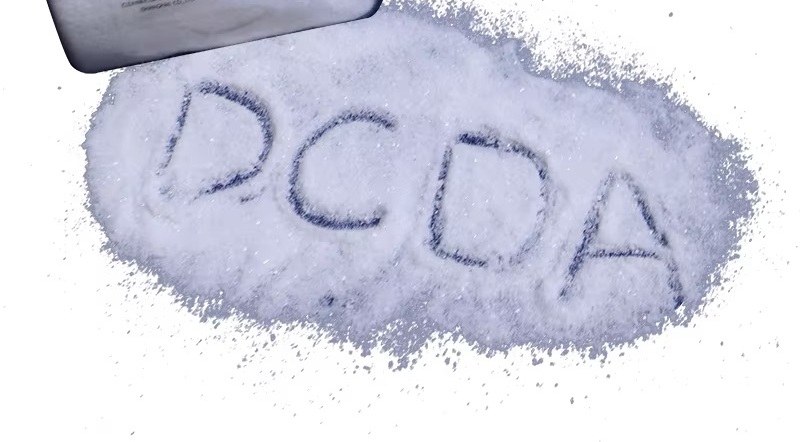
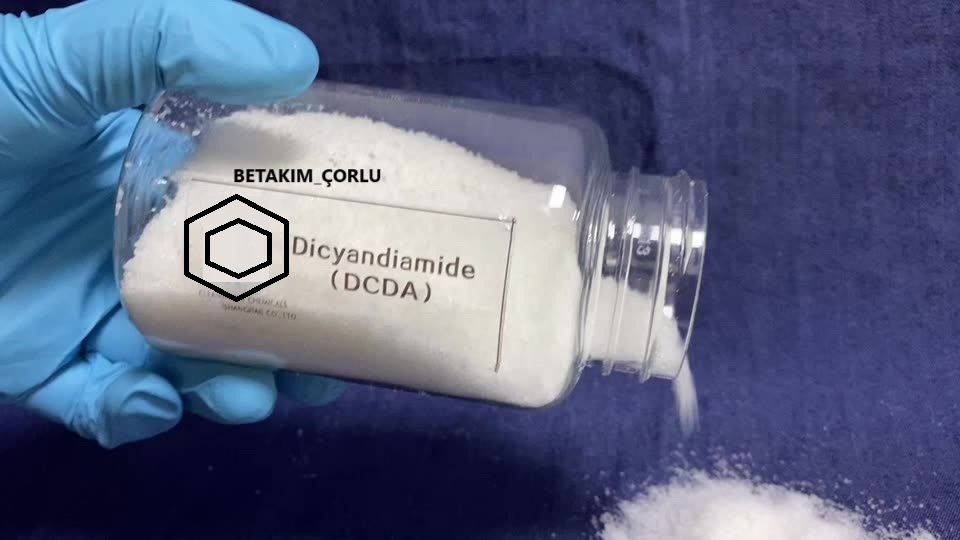
Appearance: White crystalline powder, odorless
-
Density: 1.4 g/cm³
-
Melting Point: 209.5 °C
-
Solubility: Soluble in water, alcohol, and acetone; insoluble in non-polar organic solvents
Production
Dicyandiamide is produced by polymerization of cyanamide under controlled conditions:
-
Cyanamide is prepared from ammonia and cyanogen halides.
-
When heated or catalyzed, cyanamide polymerizes into dicyandiamide and higher oligomers.
-
Reaction parameters such as temperature, pH, and catalysts are critical for purity and yield.
Industrial Applications and Usage Levels
1. Agriculture
-
Used as a nitrification inhibitor and component of slow-release nitrogen fertilizers.
-
Typical inclusion rate: 2–10% of fertilizer formulation.
-
Improves nitrogen use efficiency, reduces nitrate leaching, and lowers nitrous oxide emissions.
-
Widely applied in crops with high nitrogen demand such as maize, wheat, and barley.
2. Chemical Industry
-
Intermediate in melamine production and guanidine derivatives.
-
Consumed in large tonnage for melamine synthesis.
-
Also used in the manufacture of pharmaceuticals (e.g., barbiturates) and specialty chemicals.
3. Plastics and Epoxy Resins
-
Functions as a curing agent for epoxy resins, laminates, adhesives, and powder coatings.
-
Typical dosage: 3–8% of resin system.
-
Provides thermal stability, mechanical strength, and chemical resistance.
4. Electronics
-
Essential in printed circuit board laminates.
-
Used at 5–10% levels in epoxy systems to achieve high-performance electrical insulation.
5. Explosives and Defense
-
Acts as a stabilizer and fuel component in certain explosive formulations.
-
Usage is limited to low percentages (1–3%) for safety and performance.
6. Water Treatment and Rubber Industry
-
Applied in water conditioning chemicals and as an additive in rubber compounding.
-
Dosage is typically below 2% depending on formulation.
7. Leather and Textile
-
Serves as a selective filler in leather processing and as a flame-retardant agent in textile finishing.
-
Used in low concentrations (1–3%).
Solubility and Application Behavior
-
Water: Highly soluble, enabling easy incorporation into fertilizers and aqueous systems.
-
Alcohols and Acetone: Soluble, suitable for resin formulations.
-
Non-polar solvents: Insoluble, limiting its use in hydrophobic systems.
-
Stability: Dry and stable at room temperature; decomposes upon melting rather than boiling.
Commercial Aspects
-
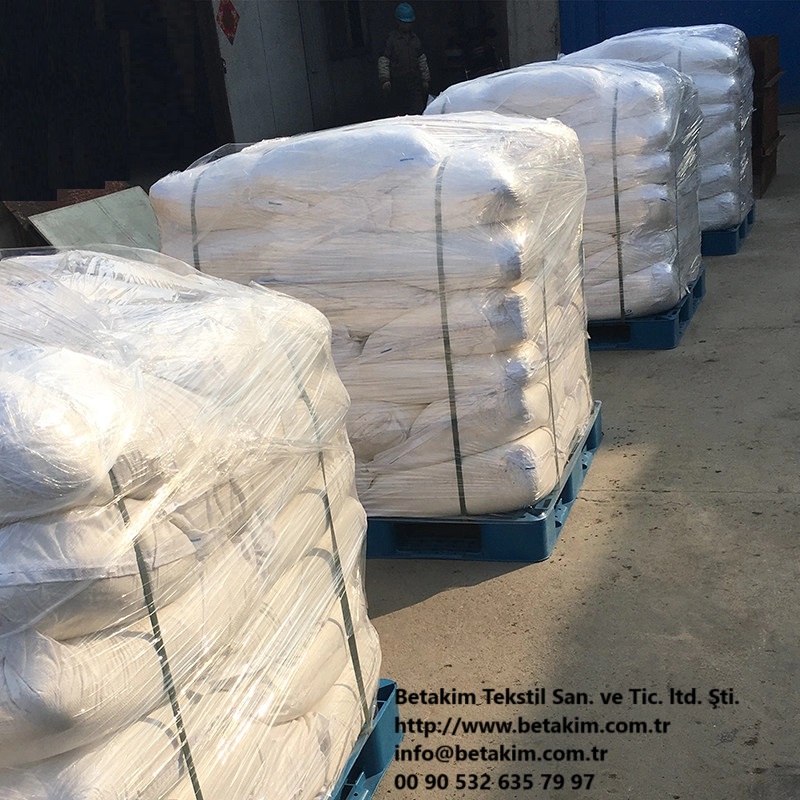
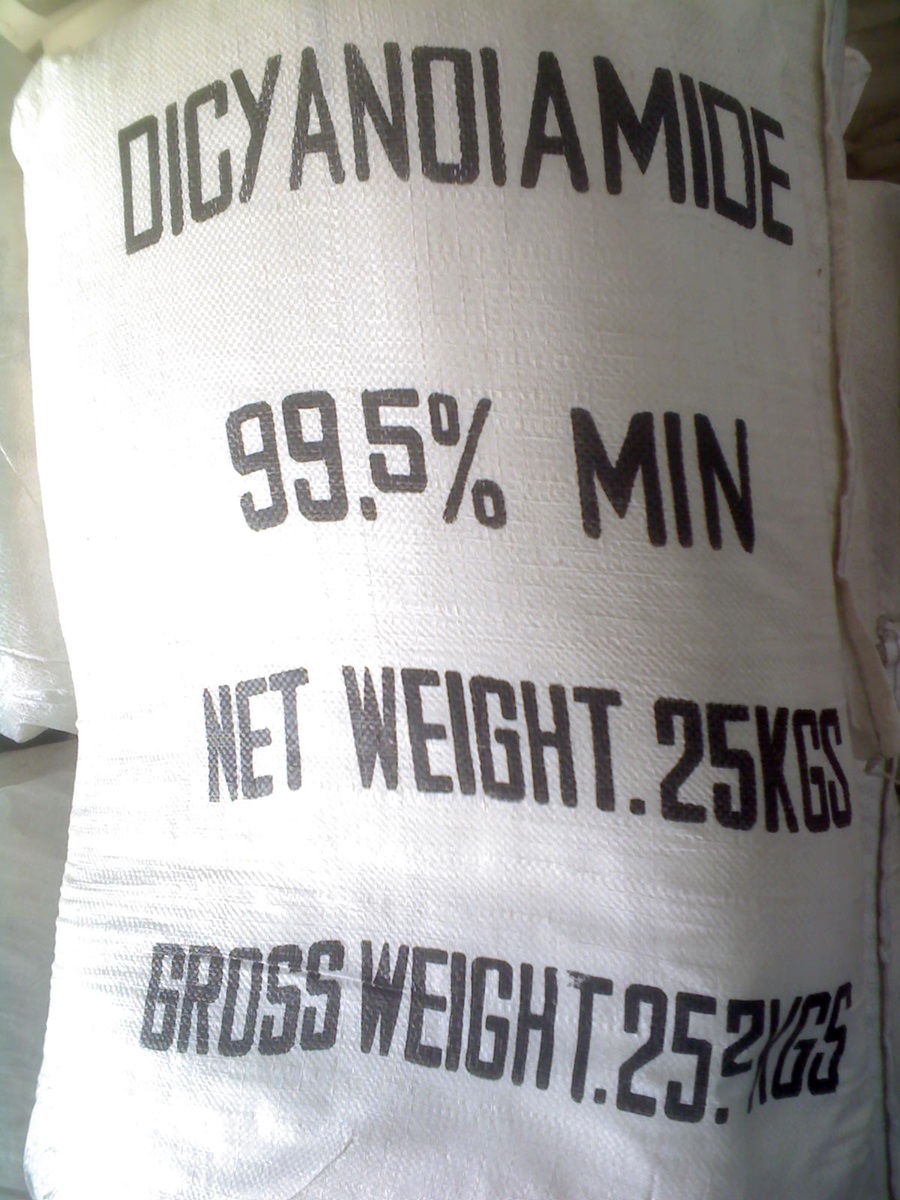
Supplied in 25 kg bags for industrial use.
-
Registered under REACH in Europe with an annual production/import volume of 10,000–100,000 tons.
-
In Turkey, the product is mainly imported through distributors rather than locally manufactured.
Safety and Handling
-
Store in a dry, cool environment.
-
Use protective equipment (gloves, goggles, masks) during handling.
-
Always verify COA (Certificate of Analysis) and TDS (Technical Data Sheet) for compliance.
In summary, Dicyandiamide is a versatile chemical with dual importance:
-
In agriculture, it enhances nitrogen efficiency and reduces environmental impact.
-
In industry, it is a critical intermediate for melamine and a curing agent for epoxy resins and laminates.
Solubility
-
Water: Highly soluble, which makes it ideal for fertilizer formulations and aqueous systems. At 25 °C, solubility is about 4.13 g/100 ml.
-
Alcohols and Acetone: Soluble, so it can be incorporated into epoxy resin systems and adhesives.
-
Non-polar solvents (e.g., hexane, toluene): Insoluble, limiting its use in hydrophobic formulations.
-
Stability: Stable in dry conditions at room temperature; decomposes upon melting rather than boiling.
Best Practices for Dissolution
-
Agriculture:
-
Dissolve directly in water-based fertilizer solutions or blend into granulated fertilizers.
-
Works best when evenly mixed into soil after application to maximize nitrification inhibition.
-
Dosage: typically 2–10% of fertilizer formulation.
-
-
Epoxy Resins and Laminates:
-
Dissolved in polar solvents or directly mixed into resin systems.
-
Requires controlled heating during curing to activate crosslinking.
-
Dosage: 3–8% of resin system depending on hardness and thermal resistance required.
-
-
Melamine Production:
-
Used in large tonnage as an intermediate; cyanamide is polymerized into dicyandiamide, then further processed into melamine.
-
Dissolution is not the main step here; instead, it undergoes controlled polymerization reactions.
-
-
Water Treatment and Rubber:
-
Dissolved in water for conditioning applications.
-
Dosage: typically below 2% depending on system design.
-
-
Leather and Textile:
-
Applied in aqueous finishing baths for selective filling or flame-retardant finishing.
-
Dosage: 1–3% depending on fabric or leather type.
-
How to Use Effectively
-
Agriculture: Apply with fertilizers during soil preparation; ensure mixing into soil to prevent nitrate leaching.
-
Epoxy Systems: Add as curing agent during resin formulation; control curing temperature for optimal performance.
-
Industrial Synthesis: Use as a precursor in melamine and guanidine chemistry; requires precise reaction conditions.
-
Environmental Applications: Incorporate into fertilizers to reduce nitrous oxide emissions and improve nitrogen efficiency.