We unleash your business potential by maximize the business innovation.
Send EmailZinc Pyrithione , Zinc Omadine, Zinc Polyanemine, Pyrithione Zincique, ZPT, 13463-41-7
ZINC PYRITHIONE (ZPT)
SECTION 1: PRODUCT IDENTITY AND CHEMICAL IDENTIFICATION
| Parameter | Information |
|---|---|
| Product Name | Zinc Pyrithione |
| Chemical Name | Bis(1-hydroxy-2(1H)-pyridinethionato)zinc |
| Synonyms (Turkish) | Çinko Pritiyon, Pritiyon Çinko, ZPT, Çinko 2-piridintiyol-1-oksit |
| Synonyms (English) | Zinc Pyrithione, Zinc Omadine, Zinc Polyanemine, ZPT, Bis(1-hydroxy-2(1H)-pyridinethionato)zinc |
| CAS Number | 13463-41-7 |
| EC Number (EINECS) | 236-671-3 |
| Molecular Formula | C₁₀H₈N₂O₂S₂Zn |
| Molecular Weight | 317.7 g/mol |
| Chemical Class | Organometallic compound; Pyrithione salt |
| Appearance | White to off-white powder |
| Odor | Slight characteristic |
| Physical State (20°C) | Solid (powder) |
| Solubility | Low in water (~8 mg/L); Soluble in organic solvents |
SECTION 2: CHEMICAL STRUCTURE
Structure Description:
        O
        ||
    S - C - N
    |       \
    Zn       C - H
    |       /
    S - C - N
        ||
        O

    Bis(1-hydroxy-2(1H)-pyridinethionato)zinc
    Zinc Pyrithione
    C₁₀H₈N₂O₂S₂Zn
| Parameter | Description |
|---|---|
| Chemical Family | Organometallic / Pyrithione salts |
| Coordination | Tetrahedral geometry around zinc center |
| Ligand | 2-Mercaptopyridine-N-oxide (pyrithione) |
| Zinc-Ligand Ratio | 1:2 (one zinc ion, two pyrithione ligands) |
| Chelate Ring | 5-membered chelate ring |
| SMILES | C1=CC=C(C(=N1)[S-])[O-].[Zn+2].C1=CC=C(C(=N1)[S-])[O-] |
| InChI | InChI=1S/2C5H5NOS.Zn/c2*7-5-3-1-2-4-6-5;/h2*1-4H,(H,6,7);/q;;+2/p-2 |
| InChI Key | BUZCLUZISQDEDR-UHFFFAOYSA-L |
SECTION 3: PHYSICAL AND CHEMICAL PROPERTIES
| Property | Value | Test Method / Note |
|---|---|---|
| Appearance | White to off-white powder | Visual |
| Odor | Slight characteristic | Olfactometric |
| Molecular Weight | 317.7 g/mol | Calculated |
| Purity | ≥98.0% | Titration |
| Zinc Content | 19.5 – 20.5% | Titration |
| Melting Point | ~240°C (decomposes) | DSC |
| Density | ~1.78 g/cm³ | Pycnometer |
| Loss on Drying | ≤0.5% | USP <731> |
| Residue on Ignition | ≤0.5% | USP <281> |
| pH (1% Aqueous Suspension) | 6.5 – 8.5 | USP <791> |
| Water Solubility (25°C) | Low (~8 mg/L) | General Method |
| Ethanol Solubility | Moderate | General Method |
| Propylene Glycol Solubility | Moderate | General Method |
| PEG-400 Solubility | High | General Method |
| DMSO Solubility | Soluble | General Method |
| DMF Solubility | Soluble | General Method |
| Particle Size (Powder) | D90 <10 µm | Laser Diffraction |
| Thermal Decomposition | >200°C | TGA |
| Flash Point | Not applicable (solid) | - |
| Hygroscopicity | Low | - |
SECTION 4: ANTIMICROBIAL ACTIVITY
| Microorganism Type | Activity | MIC (Minimum Inhibitory Concentration) |
|---|---|---|
| Fungi | ||
| Malassezia furfur (Pityrosporum ovale) | Very High | 1 – 10 µg/mL |
| Candida albicans | High | 2 – 20 µg/mL |
| Trichophyton mentagrophytes | High | 5 – 50 µg/mL |
| Aspergillus niger | Moderate | 10 – 100 µg/mL |
| Gram-Positive Bacteria | ||
| Staphylococcus aureus | High | 5 – 50 µg/mL |
| Streptococcus pyogenes | Moderate | 10 – 100 µg/mL |
| Gram-Negative Bacteria | ||
| Escherichia coli | Moderate | 20 – 200 µg/mL |
| Pseudomonas aeruginosa | Moderate | 50 – 200 µg/mL |
| Klebsiella pneumoniae | Moderate | 20 – 100 µg/mL |
| Algae | ||
| Chlorella spp. | High | 1 – 10 µg/mL |
| Nostoc spp. | High | 1 – 10 µg/mL |
Mechanism of Action:
-
Disrupts metal ion homeostasis in cell membranes
-
Triggers production of reactive oxygen species (ROS)
-
Inhibits cellular metabolism and ATP production
-
Disrupts cell membrane integrity and function
-
Prevents biofilm formation
SECTION 5: FORMULATION COMPATIBILITY
| Component / System | Compatibility | Description |
|---|---|---|
| Anionic Surfactants (SLES, ALS, SLS) | Compatible | Shampoo, soap formulations |
| Non-ionic Surfactants | Caution | EDTA may reduce activity |
| Cationic Surfactants | Compatible | Conditioners, softeners |
| EDTA | Incompatible | Chelation reduces activity |
| Oil Phase (Mineral Oil, Triglycerides) | Compatible | Creams, lotions, ointments |
| Polymers (Carbomer, HEC, PVP) | Compatible | Gel, cream formulations |
| Acrylic / Epoxy / Polyurethane | Compatible | Paint and coating systems |
| Chlorhexidine | Compatible | Veterinary combination products |
| Ketoconazole | Compatible | Combination antifungal therapy |
| Clotrimazole | Compatible | Combination antifungal therapy |
| Hydrocortisone | Compatible | Anti-inflammatory combinations |
| pH Stability Range | 4.5 – 9.0 | Maximum stability pH 4.5 – 6.5 |
SECTION 6: COSMETIC APPLICATIONS
| Application | Function | Typical Concentration | Formulation Notes |
|---|---|---|---|
| Anti-Dandruff Shampoos | Antifungal, anti-dandruff | 0.3 – 2.0% (opt. 1.0%) | Compatible with anionic surfactants; incompatible with EDTA |
| Hair Conditioners | Antifungal, scalp care | 0.3 – 0.8% | Compatible with cationic surfactants |
| Scalp Lotions & Tonics | Antifungal, soothing | 0.5 – 1.0% | Alcohol/water systems |
| Hair Sprays | Protection | 0.3 – 0.5% | Ethanol/water systems |
| Anti-Dandruff Creams | Antifungal | 0.5 – 1.5% | Oil-water emulsions |
SECTION 7: DERMATOLOGICAL APPLICATIONS
| Application | Function | Typical Concentration |
|---|---|---|
| Seborrheic Dermatitis (Mild) | Antifungal, anti-inflammatory | 0.5% |
| Seborrheic Dermatitis (Moderate-Severe) | Antifungal, anti-inflammatory | 1.0 – 1.5% |
| Acne Vulgaris | Antibacterial, anti-inflammatory | 0.5 – 1.0% |
| Eczema (Atopic Dermatitis) | Antifungal, soothing | 0.5 – 1.0% |
| Tinea Versicolor | Antifungal | 1.0 – 1.5% |
SECTION 8: PAINT AND COATING APPLICATIONS
| Application | Function | Typical Concentration |
|---|---|---|
| Exterior Acrylic Paints | Antifungal, anti-algal | 0.5 – 1.0% |
| Marine Antifouling Paints | Algicide, antifouling | 1.0 – 2.0% |
| Wood Preservatives | Antifungal, mold prevention | 0.5 – 1.5% |
| Metal Coatings | Antimicrobial | 0.3 – 0.8% |
| Bathroom/Kitchen Wall Paints | Mold prevention | 0.5 – 1.0% |
Resin Compatibility:
| Resin System | Compatibility | Description |
|---|---|---|
| Acrylic (Water-based) | Excellent | Most common system |
| Epoxy (Solvent-based) | Excellent | Industrial coatings |
| Polyurethane | Excellent | Clear and pigmented coatings |
| Alkyd | Good | Oil-based paints |
| Polyester | Good | Coil coatings |
SECTION 9: TEXTILE APPLICATIONS
| Application | Function | Typical Concentration |
|---|---|---|
| Medical Textiles | Antibacterial finish | 0.1 – 0.3% (by fabric weight) |
| Sportswear | Odor prevention | 0.1 – 0.3% |
| Shoe Linings | Fungal and bacterial prevention | 0.2 – 0.4% |
| Home Textiles | Antimicrobial | 0.1 – 0.3% |
| Microencapsulated Finish | Controlled release | 0.5 – 1.0% |
SECTION 10: WATER TREATMENT APPLICATIONS
| Application | Function | Typical Concentration |
|---|---|---|
| Cooling Tower Water | Biocide, preservative | 10 – 30 ppm (continuous) |
| Cooling Tower (Shock Dose) | Biocide, shock treatment | 50 – 100 ppm |
| CIP (Clean-In-Place) | Antimicrobial | 20 – 50 ppm |
| Paper Machine Water | Slime prevention | 5 – 15 ppm |
| Metalworking Fluids | Preservative, biocide | 50 – 200 ppm |
| RO Membrane Protection | Biofilm prevention | 5 – 20 ppm |
SECTION 11: PLASTIC AND POLYMER APPLICATIONS
| Application | Function | Typical Concentration |
|---|---|---|
| PVC (Flexible/Rigid) | Antimicrobial | 0.5 – 1.5% |
| PE (LDPE, HDPE) | Antimicrobial | 0.5 – 2.0% |
| PP | Antimicrobial | 0.5 – 2.0% |
| PU (TPU) | Antimicrobial | 0.5 – 1.5% |
| PS / ABS | Antimicrobial | 0.5 – 1.0% |
SECTION 12: VETERINARY APPLICATIONS
| Application | Function | Typical Concentration |
|---|---|---|
| Dog Shampoo (Mild Seborrhea) | Antifungal, antibacterial | 0.5% |
| Dog Shampoo (Severe) | Antifungal, antibacterial | 1.0 – 1.5% |
| Cat Shampoo | Antifungal, antibacterial | 0.5 – 1.0% |
| Topical Spray (Dog) | Antifungal | 0.5 – 1.0% |
| Hoof Lotion (Horse) | Antifungal | 1.0 – 1.5% |
| Foot Bath (Poultry) | Antimicrobial | 0.2 – 0.5% |
Synergistic Combinations:
| Combined Active | Concentration | Effect |
|---|---|---|
| Chlorhexidine | 0.5 – 2.0% | Broad-spectrum antibacterial + antifungal |
| Ketoconazole | 0.5 – 1.0% | Strong antifungal synergy |
| Miconazole | 0.5 – 1.0% | Against yeast and dermatophytes |
| Hydrocortisone Acetate | 0.5 – 1.0% | Anti-inflammatory + antipruritic |
SECTION 13: APPLICATION QUICK REFERENCE TABLE
| Industry | Typical Concentration | Critical Parameter | Main Incompatibility |
|---|---|---|---|
| Cosmetics | 0.3 – 2.0% | pH 4.5 – 6.5 | EDTA |
| Dermatology | 0.5 – 1.5% | Particle size, oil phase stability | EDTA, high pH |
| Paint & Coating | 0.5 – 2.0% | UV stability, resin compatibility | Strong oxidizers |
| Textile | 0.1 – 0.5% | Temperature <150°C | High dosage (stiffness) |
| Water Treatment | 10 – 100 ppm | No chelators, pH 4.5 – 9.0 | EDTA, phosphonates |
| Plastic & Polymer | 0.5 – 2.0% | Processing temperature <220°C | Prolonged >200°C |
| Veterinary | 0.5 – 1.5% | Contact time, rinsing | High dose in cats |
SECTION 14: SAFETY AND TOXICOLOGICAL PROFILE
GHS Classification:
| Hazard Class | Category | Description |
|---|---|---|
| Acute Toxicity (Oral) | Category 3 | H301 – Toxic if swallowed |
| Acute Toxicity (Inhalation) | Category 1 | H330 – Fatal if inhaled |
| Acute Aquatic Toxicity | Category 1 | H400 – Very toxic to aquatic life |
| Chronic Aquatic Toxicity | Category 1 | H410 – Long-lasting effects |
Toxicological Data:
| Parameter | Value | Test System |
|---|---|---|
| LD50 (Oral, Rat) | 200 – 400 mg/kg | - |
| LD50 (Dermal, Rabbit) | >2,000 mg/kg | - |
| LC50 (Inhalation, Rat) | <0.5 mg/L (4 hours) | - |
| EC50 (Daphnia, 48h) | 0.02 – 0.06 mg/L | - |
| EC50 (Algae, 72h) | 0.01 – 0.03 mg/L | - |
| Skin Irritation | Moderate | Rabbit |
| Eye Irritation | Severe | Rabbit |
| Skin Sensitization | Low potential | Human Patch Test |
| Carcinogenicity | Not classified (IARC, NTP) | - |
| Mutagenicity | Not mutagenic | Ames Test |
Personal Protective Equipment (PPE):
| Application | Requirement |
|---|---|
| Powder Form | Dust mask (P2/P3), safety goggles, chemical gloves (nitrile) |
| Liquid Form | Chemical gloves (nitrile/butyl), safety goggles, apron |
| Ventilation | Local exhaust + general ventilation |
SECTION 15: GHS CLASSIFICATION AND LABELING
GHS Classification (in accordance with 1272/2008/EC):
| Hazard Class | Category | H-Statement |
|---|---|---|
| Acute Toxicity (Oral) | Category 3 | H301 |
| Acute Toxicity (Inhalation) | Category 1 | H330 |
| Aquatic Acute Toxicity | Category 1 | H400 |
| Aquatic Chronic Toxicity | Category 1 | H410 |
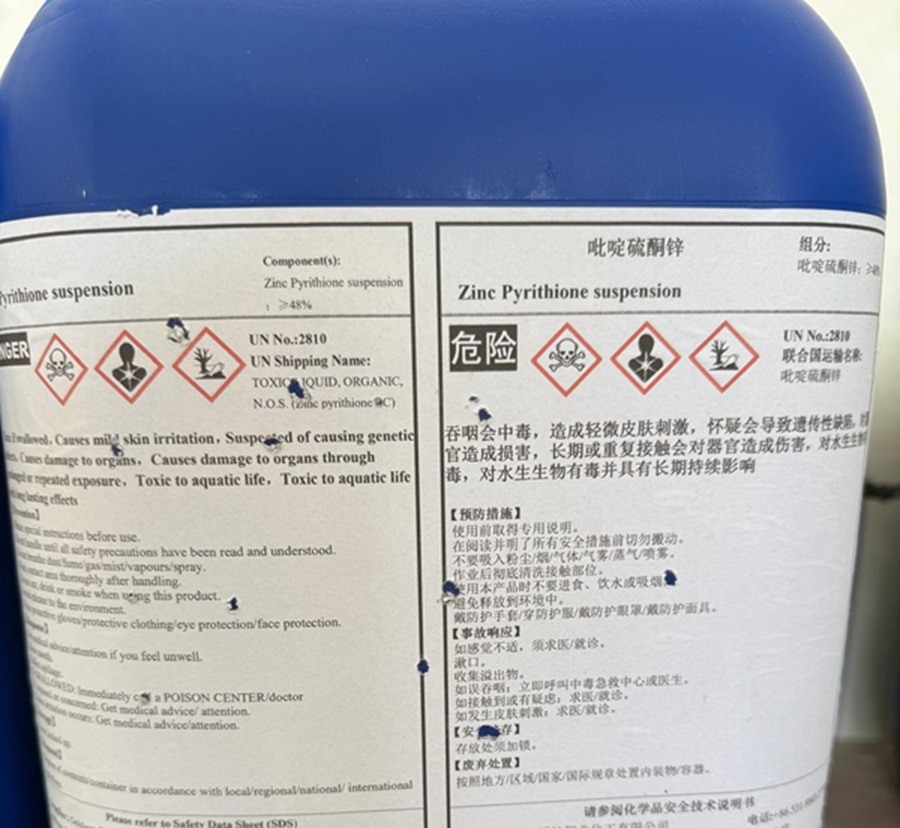
Signal Word: DANGER
Hazard Pictograms: GHS06 (Skull and Crossbones), GHS09 (Environment)
NFPA 704 Hazard Classification:
| Health | Flammability | Reactivity | Special |
|---|---|---|---|
| 3 | 0 | 0 | - |
| (Serious health hazard) | (Non-combustible) | (Stable) | (None) |
SECTION 16: PRECAUTIONARY STATEMENTS (P-CODES)
| Code | Statement |
|---|---|
| P260 | Do not breathe dust/fume/gas |
| P264 | Wash hands thoroughly after handling |
| P270 | Do not eat, drink or smoke when using this product |
| P271 | Use only outdoors or in a well-ventilated area |
| P273 | Avoid release to the environment |
| P280 | Wear protective gloves/protective clothing/eye protection/face protection |
| P301+P310 | IF SWALLOWED: Immediately call a POISON CENTER/doctor |
| P304+P340 | IF INHALED: Remove person to fresh air and keep comfortable for breathing |
| P310 | Immediately call a POISON CENTER/doctor |
| P320 | Specific treatment is urgent (see label instructions) |
| P330 | Rinse mouth |
| P391 | Collect spillage |
| P403+P233 | Store in a well-ventilated place. Keep container tightly closed |
| P405 | Store locked up |
| P501 | Dispose of contents/container in accordance with local/regional/national/international regulations |
SECTION 17: FIRST AID MEASURES
| Route of Exposure | Action |
|---|---|
| Inhalation | Move to fresh air immediately. Give artificial respiration if necessary. Seek immediate medical attention. |
| Skin Contact | Remove contaminated clothing. Wash with plenty of soap and water for at least 15 minutes. Seek medical attention. |
| Eye Contact | Rinse immediately with plenty of water for at least 15 minutes. Keep eyelids open. Remove contact lenses if present. Seek immediate medical attention. |
| Ingestion | Rinse mouth. Do NOT induce vomiting. Drink 1-2 glasses of water. Seek immediate medical attention. Never give anything by mouth to an unconscious person. |
SECTION 18: FIREFIGHTING MEASURES
| Parameter | Information |
|---|---|
| Fire Hazard | Non-combustible. May decompose at high temperatures. |
| Fire-Related Hazards | Thermal decomposition produces toxic gases (SOₓ, NOₓ, ZnO fumes) |
| Suitable Extinguishing Media | Water mist, CO₂, dry chemical powder, foam |
| Special Protective Equipment | SCBA, full protective clothing |
SECTION 19: STORAGE AND SHELF LIFE
| Parameter | Condition |
|---|---|
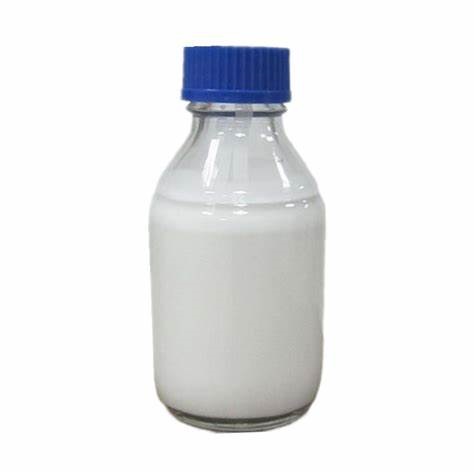
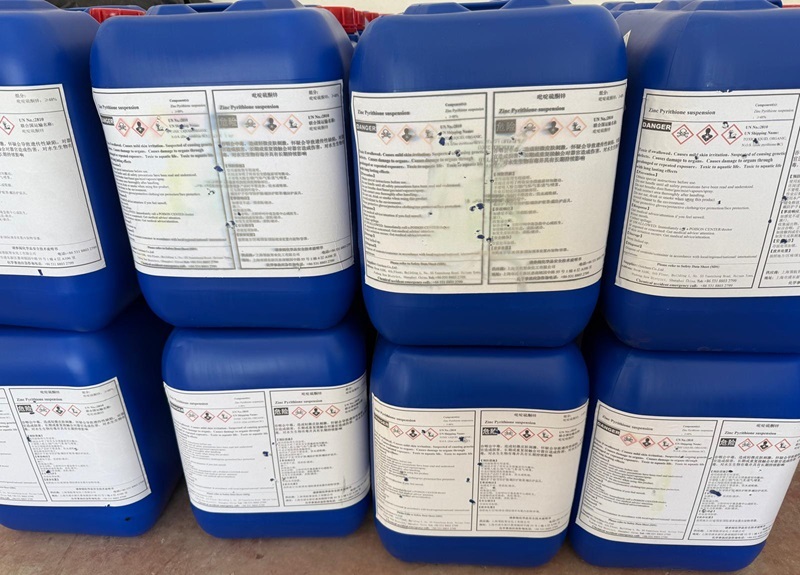
| Packaging | 25 kg HDPE drum (powder/liquid) |
| Temperature | 5 – 30°C (cool) |
| Humidity | <70% relative humidity |
| Light | Protect from UV (dark-colored packaging) |
| Ventilation | Dry, well-ventilated |
| Shelf Life | 24 months (original packaging, recommended conditions) |
| Incompatibilities | Strong oxidizers, EDTA, high pH (>10) |
SECTION 20: PACKAGING OPTIONS
| Packaging Type | Quantity / Capacity | Material |
|---|---|---|
| HDPE Drum (Powder) | 25 kg | HDPE |
| HDPE Drum (Liquid Dispersion) | 25 kg, 50 kg, 200 kg | HDPE |
| Aluminum Foil Bag | 1 kg, 5 kg, 10 kg | Aluminum / PE |
| IBC Container | 500 kg, 1000 kg | HDPE |
| Fiber Drum | 25 kg, 50 kg | Fiber / PE liner |
SECTION 21: TRANSPORTATION INFORMATION
| Parameter | Information |
|---|---|
| UN Number | UN 3077 (Environmentally Hazardous Substance, Solid, N.O.S.) |
| Hazard Class | Class 9 - Miscellaneous Dangerous Goods |
| Packing Group | III |
| ADR/RID | Class 9; UN 3077; Packing Group III |
| IMDG Code | Class 9; UN 3077; Marine pollutant: Yes |
| IATA (Air) | Class 9; UN 3077; Packing Group III |
| Marine Pollutant | Yes |
SECTION 22: REGULATORY STATUS
| Region / Authority | Status | Description |
|---|---|---|
| EU REACH | Restricted (post-2022) | Banned in cosmetics (EC No 2022/2190) |
| EU Biocidal Products | Allowed (PT7, PT9, PT13) | Paints, preservatives, metalworking fluids |
| USA (FDA) | Not banned in cosmetics | Allowed up to 2% in shampoos |
| China | Restricted | Max. 1.5% in cosmetics |
| Japan | Allowed | Positive list |
| WGK (Germany) | Class 3 | High water hazard |
| Turkey (KKDIK) | REACH compliant | Restrictions parallel to EU |
Important Regulatory Note:
-
EU: As of March 1, 2022, Zinc Pyrithione has been added to Annex II (prohibited substances) of the Cosmetics Regulation. Use in cosmetic products is banned in Europe.
-
Industrial Use: Paint, coating, industrial applications continue.
SECTION 23: OTHER NAMES AND SYNONYMS
| Type | Name |
|---|---|
| Turkish Names | Çinko Pritiyon, Pritiyon Çinko, ZPT |
| English Names | Zinc Pyrithione, Zinc Omadine, Zinc Polyanemine, ZPT |
| Chemical Names | Bis(1-hydroxy-2(1H)-pyridinethionato)zinc, Zinc 2-pyridinethiol-1-oxide |
| Trade Names | Zinc Omadine, ZPT, Zinc Polyanemine |
| CAS Number | 13463-41-7 |
| EC Number | 236-671-3 |
| PubChem CID | 3005830 |
| FDA UNII | 6D2V8241GV |
| HS Code | 2934.99 |
SECTION 24: SUMMARY TABLE
| Property | Value |
|---|---|
| CAS Number | 13463-41-7 |
| Molecular Formula | C₁₀H₈N₂O₂S₂Zn |
| Molecular Weight | 317.7 g/mol |
| Appearance | White to off-white powder |
| Purity | ≥98.0% |
| Zinc Content | 19.5 – 20.5% |
| Melting Point | ~240°C (decomposes) |
| Water Solubility | ~8 mg/L (low) |
| Primary Function | Antifungal, antibacterial, algicide |
| Main Applications | Cosmetics (banned in EU), paints, textiles, water treatment, plastics, veterinary |
| Shelf Life | 24 months |
| Storage | Cool (5-30°C), dry, dark |
| GHS Signal Word | DANGER |
| UN Number | 3077 |
| Hazard Class | 9 |
| EU Cosmetic Status | Banned (as of March 1, 2022) |
SECTION 25: CRITICAL WARNINGS AND BEST PRACTICES
CRITICAL WARNINGS:
-
Regulatory Compliance: ZPT is banned in cosmetics in the EU (March 1, 2022). Users must check local regulations for compliance.
-
Toxicity: Toxic if swallowed (H301); fatal if inhaled (H330). Use appropriate PPE.
-
Environmental Toxicity: Very toxic to aquatic life (H400/H410). Avoid release to the environment.
-
EDTA Incompatibility: EDTA and other chelators inactivate ZPT. Do not use EDTA in formulations.
-
Photostability: Slowly degrades under UV light. Protect with UV absorbers or HALS.
-
Heat Sensitivity: Decomposes above 200°C. Temperature control is critical in plastic processing.
-
pH Sensitivity: Maximum stability at pH 4.5-6.5. Hydrolysis occurs above pH 9.
-
Cats Caution: Cats are more sensitive to ZPT; excessive licking may lead to oral toxicity.
BEST PRACTICE RECOMMENDATIONS:
-
Formulation: Work with anionic surfactants (SLES, ALS). Avoid EDTA and chelators. Maintain pH 4.5-6.5.
-
Dispersion: Use high-shear mixing for powder form. Liquid dispersions are ready-to-use.
-
Storage: Store in cool (5-30°C), dry, dark place. Protect from UV.
-
Combinations: Can be combined with ketoconazole, clotrimazole or chlorhexidine (synergy).
-
Testing: Perform compatibility and efficacy tests in new formulations. Phytotoxicity testing (agriculture) and skin tolerance (cosmetics) are mandatory.
-
Personal Protective Equipment: Dust mask (P2/P3), nitrile gloves, safety goggles, apron. Ensure good ventilation.
-
Quality Control: Regularly perform assay, zinc content, pH, particle size, microbiological purity tests.
-
Waste Management: Do not discharge to environment. Dispose in accordance with local regulations. Treatment may be required due to aquatic toxicity.
LEGAL DISCLAIMER:
The information provided in this document is based on our current knowledge and experience and is presented in good faith. However, as all conditions of use are beyond our control, it does not constitute a binding specification or guarantee. This Technical Data Sheet is for informational purposes only. Users are responsible for testing suitability for their own applications and for complying with all local, regional, and national regulations. For complete safety, storage, use, handling, waste, and regulatory compliance information, please refer to the official Safety Data Sheet (SDS/MSDS) provided by the manufacturer/supplier.