We unleash your business potential by maximize the business innovation.
Send EmailMethionine, L-Methionine, DL-Methionine, Metilanin, 63-68-3, 59-51-8
METHIONINE
Methionine / L-Methionine / DL-Methionine / Metilanin / 2-Amino-4-(methylthio)butanoic Acid
CAS Numbers: 63-68-3 (L-Methionine); 59-51-8 (DL-Methionine)
EC Numbers: 200-562-9 (L); 200-432-1 (DL)
1. PRODUCT IDENTIFICATION AND CHEMICAL IDENTITY
| Parameter | Description |
|---|---|
| Chemical Name (IUPAC) | (S)-2-Amino-4-(methylthio)butanoic acid (L-form) |
| Other Names | Methionine, L-Methionine, DL-Methionine, Metilanin, 2-Amino-4-(methylthio)butanoic acid, S-Methyl-L-homocysteine |
| CAS Numbers | 63-68-3 (L-Methionine); 59-51-8 (DL-Methionine) |
| EC Numbers | 200-562-9 (L); 200-432-1 (DL) |
| Molecular Formula | C₅H₁₁NO₂S |
| Molecular Weight | 149.21 g/mol |
| Chemical Class | Amino acid (essential, sulfur-containing) |
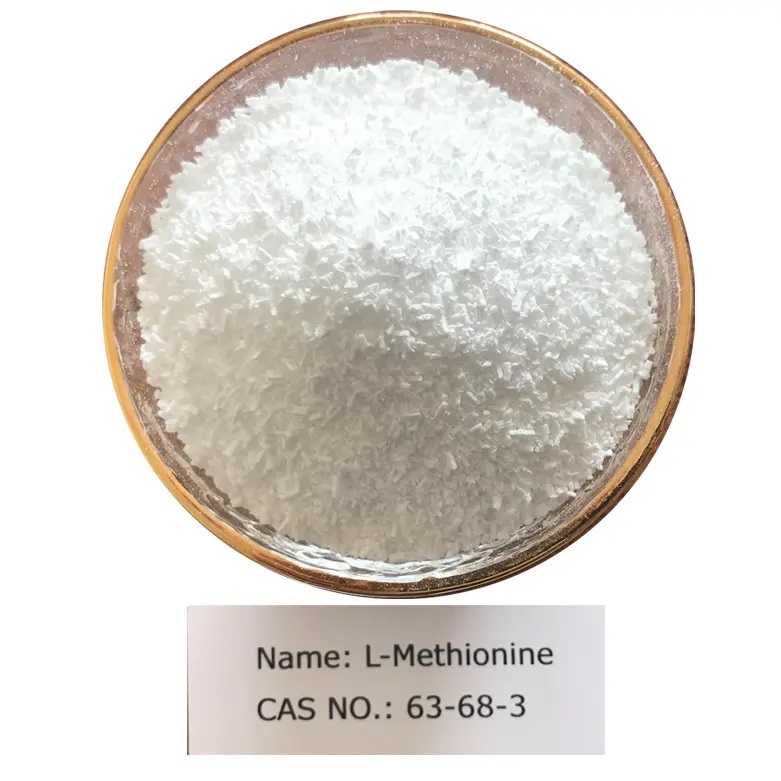
| Appearance | White crystalline powder or colorless plates |
| Odor | Odorless or faint characteristic odor |
| Taste | Sulfurous taste |
Methionine is one of the nine essential amino acids that the human body cannot synthesize on its own and must obtain through diet or supplementation. It is a sulfur-containing amino acid that plays a critical role in protein synthesis and various metabolic processes. Methionine exists in two forms: L-Methionine (the biologically active form) and DL-Methionine (a racemic mixture of D- and L- isomers). L-Methionine is the naturally occurring form found in proteins and is the biologically active isomer. DL-Methionine is a synthetic mixture containing both D- and L-isomers, commonly used in animal feed and some supplements. L-Methionine is a white crystalline powder or colorless plates with a sulfurous taste. It is an essential amino acid that serves as a precursor to other important sulfur-containing compounds including cysteine, taurine, S-adenosylmethionine (SAM-e), and glutathione. Methionine is also involved in the synthesis of creatine, carnitine, and various phospholipids. It is naturally found in protein-rich foods such as meat, fish, eggs, dairy products, and legumes. Methionine is produced synthetically through chemical synthesis or fermentation and is widely used in dietary supplements, animal feed, pharmaceuticals, and the food industry.
2. PHYSICAL AND CHEMICAL PROPERTIES
| Property | Value |
|---|---|
| Molecular Formula | C₅H₁₁NO₂S |
| Molecular Weight | 149.21 g/mol |
| Appearance | White crystalline powder or colorless plates |
| Odor | Odorless or faint characteristic odor |
| Taste | Sulfurous taste |
| Density | ~1.34 g/cm³ (L); ~1.34 g/cm³ (DL) |
| Melting Point | 280-282°C (L); 281°C (DL) (decomposes) |
| Boiling Point | ~181°C (decomposes) |
| Water Solubility (25°C) | ~56.6 g/L (L); ~53.7 g/L (DL) |
| Solubility in Dilute Ethanol | Soluble |
| pH (1% solution) | ~5.5-6.5 |
| Specific Optical Rotation ([α]²⁰D) | +23.0 to +24.5° (L, c=1, H₂O); 0° (DL, racemic mixture) |
| pKa (25°C) | 2.28 (COOH), 9.21 (α-NH₂) |
| Isoelectric Point | 5.74 |
| Nitrogen Content | ~9.4% (by weight) |
| Sulfur Content | ~21.5% (by weight) |
| Particle Size | 100-500 µm (typical) |
| Moisture Content | ≤ 0.5% (typical) |
| Residue on Ignition | ≤ 0.3% |
| Heavy Metals | ≤ 10 ppm (as Pb) |
| Chloride Content | ≤ 0.05% |
| Sulfate Content | ≤ 0.05% |
Methionine is a white crystalline powder or colorless plates with a sulfurous taste. L-Methionine has a melting point of 280-282°C (decomposes), while DL-Methionine melts at 281°C. The boiling point is approximately 181°C (decomposes). Water solubility at 25°C is approximately 56.6 g/L for L-Methionine and 53.7 g/L for DL-Methionine. Both forms are soluble in dilute ethanol. The specific optical rotation is +23.0 to +24.5° for L-Methionine (c=1, H₂O), while DL-Methionine as a racemic mixture has an optical rotation of 0°. The pKa values are 2.28 (carboxyl group) and 9.21 (amino group), with an isoelectric point of 5.74. The nitrogen content is approximately 9.4% by weight, and the sulfur content is approximately 21.5% by weight. Typical moisture content is ≤ 0.5%, and residue on ignition is ≤ 0.3%. Heavy metals are typically ≤ 10 ppm (as Pb). Chloride and sulfate content are each ≤ 0.05%.
3. CHEMICAL PROPERTIES AND REACTIONS
Methionine is a sulfur-containing amino acid with a thioether group (-S-CH₃) in its side chain. This unique structure gives methionine its distinctive chemical properties and reactivity.
Acid-Base Properties:
Methionine has both carboxyl (COOH) and amino (NH₂) groups. In aqueous solution, it has the following ionization equilibria:
-
pKa₁ (COOH): 2.28 (carboxyl group deprotonation)
-
pKa₂ (α-NH₂): 9.21 (amino group deprotonation)
-
Isoelectric Point: 5.74
S-Adenosylmethionine (SAM-e) Formation:
Methionine is converted to S-adenosylmethionine (SAM-e) through reaction with ATP by the enzyme methionine adenosyltransferase:
Methionine + ATP → SAM-e + PPi + Pi (S-adenosylmethionine formation)
SAM-e is a critical methyl donor involved in numerous methylation reactions in the body.
Transsulfuration Pathway:
Methionine is converted to cysteine through the transsulfuration pathway:
Methionine → SAM-e → Homocysteine → Cysteine
Decarboxylation:
Methionine can be decarboxylated to form various amines.
Oxidation:
Methionine can be oxidized to methionine sulfoxide and methionine sulfone. The sulfur atom in the thioether group is susceptible to oxidation.
Reaction with Halogens:
Methionine reacts with halogens (chlorine, bromine, iodine) to form sulfonium salts.
Methylation Reactions:
Methionine, through SAM-e, is a key methyl donor in numerous biological methylation reactions, including the synthesis of creatine, carnitine, and various neurotransmitters.
Thermal Decomposition:
At temperatures above 280°C, methionine decomposes to produce volatile compounds including sulfur-containing gases (methanethiol, hydrogen sulfide, sulfur dioxide), ammonia, and various nitrogen-containing compounds.
4. DIFFERENCES BETWEEN L-METHIONINE AND DL-METHIONINE
| Parameter | L-Methionine | DL-Methionine |
|---|---|---|
| Chemical Structure | Only L-isomer (biologically active) | Racemic mixture (50% D, 50% L) |
| CAS Number | 63-68-3 | 59-51-8 |
| Specific Optical Rotation | +23.0 to +24.5° (c=1, H₂O) | 0° (racemic mixture) |
| Bioavailability | High (biologically active form) | Lower (D-isomer not biologically active) |
| Biological Activity | Fully active | Partially active (only L-isomer active) |
| Primary Use | Human nutrition, dietary supplements, pharmaceuticals | Animal feed, some dietary supplements |
| Production | Fermentation or enzymatic | Chemical synthesis |
| Water Solubility (25°C) | ~56.6 g/L | ~53.7 g/L |
| Price | Higher | Lower (more economical) |
L-Methionine:
L-Methionine is the naturally occurring form of methionine found in proteins. It is the biologically active form that is directly incorporated into proteins during protein synthesis. It has high bioavailability and is readily utilized by the body. L-Methionine is primarily used in human nutrition, dietary supplements, and pharmaceutical applications. It is produced through fermentation using microorganisms such as Corynebacterium glutamicum or Escherichia coli.
DL-Methionine:
DL-Methionine is a racemic mixture containing equal amounts of D- and L-isomers (50% D, 50% L). The D-isomer is not biologically active and must be converted to the L-form in the body through enzymatic racemization. This conversion is limited and inefficient in humans, making DL-methionine less bioavailable than L-methionine. DL-Methionine is primarily used in animal feed because animals (especially poultry and livestock) can effectively convert the D-isomer to the L-form. It is produced through chemical synthesis and is more economical than L-methionine.
5. PHYSIOLOGICAL FUNCTIONS AND HEALTH BENEFITS
Methionine is an essential amino acid that plays numerous critical roles in the body. It is involved in protein synthesis, methylation reactions, sulfur metabolism, and the production of other important biomolecules.
5.1. Protein Synthesis
| Benefit | Description |
|---|---|
| Protein Synthesis | Essential amino acid for protein synthesis; required for the formation of all proteins in the body. |
| Growth and Development | Critical for growth and development in children and adolescents. |
| Tissue Repair | Supports tissue repair and wound healing. |
| Muscle Mass | Supports maintenance and growth of muscle mass. |
Methionine is one of the nine essential amino acids required for protein synthesis. It is incorporated into proteins during translation and is necessary for the formation of all proteins in the body. Adequate methionine intake is critical for growth, development, tissue repair, and maintenance of muscle mass.
5.2. Methyl Donor (Through SAM-e)
| Benefit | Description |
|---|---|
| Methylation Reactions | Acts as a methyl donor through S-adenosylmethionine (SAM-e) formation. |
| DNA Methylation | Involved in DNA methylation, which regulates gene expression. |
| Neurotransmitter Synthesis | Contributes to the synthesis of neurotransmitters. |
| Creatine Synthesis | Provides methyl groups for creatine synthesis (energy metabolism). |
| Carnitine Synthesis | Provides methyl groups for carnitine synthesis (fatty acid metabolism). |
| Liver Function | Supports liver function and detoxification processes. |
| SAM-e Supplementation | SAM-e is used as a supplement for depression, joint pain, and liver health. |
Methionine is converted to S-adenosylmethionine (SAM-e), which is a critical methyl donor involved in numerous methylation reactions. SAM-e contributes to the synthesis of creatine, carnitine, and various neurotransmitters. It is also involved in DNA methylation, which regulates gene expression. SAM-e is used as a dietary supplement for depression, osteoarthritis, and liver health.
5.3. Sulfur Metabolism and Antioxidant Function
| Benefit | Description |
|---|---|
| Cysteine Synthesis | Precursor to cysteine, which is used to synthesize glutathione (a major antioxidant). |
| Glutathione Production | Essential for glutathione synthesis, which protects cells from oxidative stress. |
| Taurine Synthesis | Precursor to taurine, which is important for heart and eye health. |
| Sulfur Donor | Provides sulfur for the synthesis of various sulfur-containing compounds. |
| Detoxification | Supports detoxification processes through glutathione production. |
| Heavy Metal Chelation | May help chelate heavy metals and support their excretion. |
Methionine is a precursor to cysteine, which is used to synthesize glutathione—one of the body's most important antioxidants. Glutathione protects cells from oxidative stress, supports immune function, and aids in detoxification. Methionine is also a precursor to taurine, an amino acid important for heart and eye health.
5.4. Liver Health and Detoxification
| Benefit | Description |
|---|---|
| Liver Protection | Supports liver function and protects against liver damage. |
| Acetaminophen Overdose | Used in the treatment of acetaminophen (paracetamol) overdose to prevent liver damage. |
| Detoxification | Supports detoxification processes through glutathione production and methylation. |
| Hepatoprotective | May have hepatoprotective (liver-protecting) properties. |
Methionine supports liver function and protects against liver damage. It is used in the treatment of acetaminophen (paracetamol) overdose to prevent liver damage by replenishing glutathione levels. Methionine also supports general detoxification processes in the liver.
5.5. Other Health Benefits
| Benefit | Description |
|---|---|
| Urine Acidification | Used to acidify urine for the treatment of urinary tract conditions. |
| Joint Health | May support joint health and reduce inflammation (through SAM-e). |
| Mood Support | May support mood and mental health (through SAM-e). |
| Parkinson's Disease | Used in the treatment of Parkinson's disease (in combination with other therapies). |
| Radiation Protection | May offer some protection against radiation exposure. |
| Allergy and Asthma | Used in the treatment of certain allergies and asthma. |
| PMS Symptoms | May help reduce premenstrual syndrome (PMS) symptoms. |
6. APPLICATIONS AND INDUSTRIAL USES
Methionine has a wide range of applications in human nutrition, animal nutrition, pharmaceuticals, the food industry, and cosmetics.
6.1. Human Nutrition and Dietary Supplements
| Application | Description |
|---|---|
| Dietary Supplements | Essential amino acid supplement for protein synthesis, antioxidant support, and liver health. |
| Sports Nutrition | Used in amino acid blends to support muscle growth, recovery, and performance. |
| SAM-e Supplements | Used as a precursor to SAM-e for mood support, joint health, and liver health. |
| Weight Management | May support weight management through its role in metabolism. |
| Vegan/Vegetarian Supplements | Important supplement for individuals on plant-based diets to ensure adequate methionine intake. |
L-Methionine is widely used as a dietary supplement in human nutrition. It is used in amino acid blends, protein supplements, and sports nutrition products. L-Methionine is also used as a precursor to SAM-e, which is available as a supplement for depression, osteoarthritis, and liver health. It is particularly important for individuals on plant-based diets, as plant proteins are often low in methionine.
6.2. Animal Nutrition and Feed Additives
| Application | Description |
|---|---|
| Animal Feed Supplement | Essential amino acid supplement for livestock, poultry, and aquaculture feed. |
| DL-Methionine Feed Grade | Most common form used in animal feed (DL-Methionine is more economical). |
| Growth Promotion | Promotes growth and weight gain in livestock and poultry. |
| Feed Efficiency | Improves feed conversion efficiency (FCR). |
| Egg Production | Supports egg production in poultry. |
| Milk Production | Supports milk production in dairy cattle. |
| Wool Production | Supports wool production in sheep. |
| Feather Development | Supports feather development in poultry. |
DL-Methionine is widely used as an essential amino acid supplement in animal nutrition. It is often the first limiting amino acid in poultry and livestock feeds (especially corn and soybean-based feeds). Supplementation improves growth, feed conversion efficiency, egg production, and milk production. DL-Methionine is more economical than L-Methionine for animal feed applications because animals can effectively convert the D-isomer to the L-form.
6.3. Pharmaceutical Industry
| Application | Description |
|---|---|
| Acetaminophen Overdose Treatment | Used to prevent liver damage in acetaminophen (paracetamol) overdose. |
| Liver Disease Treatment | Used in the treatment of certain liver diseases. |
| Urinary Acidification | Used to acidify urine for the treatment of urinary tract conditions. |
| Drug Formulations | Used as an ingredient in various pharmaceutical formulations. |
| SAM-e Formulations | Used as a precursor in SAM-e production for depression and joint health. |
| Amino Acid Infusions | Used in amino acid infusion solutions for parenteral nutrition. |
L-Methionine is used in pharmaceutical applications for the treatment of acetaminophen overdose, liver diseases, and urinary tract conditions. It is also used as an ingredient in various drug formulations and in amino acid infusion solutions for parenteral nutrition. SAM-e is used as a pharmaceutical ingredient for depression, osteoarthritis, and liver health.
6.4. Food Industry
| Application | Description |
|---|---|
| Food Additive | Used as a nutrient supplement and antioxidant in processed foods. |
| Fortified Foods | Used to fortify cereals, bread, and other grain-based products. |
| Sports Nutrition | Used in protein powders, bars, and beverages. |
| Infant Formula | Used in infant formula to ensure adequate methionine intake. |
| Flour Treatment | Used as a flour treatment agent and dough conditioner. |
Methionine is used in the food industry as a nutrient supplement and antioxidant. It is added to fortified foods, sports nutrition products, infant formula, and baked goods. It is used as a flour treatment agent and dough conditioner in baked goods.
6.5. Cosmetics and Personal Care
| Application | Description |
|---|---|
| Skin Care Products | Used for its antioxidant and skin-conditioning properties. |
| Hair Care Products | Used in hair care products for its conditioning and strengthening properties. |
| Anti-Aging Products | Used in anti-aging formulations for its antioxidant properties. |
| Antistatic Agents | Used as an antistatic agent in hair and skin care products. |
L-Methionine is used in cosmetics and personal care products as an antioxidant, skin-conditioning agent, and hair conditioner. It is also used as an antistatic agent in hair and skin care products.
7. DOSAGE AND ADMINISTRATION
| Parameter | Information |
|---|---|
| General Supplementation | 500-1,500 mg per day (L-Methionine) |
| SAM-e Support | 400-1,600 mg per day (as SAM-e, not methionine) |
| Athletic Performance | 500-1,000 mg per day |
| Liver Support | 500-1,500 mg per day (under medical supervision) |
| Acetaminophen Overdose | Medical supervision required; typically 2.5-5 g over 24 hours (intravenous) |
| Maximum Safe Dose | Up to 2,000-3,000 mg per day under medical supervision |
| Timing | Between meals for best absorption; with vitamin B6, B12, and folate for optimal SAM-e production |
| Forms | Tablets, capsules, powders, liquids, intravenous solutions |
| Disclaimer | Dosages may vary based on individual needs and health status. Consult a healthcare professional before use. |
8. POTENTIAL SIDE EFFECTS AND WARNINGS
| Side Effect | Description |
|---|---|
| Gastrointestinal Distress | Nausea, diarrhea, abdominal pain, bloating (at high doses) |
| Drowsiness | May cause drowsiness in some individuals |
| Dizziness | May cause dizziness in some individuals |
| Headache | May cause headache in some individuals |
| Allergic Reactions | Rare; possible skin rash, itching, swelling |
| Drug Interactions | May interact with levodopa (L-Dopa) and other Parkinson's medications |
| Methionine Toxicity | High doses may cause hyperhomocysteinemia (elevated homocysteine levels) |
| Contraindications | Homocysteinuria, cystinuria, sulfite sensitivity, severe liver disease |
| Pregnancy and Lactation | Generally safe at recommended doses; consult healthcare professional before use |
| Warning | Side effects are generally mild and occur at high doses. Consult a healthcare professional before use, especially if you have pre-existing conditions or are taking medications. |
9. DRUG INTERACTIONS
| Drug Class | Interaction | Recommendation |
|---|---|---|
| Levodopa (L-Dopa) | May interfere with L-Dopa absorption | Administer L-Dopa 1-2 hours before or after methionine |
| Antiparkinsonian Drugs | Possible interactions | Use under medical supervision |
| Sulfasalazine | May reduce absorption | Use under medical supervision |
| Acidifying Agents | Additive acidifying effect | Use under medical supervision |
| Antacids | May reduce methionine absorption | Separate dosing |
10. NATURAL FOOD SOURCES OF METHIONINE
| Animal Sources | Plant Sources |
|---|---|
| Meat (beef, lamb, pork) | Soybeans |
| Poultry (chicken, turkey) | Sesame seeds |
| Fish (salmon, tuna, cod) | Brazil nuts |
| Eggs | Sunflower seeds |
| Dairy products (milk, cheese, yogurt) | Pumpkin seeds |
| Seafood (shrimp, mussels) | Chickpeas |
| Lentils | |
| Oats | |
| Brown rice | |
| Corn |
11. SAFETY AND TOXICOLOGY
| Parameter | Value |
|---|---|
| Oral LD50 (Rat) | > 5,000 mg/kg (low toxicity) |
| Dermal LD50 (Rabbit) | > 2,000 mg/kg |
| Skin Irritation | Non-irritant |
| Eye Irritation | Mild irritant |
| Skin Sensitization | Not a sensitizer |
| Mutagenicity | Negative (Ames test) |
| Carcinogenicity | Not classified |
| Reproductive Toxicity | Not classified |
| GRAS Status | Generally Recognized as Safe (GRAS) by FDA |
| Acceptable Daily Intake | Not established (no safety concerns at typical doses) |
12. FIRST AID MEASURES
| Exposure Route | Action |
|---|---|
| Inhalation | Move person to fresh air. If irritation persists, seek medical attention. |
| Skin Contact | Wash with plenty of soap and water. If irritation persists, seek medical attention. |
| Eye Contact | Rinse immediately with plenty of water for at least 15 minutes. Remove contact lenses if present. If irritation persists, seek medical attention. |
| Ingestion | Rinse mouth with water. Drink plenty of water. Do NOT induce vomiting. Seek medical attention if large amounts are swallowed. |
13. SAFETY INFORMATION (GHS CLASSIFICATION)
| Hazard Class | Category |
|---|---|
| Skin Irritation | Category 3 (mild irritation) |
| Eye Irritation | Category 2B (mild irritation) |
| Specific Target Organ Toxicity - Single Exposure | Category 3 (respiratory irritation) |
Signal Word: WARNING
Hazard Statements (H-Codes):
| Code | Statement |
|---|---|
| H315 | Causes skin irritation (mild) |
| H319 | Causes serious eye irritation (mild) |
| H335 | May cause respiratory irritation (dust) |
Precautionary Statements (P-Codes):
| Code | Statement |
|---|---|
| P261 | Avoid breathing dust |
| P271 | Use only outdoors or in a well-ventilated area |
| P280 | Wear protective gloves, protective clothing, eye/face protection |
| P302+P352 | IF ON SKIN: Wash with plenty of soap and water |
| P304+P340 | IF INHALED: Remove person to fresh air and keep comfortable for breathing |
| P305+P351+P338 | IF IN EYES: Rinse cautiously with water for several minutes. Remove contact lenses if present and easy to do. Continue rinsing |
| P332+P313 | If skin irritation occurs: Get medical attention |
| P337+P313 | If eye irritation persists: Get medical attention |
| P403+P233 | Store in a well-ventilated place. Keep container tightly closed |
| P501 | Dispose of contents/container in accordance with local/regional/national/international regulations |
14. FIREFIGHTING MEASURES
| Parameter | Information |
|---|---|
| Fire Hazard | Combustible dust; dust-air mixtures may be explosive at high concentrations |
| Extinguishing Media | Water spray, CO₂, dry chemical powder, foam |
| Special Hazards | Thermal decomposition produces toxic and irritant fumes (sulfur oxides, nitrogen oxides, carbon monoxide, carbon dioxide, hydrogen sulfide) |
| Protective Equipment | Self-contained breathing apparatus (SCBA), full protective clothing |
15. ACCIDENTAL RELEASE MEASURES
| Parameter | Information |
|---|---|
| Personal Protection | Wear appropriate PPE (dust mask, goggles, protective clothing, gloves) |
| Ventilation | Increase ventilation; evacuate area if necessary |
| Containment | Stop source if safe; contain powder to prevent spread |
| Cleaning Methods | Vacuum or sweep carefully to avoid dust generation; use wet methods to suppress dust |
| Environmental Precautions | Prevent entry into drains, sewers, and water bodies |
| Waste Disposal | Dispose of according to local, state, and federal regulations |
16. STORAGE AND HANDLING
| Parameter | Information |
|---|---|
| Storage Conditions | Cool, dry, well-ventilated area; store below 25°C; protect from light |
| Container Requirements | Tightly closed containers (bags, drums, boxes) |
| Materials to Avoid | Strong oxidizing agents, strong acids, strong bases, moisture |
| Shelf Life | 24-36 months under proper storage conditions |
| Hygroscopicity | Slightly hygroscopic |
| Handling Notes | Avoid dust generation; avoid contact with skin and eyes |
| Packaging Options | 25 kg bags (standard), 25 kg drums, 500-1000 kg FIBCs |
Methionine should be stored below 25°C in cool, dry, well-ventilated areas, protected from light. It is slightly hygroscopic and should be protected from moisture. Containers should be kept tightly closed to prevent moisture absorption and contamination. It is incompatible with strong oxidizing agents, strong acids, and strong bases. Shelf life under proper storage conditions is typically 24-36 months.
Handling Notes:
-
Avoid dust generation (use enclosed systems, local exhaust ventilation)
-
Avoid contact with skin and eyes (use protective gloves and goggles)
-
Avoid breathing dust (use dust mask or respirator)
-
Keep away from ignition sources
-
Do not allow material to become wet
17. TRANSPORT INFORMATION
| Parameter | Information |
|---|---|
| UN Number | Not applicable (not classified as dangerous good) |
| Hazard Class | Not a dangerous good |
| Packing Group | Not applicable |
| Proper Shipping Name | Methionine |
| Marine Pollutant | No |
| ADR/RID Label | Not applicable |
Methionine is not classified as a dangerous good for transport. It is shipped in 25 kg bags, drums, or FIBCs. During transport, protect from moisture, impact, and excessive heat.
18. REGULATORY INFORMATION
| Region | Status |
|---|---|
| EU | REACH registered; approved as food and feed additive |
| Turkey (KKDİK) | Mandatory compliance; requires registration |
| USA (TSCA) | Listed; GRAS by FDA |
| Canada (DSL) | Listed |
| Australia (AICS) | Listed |
| Japan (ENCS) | Listed |
| Korea (KECL) | Listed |
| China (IECSC) | Listed |
Regulatory Status:
| Status | Information |
|---|---|
| FDA Compliance | GRAS (Generally Recognized as Safe) |
| EU Compliance | REACH registered; approved as food additive and feed additive |
| IARC Classification | Not classified |
| HS Code | 29304000 |
| RTECS | PD0456000 (L); PD0457000 (DL) |
| WGK Germany | 1 (slight hazard to water) |
| TSCA | Yes |
| EINECS | 200-562-9 (L); 200-432-1 (DL) |
19. OTHER NAMES AND DATABASE IDENTIFIERS
| Category | Names / Identifiers |
|---|---|
| Chemical Names | (S)-2-Amino-4-(methylthio)butanoic acid (L) |
| Synonyms | Methionine, L-Methionine, DL-Methionine, Metilanin, 2-Amino-4-(methylthio)butanoic acid, S-Methyl-L-homocysteine, Poly-L-Methionine |
| Turkish Names | Metiyonin, L-Metiyonin, DL-Metiyonin |
Database Identifiers:
| Database | L-Methionine | DL-Methionine |
|---|---|---|
| CAS | 63-68-3 | 59-51-8 |
| EC (EINECS) | 200-562-9 | 200-432-1 |
| MDL | MFCD00063092 | MFCD00063090 |
| PubChem CID | 6137 | 5861 |
| RTECS | PD0456000 | PD0457000 |
| UN | Not applicable | Not applicable |
| HS Code | 29304000 | 29304000 |
| Merck | 14, 5975 | 14, 5975 |
| Beilstein | 1722294 | 1722294 |
20. SUMMARY AND CRITICAL WARNINGS
SUMMARY:
Methionine (C₅H₁₁NO₂S) is one of the nine essential amino acids that the human body cannot synthesize and must obtain through diet or supplementation. It is a sulfur-containing amino acid that exists in two forms: L-Methionine (the biologically active form, CAS 63-68-3) and DL-Methionine (a racemic mixture, CAS 59-51-8). L-Methionine is a white crystalline powder or colorless plates with a sulfurous taste. The molecular weight is 149.21 g/mol, melting point is 280-282°C (decomposes), and water solubility at 25°C is approximately 56.6 g/L. It is produced through fermentation or chemical synthesis. Methionine plays critical roles in protein synthesis, methylation reactions (as a precursor to SAM-e), sulfur metabolism, and antioxidant function (as a precursor to glutathione and cysteine). It is widely used in dietary supplements, animal feed, pharmaceuticals, the food industry, and cosmetics. L-Methionine is used in human nutrition and pharmaceutical applications, while DL-Methionine is primarily used in animal feed due to its lower cost. The recommended supplement dose is typically 500-1,500 mg per day. It is considered GRAS (Generally Recognized as Safe) by the FDA, but high doses may cause gastrointestinal distress and hyperhomocysteinemia. It is stored below 25°C in cool, dry, well-ventilated areas, protected from moisture and light. Packaging: 25 kg bags, drums, or FIBCs.
Key Properties:
| Property | Value |
|---|---|
| Appearance | White crystalline powder or colorless plates |
| Chemical Formula | C₅H₁₁NO₂S |
| Molecular Weight | 149.21 g/mol |
| CAS Numbers | 63-68-3 (L); 59-51-8 (DL) |
| Melting Point | 280-282°C (L); 281°C (DL) (decomposes) |
| Water Solubility (25°C) | ~56.6 g/L (L); ~53.7 g/L (DL) |
| Specific Optical Rotation | +23.0 to +24.5° (L); 0° (DL) |
| Sulfur Content | ~21.5% (by weight) |
| Primary Use | Dietary supplement, animal feed, pharmaceutical intermediate |
Major Application Areas:
| Industry | Applications |
|---|---|
| Human Nutrition | Dietary supplements, sports nutrition, SAM-e precursors |
| Animal Nutrition | Essential amino acid supplement in livestock, poultry, and aquaculture feed |
| Pharmaceutical | Acetaminophen overdose treatment, liver disease, urinary acidification |
| Food Industry | Food additive, fortified foods, sports nutrition products, infant formula |
| Cosmetics | Skin care, hair care, anti-aging formulations, antistatic agents |
Key Safety Points:
-
LOW TOXICITY: GRAS (Generally Recognized as Safe) by FDA
-
SLIGHTLY HYGROSCOPIC: Protect from moisture; store in tightly closed containers
-
MILD IRRITANT: May cause mild skin and eye irritation
-
STORAGE: Store below 25°C in cool, dry, well-ventilated area, protected from light
-
PPE REQUIRED: Dust mask, safety goggles, protective gloves (for handling powder)
-
SIDE EFFECTS: May cause gastrointestinal distress at high doses; risk of hyperhomocysteinemia
-
DRUG INTERACTIONS: May interact with levodopa (L-Dopa) and other Parkinson's medications
-
CONTRAINDICATIONS: Homocysteinuria, cystinuria, sulfite sensitivity, severe liver disease
CRITICAL WARNINGS:
Essential Sulfur-Containing Amino Acid: Methionine is one of the nine essential amino acids and is the primary source of sulfur in the body. It is critical for protein synthesis, methylation reactions, and the production of other important sulfur-containing compounds (cysteine, taurine, glutathione, SAM-e). Deficiency can lead to poor growth, impaired immune function, and various metabolic disorders.
L-Methionine vs. DL-Methionine: L-Methionine is the biologically active form found in proteins and is directly used in protein synthesis. DL-Methionine is a synthetic racemic mixture containing both D- and L-isomers. The D-isomer must be converted to the L-form in the body, making DL-Methionine less bioavailable in humans. DL-Methionine is primarily used in animal feed because animals can effectively convert the D-isomer to the L-form. For human nutrition and pharmaceutical applications, L-Methionine is the preferred form.
SAM-e and Methylation: Methionine is converted to S-adenosylmethionine (SAM-e), which is a critical methyl donor involved in numerous methylation reactions. SAM-e contributes to the synthesis of creatine, carnitine, and various neurotransmitters. It is also involved in DNA methylation, which regulates gene expression. SAM-e is used as a dietary supplement for depression, osteoarthritis, and liver health. Adequate intake of vitamin B6, B12, and folate is required for optimal SAM-e production.
Antioxidant Function: Methionine is a precursor to cysteine, which is used to synthesize glutathione—one of the body's most important antioxidants. Glutathione protects cells from oxidative stress, supports immune function, and aids in detoxification. Methionine also provides sulfur for the synthesis of other sulfur-containing compounds with antioxidant properties.
Liver Health and Detoxification: Methionine supports liver function and protects against liver damage. It is used in the treatment of acetaminophen (paracetamol) overdose to prevent liver damage by replenishing glutathione levels. Methionine also supports general detoxification processes in the liver.
Hyperhomocysteinemia Risk: High doses of methionine can lead to elevated homocysteine levels (hyperhomocysteinemia), which is a risk factor for cardiovascular disease. Individuals with pre-existing conditions or those taking high doses should be monitored by a healthcare professional. Adequate intake of vitamin B6, B12, and folate can help maintain normal homocysteine levels.
Drug Interactions: Methionine may interact with levodopa (L-Dopa), a medication used for Parkinson's disease, by interfering with its absorption. It is recommended to administer L-Dopa 1-2 hours before or after taking methionine.
Natural Food Sources: Methionine is naturally found in protein-rich foods including meat, poultry, fish, eggs, dairy products, soybeans, sesame seeds, Brazil nuts, and sunflower seeds. Individuals on plant-based diets may have a higher risk of methionine deficiency and may benefit from supplementation.
Pregnancy and Lactation: Methionine is generally considered safe during pregnancy and lactation at recommended doses. However, as with all supplements, it is recommended to consult a healthcare professional before use.
Important Disclaimer: This Technical Data Sheet (TDS) is for informational purposes only. The information provided is based on available data and is believed to be accurate. However, the user is solely responsible for determining the suitability of the product for their specific application and for complying with all applicable regulations and safety requirements. For complete safety, handling, storage, and regulatory compliance information, always refer to the official Safety Data Sheet (SDS/MSDS) provided by the manufacturer/supplier. Users are responsible for testing the product in their own processes and applications. All local, national, and international regulations must be followed when working with methionine. This is NOT a substitute for professional medical advice. Consult a healthcare professional before use, especially if taking medications, pregnant, or nursing.