We unleash your business potential by maximize the business innovation.
Send EmailDiethylene Triamine, Diethylenetriamine, DETA, DIEN, 111-40-0
Diethylenetriamine (DETA)
This section provides a deep dive into the molecular structure, reaction mechanisms, industrial roles, and comparative analysis of DETA.
1. Molecular Structure and Reactivity Analysis
The power of DETA lies in its molecular architecture: H₂N-CH₂-CH₂-NH-CH₂-CH₂-NH₂
-
Three Functional Amine Groups:
-
Two Primary Amines (-NH₂): Located at both ends of the chain. They are highly reactive, quickly reacting with epoxy groups to extend the polymer chain.
-
One Secondary Amine (-NH-): Located in the middle of the chain. While less reactive than primary amines, it plays a critical role in forming three-dimensional cross-links. This explains the high hardness and durability of epoxies cured with DETA.
-
-
Spacer Effect: The ethylene (-CH₂-CH₂-) chains between amine groups provide a degree of flexibility to the polymer network while being short enough to allow for a dense network structure.
-
Nucleophilic Character: The lone electron pairs on the nitrogen atoms make DETA a strong nucleophile (electron-loving) and base. This property is vital for both epoxy ring-opening and complex formation with metal ions (chelation).
2. Technical Role as an Epoxy Hardener and Reaction Mechanism
DETA acts as a stoichiometric hardener for epoxy resins (typically Bisphenol-A diglycidyl ether - DGEBA). This means a specific chemical ratio is required for the curing reaction.
-
Reaction Steps:
-
Ring-Opening: A hydrogen from a primary amine is attracted to the oxygen of the epoxy group. The amine nitrogen bonds to the epoxy's carbon, opening the ring. This creates a hydroxyl (-OH) group and a new secondary amine.
-
Chain Propagation: The newly formed secondary amine reacts with another epoxy group, extending the chain and creating a tertiary amine.
-
Cross-linking: The original secondary amine in the middle of the DETA molecule also participates in these reactions. Consequently, all 5 active hydrogens of DETA (4H from two primary amines, 1H from one secondary amine) react with epoxy groups, forming a dense, three-dimensional network.
-
-
Advantages:
-
Low Viscosity: Ensures easy mixing and application, reducing air bubble entrapment.
-
Room Temperature Cure: Offers application convenience on-site without requiring heat.
-
High Glass Transition Temperature (Tg): The dense network structure allows DETA-cured epoxies to retain mechanical properties up to high temperatures (around 120°C).
-
Chemical Resistance: The final product exhibits excellent resistance to acids, bases, and solvents.
-
3. In-Depth Use as a Chemical Intermediate
DETA serves as a "building block" for synthesizing more complex molecules.
-
Imidazoline Synthesis (Corrosion Inhibitors): When DETA reacts with long-chain fatty acids (e.g., oleic acid), it forms imidazoline derivatives. These molecules strongly adsorb onto metal surfaces, creating a protective film. They are vital in preventing corrosion caused by CO₂ and H₂S, especially in oil and gas pipelines.
-
Chelating Agents (EDTA Analogs): DETA is used in the synthesis of strong chelating agents like DTPA (Diethylenetriaminepentaacetic acid) via reaction with chloroacetic acid or formaldehyde/cyanide. DTPA tightly binds metal ions (Fe³⁺, Mn²⁺, Cu²⁺) and is used extensively from paper pulp bleaching to detergent stabilization.
-
Polyamide Resins: DETA reacts with dimer fatty acids to form thermoplastic polyamide resins. These resins are used in hot-melt adhesives, flexographic inks, and protective coatings.
4. Comparison with Other Ethylene Amines: Why Choose DETA?
Choosing the correct amine is critical for a project.
| Property | EDA (Ethylenediamine) | DETA | TETA (Triethylenetetramine) | TEPA (Tetraethylenepentamine) |
|---|---|---|---|---|
| Molecular Weight | 60.1 | 103.2 | 146.2 | 189.3 |
| Amine Functionality | 2 (2 Primary) | 3 (2P + 1S) | 4 (2P + 2S) | 5 (2P + 3S) |
| Viscosity | Very Low | Low | Medium | High |
| Epoxy Cure Speed | Very Fast | Fast | Medium | Slow |
| Final Hardness / Tg | High (Brittle) | Very High | High | Medium (Flexible) |
| Flexibility | Very Low | Low | Medium | High |
| Typical Application | Lab use, fast cure | General industrial flooring, adhesives | Coatings, composites | Flexible coatings, elastomers |
Conclusion: DETA provides an excellent balance between hardness and processability. It offers lower viscosity than TETA and less brittleness than EDA.
5. In-Depth Safety and Handling
-
Hazards:
-
Skin Corrosion (Category 1B): Causes irreversible skin damage. Immediate washing with plenty of water and medical attention are mandatory upon contact.
-
Respiratory Sensitization: Repeated or prolonged exposure can cause allergic reactions similar to asthma (amine asthma). Environmental monitoring and respiratory protection are critical.
-
CO₂ Absorption: DETA reacts with atmospheric carbon dioxide to form white, solid carbamate salts. These salts can cause surface defects (craters, fisheyes) in coatings. Therefore, containers must be kept tightly sealed, and blanketing with nitrogen gas after opening is recommended.
-
-
Compatibility:
-
Incompatible Materials: Strong oxidizers (nitric acid, peroxides), acids, copper and its alloys (causes corrosion), chlorinated hydrocarbons (violent reaction).
-
Compatible Materials: Stainless steel (316 grade), carbon steel (in dry conditions), polyethylene, polypropylene.
-
6. Key Quality Parameters
-
Purity by Gas Chromatography (GC): Levels of by-products like piperazine and aminoethylpiperazine (AEP) are important. High AEP can slow down epoxy curing.
-
Color (APHA/Hazen): Low color (<10) indicates high purity and no degradation. A yellowish tint may suggest oxidation or iron contamination.
-
Water Content (Karl Fischer): High water (>0.5%) can cause foaming and reduced mechanical properties in epoxy systems.
-
Neutralization Equivalent (Amine Value): Expressed in mg KOH/g (theoretical ~1087 mg KOH/g). This value is used to calculate the correct mix ratio with epoxy resin.
Detailed Physical and Chemical Properties of Diethylenetriamine (DETA)
This section provides a comprehensive technical report on the physical and chemical behavior of DETA (C₄H₁₃N₃, CAS: 111-40-0).
1. Basic Physical Properties Table
| Property | Value | Unit / Note |
|---|---|---|
| Molecular Formula | C₄H₁₃N₃ | |
| Molecular Weight | 103.17 | g/mol |
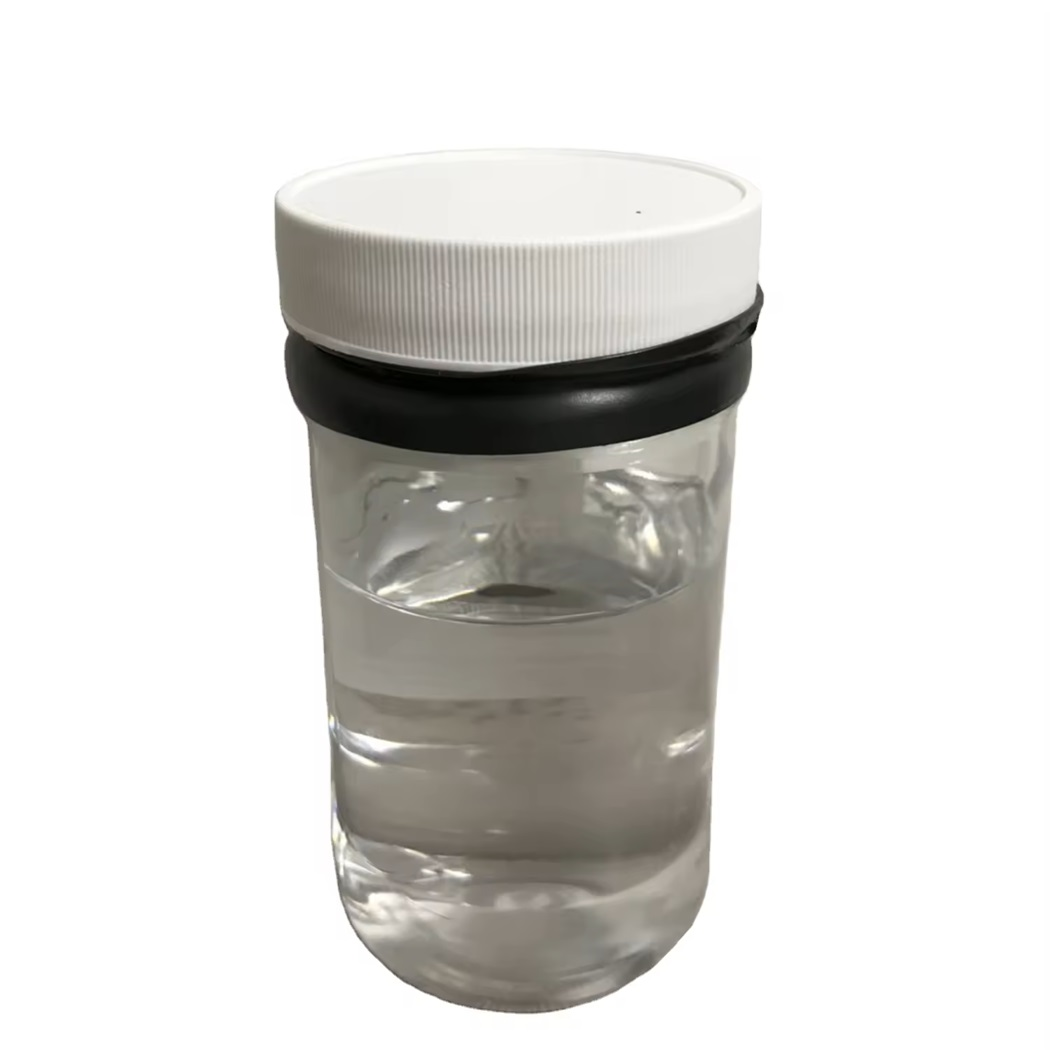
| Appearance (20°C) | Clear, colorless to pale yellow | Liquid |
| Odor | Strong, pungent, ammonia-like | Threshold ~0.5 ppm |
| Color (APHA / Pt-Co) | Max. 10 - 30 | <10 for fresh product; yellows over time |
| Odor Threshold | 0.5 - 1.0 | ppm (air) |
2. Thermal Properties
| Property | Value | Unit | Note / Condition |
|---|---|---|---|
| Melting Point / Freezing Point | -39 | °C | 234 K |
| Boiling Point | 206 - 209 | °C | at 1013 mbar |
| Boiling Range | 200 - 210 | °C | 95% distillation range |
| Flash Point (Open Cup) | 94 - 104 | °C | Cleveland |
| Auto-ignition Temperature | 325 - 350 | °C | |
| Decomposition Temperature | >250 | °C | Decomposition starts above 250°C |
| Critical Temperature | ~430 | °C | Calculated |
| Critical Pressure | ~3.8 | MPa | Calculated |
| Heat of Fusion | 25.1 | kJ/kg | |
| Heat of Vaporization | 450 | kJ/kg | at boiling point |
3. Density and Specific Gravity
| Property | Value | Unit | Temperature |
|---|---|---|---|
| Density (ρ) | 0.954 - 0.959 | g/cm³ | 20°C |
| 0.950 | g/cm³ | 25°C | |
| 0.920 | g/cm³ | 50°C | |
| Relative Density (Water=1) | 0.96 | - | 20°C (lighter than water) |
| Vapor Density (Air=1) | 3.56 | - | 20°C (heavier than air, vapor accumulation hazard) |
| Volumetric Expansion Coefficient | 0.0010 | 1/K | 20-50°C range |
4. Fluid Properties (Viscosity)
Viscosity is strongly dependent on temperature, critical for epoxy applications.
| Temperature (°C) | Dynamic Viscosity (mPa·s = cP) |
|---|---|
| 0°C | ~18 - 20 |
| 10°C | ~11 - 13 |
| 20°C | 7.0 - 7.5 (Typical 7.0) |
| 30°C | ~5.0 - 5.5 |
| 40°C | ~3.8 - 4.2 |
| 50°C | 3.0 - 3.5 (Typical 3.0) |
| 60°C | ~2.3 - 2.7 |
| 80°C | ~1.5 - 1.8 |
5. Vapor Pressure
| Temperature (°C) | Vapor Pressure (Pa) | Vapor Pressure (mmHg) |
|---|---|---|
| 20°C | 15 - 25 (Typical 20) | 0.11 - 0.19 |
| 25°C | 25 - 35 | 0.19 - 0.26 |
| 40°C | 90 - 120 | 0.68 - 0.90 |
| 60°C | 380 - 470 | 2.85 - 3.53 |
| 80°C | 1300 - 1600 | 9.75 - 12.0 |
| 100°C | 3900 - 4500 | 29.3 - 33.8 |
| 206°C | 101325 | 760 (Boiling point) |
6. Surface Tension
| Temperature (°C) | Surface Tension (mN/m = dyne/cm) |
|---|---|
| 20°C | 42.5 - 43.5 |
| 25°C | 41.8 - 42.5 |
| 40°C | 39.5 - 40.5 |
| 60°C | 37.0 - 38.0 |
7. Optical Properties
| Property | Value | Unit | Note |
|---|---|---|---|
| Refractive Index (n) | 1.4820 - 1.4860 | - | at 20°C, 589 nm (Sodium D line) |
| Refractive Index Temp. Coefficient | -0.00045 | 1/°C | dn/dT |
| Dielectric Constant (ε) | ~12.5 | - | at 20°C, 1 kHz |
8. Solubility and Hygroscopicity
| Property | Value / State | Description |
|---|---|---|
| Solubility in Water | Completely Miscible | Mixes with water in all proportions, exothermic reaction (heat released) |
| Organic Solvents | Completely Miscible | Methanol, ethanol, acetone, benzene, toluene, chloroform, ether |
| Aliphatic Hydrocarbons | Insoluble / Slightly Soluble | Insoluble in hexane, heptane, cyclohexane |
| Oils & Aliphatic Solvents | Insoluble | Mineral oils, white spirit |
| Hygroscopicity | High | Absorbs moisture from air. Water absorption can reach 5-10% |
| CO₂ Absorption | Very High | Reacts with atmospheric carbon dioxide to form solid carbamate salts |
9. Chemical Properties
9.1. Acid-Base Character (Dissociation Constants)
| Property | Value | Unit | Description |
|---|---|---|---|
| pKa₁ | 9.9 - 10.1 | - | Most basic primary amine (terminal) |
| pKa₂ | 9.0 - 9.2 | - | Second primary amine |
| pKa₃ | 4.0 - 4.5 | - | Secondary amine (least basic) |
| pH (1% aqueous solution) | 11.5 - 12.5 | - | Strongly alkaline |
| Neutralization Equivalent (Amine Value) | 1060 - 1090 | mg KOH/g | Theoretical: 1087 mg KOH/g |
| Basicity Constant (Kb) | ~10⁻⁴ - 10⁻⁵ | - | Strong organic base |
9.2. Reactivity and Chemical Stability
| Property | Description |
|---|---|
| Stability under Normal Conditions | Stable. However, slow oxidation with light and air exposure causes yellowing. |
| Reaction with CO₂ | Reacts readily with atmospheric CO₂ to form carbamate salts (R-NH-COO⁻ NH₃⁺-R). These are solid white precipitates. |
| Reaction with Acids | Strongly exothermic reaction (neutralization). Forms salts (e.g., DETA hydrochloride). |
| Reaction with Epoxy Groups | Ring-opening reaction. Occurs exothermically at room temperature. Forms a cross-linked polymer network. |
| Compatibility with Oxidizers | Incompatible. Violent reaction with strong oxidizers (nitric acid, peroxides, hypochlorite), risk of fire/explosion. |
| Effect on Copper and Alloys | Corrosive. Attacks copper, zinc, aluminum, and their alloys (brass, bronze). |
| Reaction with Aldehydes/Ketones | Forms Schiff bases (imines). |
| Thermal Decomposition | Starts to decompose >250°C. Decomposition products: ammonia, nitrogen oxides (NOx), toxic cyanide-containing compounds. |
9.3. Chemical Purity Parameters
| Parameter | Specification | Test Method |
|---|---|---|
| DETA Purity | ≥ 99.0 - 99.5% | Gas Chromatography (GC) |
| Water Content | ≤ 0.1 - 0.5% | Karl Fischer Titration |
| Piperazine | < 0.5% (typical) | GC |
| Aminoethylpiperazine (AEP) | < 0.5% (typical) | GC |
| Chloride (Cl⁻) | < 10 ppm | Ion Chromatography |
| Iron (Fe) | < 1 ppm | ICP-OES |
10. Critical Process Warnings
-
Exothermic Mixing: DETA releases significant heat when mixed with water or acids. Temperature control is essential when mixing large volumes. Reaction heat also occurs during mixing with epoxy, affecting the "pot life."
-
Carbamate Formation: DETA left in open containers will absorb CO₂ from the air, turning hazy over time and forming a white precipitate (carbamate) at the bottom. This precipitate causes surface defects in epoxy applications. Containers must be blanketed with nitrogen gas or sealed tightly to prevent air contact.
-
Hygroscopicity: DETA is hygroscopic. Water absorption upsets the stoichiometric balance when used with epoxy, leading to incomplete curing and reduced mechanical properties. It should be used shortly after the packaging is opened.
-
Corrosion: Causes corrosion when in contact with metals like copper, zinc, and aluminum. Stainless steel (316/304) or polyethylene should be used for storage and transfer equipment.
-
Viscosity Control: In winter, increased viscosity can make transfer difficult. Heating up to 30-40°C is acceptable, as vapor pressure remains low at this temperature.
, Dietilen Triamin, 111-40-0.jpg)