We unleash your business potential by maximize the business innovation.
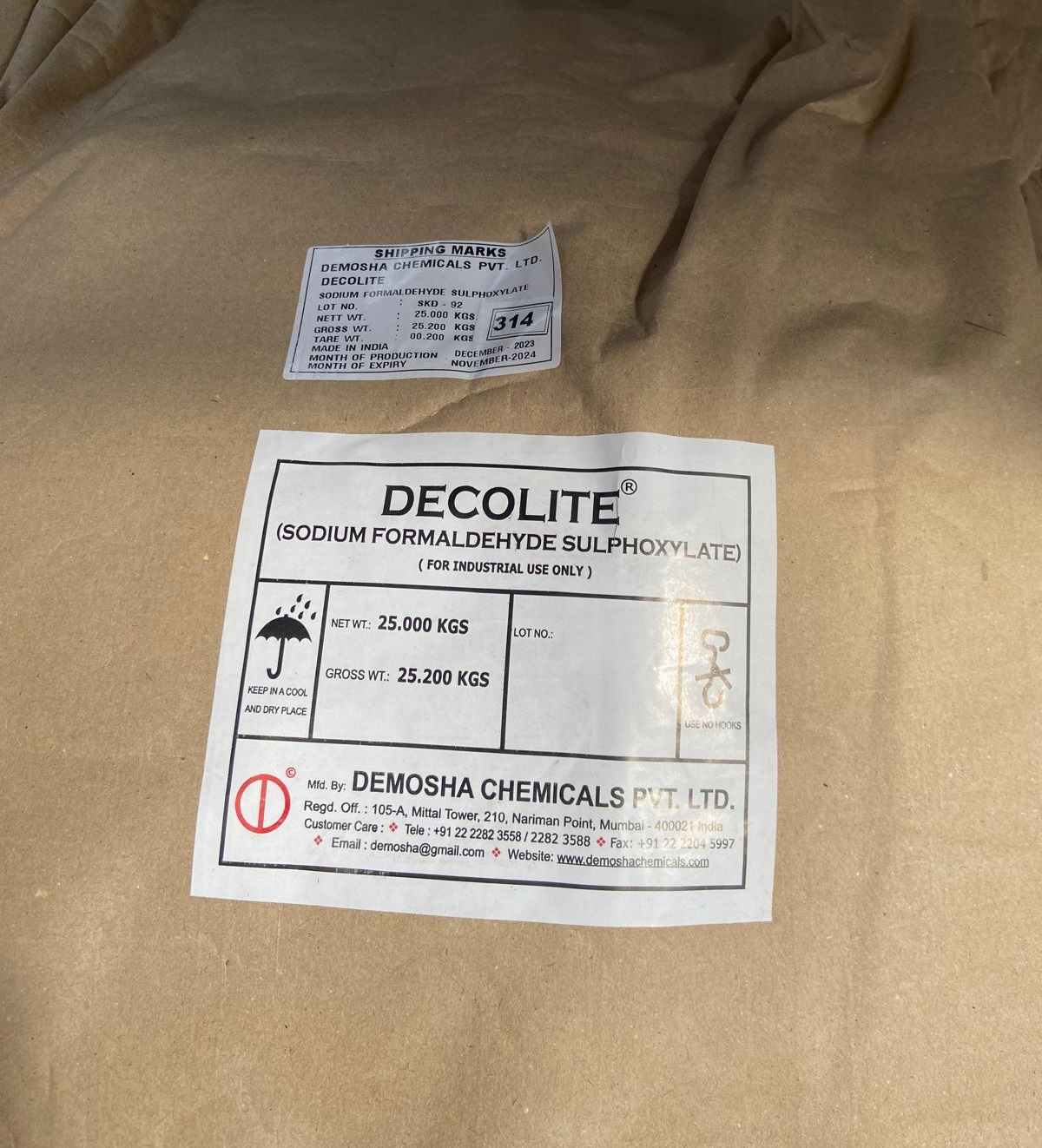
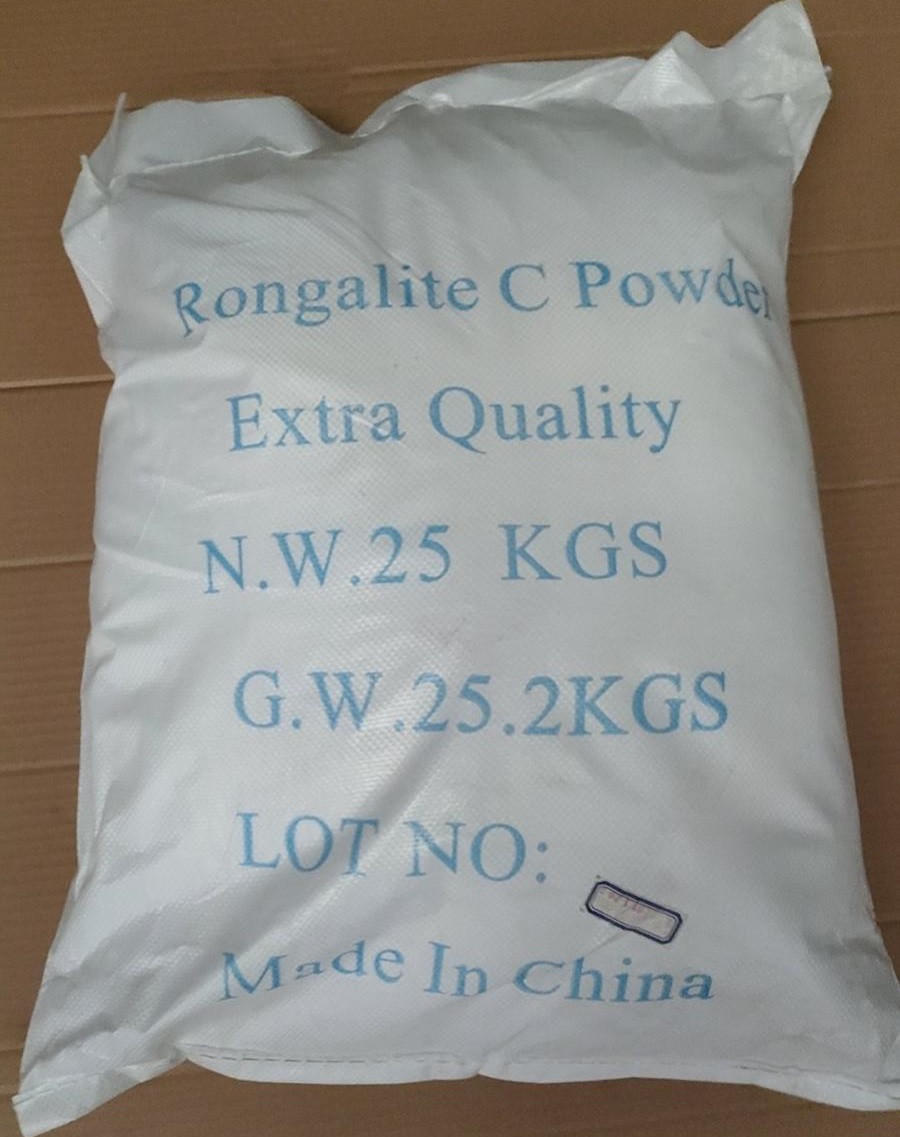
Send EmailSodium Formaldehyde Sulfoxylate, Sodium Hydroxymethanesulfinate, Acidic Reductant, Rongalit C, Decolite, Bruggolite E01, Bruggolite L40, SFS, 149-44-0, 6035-47-8
SODIUM FORMALDEHYDE SULFOXYLATE (RONGALIT C / BRUGGOLITE E01)
PRODUCT IDENTIFICATION INFORMATION
| Parameter | Information |
|---|---|
| Product Name | Sodium Formaldehyde Sulfoxylate |
| Chemical Name | Sodium Hydroxymethanesulfinate |
| Synonyms (Turkish) | Asidik Redüktan, Decolite, Bruggolit E01, Rongalite C, Sodyum Formaldehit Sülfoksilat, Sodyum Hidroksimetansülfinat |
| Synonyms (English) | Sodium Formaldehyde Sulfoxylate, Rongalit C, Bruggolite E01, Decolite, Sodium Hydroxymethanesulfinate, SFS |
| CAS Number | 149-44-0 / 6035-47-8 |
| Molecular Formula | NaHSO₂·CH₂O·2H₂O (Dihydrate); Anhydrous: NaHSO₂·CH₂O |
| Molecular Weight | 154.10 g/mol (Dihydrate) |
| Appearance | Hard, white solid (powder, granules, or liquid solution) |
| Odor | Heavy, pungent odor |
CHEMICAL STRUCTURE
Sodium Formaldehyde Sulfoxylate Structure:
        O
        ||
    H—C—SO₂Na
        |
        H
Structure Description:
-
Sodium salt of formaldehyde sulfoxylate.
-
Strong reducing agent.
-
White, crystalline solid.
-
Highly soluble in water.
-
Used as a reducing agent in textile, polymer, and chemical applications.
-
Available as powder, granules, or liquid solution.
SECTION 1: CHEMICAL IDENTITY AND DESCRIPTION
| Parameter | Information |
|---|---|
| Product Name | Sodium Formaldehyde Sulfoxylate |
| Chemical Name | Sodium Hydroxymethanesulfinate |
| Synonyms (Turkish) | Asidik Redüktan, Decolite, Bruggolit E01, Rongalite C, Sodyum Formaldehit Sülfoksilat, Sodyum Hidroksimetansülfinat |
| Synonyms (English) | Sodium Formaldehyde Sulfoxylate, Rongalit C, Bruggolite E01, Decolite, Sodium Hydroxymethanesulfinate, SFS |
| CAS Number | 149-44-0 / 6035-47-8 |
| Molecular Formula | NaHSO₂·CH₂O·2H₂O (Dihydrate); Anhydrous: NaHSO₂·CH₂O |
| Molecular Weight | 154.10 g/mol (Dihydrate) |
| Chemical Class | Reducing agent; Sulfoxylate; Redox activator |
| Source | Synthetic |
| Physical State (20°C) | Solid (powder, granules) |
| Odor | Heavy, pungent odor |
| Color | White |
SECTION 2: PHYSICAL AND CHEMICAL PROPERTIES
| Property | Value | Test Method / Note |
|---|---|---|
| Appearance | Hard, white solid (powder or granules) | Visual |
| Odor | Heavy, pungent odor | Olfactometric |
| Molecular Weight | 154.10 g/mol (Dihydrate) | Calculated |
| Melting Point | 63 – 64°C (some forms up to 120°C) | DSC |
| Solubility in Water (20°C) | ~50 g/L (soluble) | General Method |
| pH (1% Solution) | 9.5 – 10.5 (alkaline) | pH Meter |
| Flash Point | > 100°C | – |
| Stability | Stable; Incompatible with strong oxidizing agents | – |
| Thermal Decomposition Products | Sulfur oxides, sodium oxides (toxic fumes) | – |
| Reducing Properties | Strong reducing agent | – |
| Assay (Active Matter) | 98 – 100% (Powder); ~40% (Liquid) | Titrimetric |
| Loss on Drying | ≤ 0.5% | Gravimetric |
| Heavy Metals (as Pb) | ≤ 10 ppm | AAS / ICP |
SECTION 3: PRODUCT VARIANTS COMPARISON
| Parameter | Bruggolite E01 | Bruggolite L40 | Rongalit C |
|---|---|---|---|
| Form | Powder / Granule (dust-free, fast dissolving) | Stabilized aqueous liquid solution | Hard, white solid (lump or powder) |
| Chemical Structure | Sodium Hydroxymethanesulfinate | Sodium Hydroxymethanesulfinate (Aqueous Solution) | Sodium Formaldehyde Sulfoxylate (NaHSO₂·CH₂O·2H₂O) |
| Active Matter | ~98 – 100% | ~40% (diluted) | ~98 – 100% |
| Reactivity / pH | High; Optimal in acidic, stable in alkaline | High; Optimal in acidic | High; Active in acidic, stable in alkaline |
| Ease of Use | Very high (dust-free, fast dissolving) | Highest (ready to use) | Medium (dissolution and dust control required) |
| Shelf Life | 24 – 36 months (at 25°C, dry) | 12 – 24 months (at 25°C) | 24 months (varies by manufacturer) |
| Main Applications | Aqueous polymerization (main/post), textile (discharge printing, vat dyeing) | Aqueous polymerization (main/post), textile | Vat dyeing, discharge printing, pyrotechnics |
| Certifications | Available upon request | ISO 9001, ISO 14001, ISO 50001, OHSAS 18001, ILO-OSH, EcoVadis Gold | Textile and industrial standards |
SECTION 4: MECHANISM OF ACTION
| Property | Description |
|---|---|
| Reducing Agent | Powerful reducing agent in aqueous solutions; Donates electrons to other compounds; Reduces vat dyes to soluble leuco forms; Reduces metal ions and organic compounds. |
| Redox Activation | Acts as a redox activator in polymerization; Used with oxidizing agents (peroxides, persulfates) to initiate polymerization; Generates free radicals at lower temperatures; Accelerates polymerization reactions. |
| Vat Dye Reduction | Reduces insoluble vat dyes to soluble leuco forms; Allows dye penetration into textile fibers; Oxidation after dyeing regenerates the insoluble dye; Essential for vat and indigo dyeing. |
| Discharge Printing | Breaks down dye molecules in printed areas; Creates white or colored patterns on dyed fabrics; Used in discharge printing processes; Effective in acidic conditions. |
| Oxygen Scavenger | Removes dissolved oxygen from solutions; Prevents oxidation reactions; Used as an antioxidant; Maintains product stability. |
| Decomposition | Decomposes upon heating; Releases sulfur oxides and sodium oxides; Can produce toxic fumes under thermal stress. |
SECTION 5: PRODUCTION PROCESS
Industrial Production Method:
Process Flow:
Sodium Dithionite + Formaldehyde → Reaction → Sodium Formaldehyde Sulfoxylate → Purification → Crystallization → Drying → Milling → Final Product
Step-by-Step Description:
-
Raw Materials: Sodium dithionite (hydrosulfite) and formaldehyde are used as starting materials.
-
Reaction: Sodium dithionite reacts with formaldehyde in aqueous solution under controlled conditions.
-
Purification: The reaction mixture is purified to remove impurities.
-
Crystallization: Purified solution is crystallized to obtain solid product.
-
Drying: Crystals are dried to achieve the desired moisture content.
-
Milling: Dried product is milled to achieve the desired particle size (dust-free formulations available).
-
Final Product: Powder, granule, or liquid solution (L40) is produced.
Alternative Method: Reduction of sodium bisulfite with formaldehyde and zinc dust (historical method).
SECTION 6: FUNCTIONAL PROPERTIES
| Property | Description |
|---|---|
| Reducing Agent | Strong reducing agent for textile and chemical applications; Reduces vat dyes; Discharge printing agent; Polymerization activator. |
| Redox Activator | Activates redox polymerization systems; Used with peroxides and persulfates; Lowers activation temperature; Increases polymerization rate. |
| Discharge Agent | Used in discharge printing; Breaks down dye molecules; Creates patterns on dyed fabrics; Effective in acidic conditions. |
| Vat Dye Reducer | Reduces insoluble vat dyes to soluble leuco forms; Essential for vat and indigo dyeing; Improves dye uptake; Used in textile dyeing. |
| Oxygen Scavenger | Removes dissolved oxygen; Prevents oxidation; Used as antioxidant in various applications; Maintains product stability. |
| Polymerization Regulator | Controls polymer chain structure; Used as a catalyst regulator; Improves polymer quality; Reduces free monomer content. |
SECTION 7: MAIN APPLICATION AREAS
| Industry / Application | Function | Typical Use |
|---|---|---|
| Textile Industry | Vat dye reduction, discharge printing, stripping, softening | Vat dyeing (reduction to leuco form); Discharge printing (pattern creation); Stripping (excess dye removal); Softening; Dosage: 2-10 g/L (bath dependent). |
| Polymer & Plastics Industry | Redox activator, polymerization regulator, catalyst | Emulsion polymerization (redox-catalyzed systems); Post-polymerization (monomer reduction); Chain structure control; Dosage: 0.05-0.2% of total formulation (post-polymerization); 0.5-2% of monomer weight (polymerization). |
| Paints & Adhesives | Reducing agent, emulsifier, stabilizer | Paint raw materials (reducing agent); Food packaging adhesives (emulsifier, stability enhancer); Dosage: 0.5-3% of adhesive mixture; 1-5% of formulation. |
| Food & Packaging | Bleaching agent, catalyst, emulsifier | Sugar refining (bleaching); Soap production; Food contact rubber, cardboard, lid seals; Dosage: 0.5-2% (substrate dependent). |
| Pharmaceutical | Antioxidant, active ingredient | Mercury poisoning treatment (chelation therapy); Antioxidant in formulations; Dosage: Trace amounts to low percentages (formulation specific). |
| Rubber Industry | Redox activator, polymerization accelerator | Redox activation in rubber polymerization; Accelerates polymerization; Improves rubber properties; Dosage: 0.5-2% of monomer weight. |
SECTION 8: SAMPLE FORMULATIONS
Textile Discharge Printing Paste:
| Component | Amount |
|---|---|
| Thickener | 400 – 600 g |
| Water | 400 – 600 g |
| Sodium Formaldehyde Sulfoxylate (Rongalit C / Bruggolite E01) | 80 – 150 g |
| Auxiliary Chemicals (wetting agents, etc.) | 10 – 20 g |
Process: Apply discharge paste to pre-dyed fabric; Dry; Steam at 102-105°C for 6-10 minutes (wet steaming); Cool in air; Wash and finish.
Emulsion Polymerization Redox System:
| Component | Amount |
|---|---|
| Monomers | As required |
| Water | As required |
| Surfactants | As required |
| Oxidizer (Initiator: APS / Hydrogen Peroxide) | As required |
| Reducing Agent (Bruggolite E01) | 0.05 – 0.2% of total formulation |
Process: Load monomers and water into reactor; Heat and add stabilizers/surfactants; Add oxidizer (initiator); Add reducing agent (Bruggolite E01) in final stage or gradually; Reaction starts with mixing (exothermic polymerization); Results in high-quality polymer emulsion with low free monomer content.
SECTION 9: QUALITY SPECIFICATIONS
| Parameter | Bruggolite E01 (Powder) | Bruggolite L40 (Liquid) | Rongalit C (Powder) | Test Method |
|---|---|---|---|---|
| Appearance | White powder/granules | Clear to slightly yellowish liquid | White powder/lumps | Visual |
| Active Matter | ≥ 98.0% | ~40.0% | ≥ 98.0% | Titrimetric |
| pH (1% Solution) | 9.5 – 10.5 | 9.5 – 10.5 | 9.5 – 10.5 | pH Meter |
| Loss on Drying | ≤ 0.5% | – | ≤ 0.5% | Gravimetric |
| Density (20°C) | – | ~1.2 g/cm³ | – | ASTM D4052 |
| Heavy Metals (as Pb) | ≤ 10 ppm | ≤ 10 ppm | ≤ 10 ppm | AAS / ICP |
| Iron (Fe) | ≤ 5 ppm | ≤ 5 ppm | ≤ 10 ppm | AAS / ICP |
| Shelf Life | 24 – 36 months | 12 – 24 months | 24 months | – |
SECTION 10: TOXICOLOGICAL PROFILE
| Parameter | Value |
|---|---|
| Acute Oral Toxicity (LD50, Rat) | ~ 3,000 – 5,000 mg/kg (low to moderate toxicity) |
| Acute Dermal Toxicity | Low toxicity; May cause mild irritation |
| Skin Irritation | May cause mild irritation |
| Eye Irritation | May cause irritation |
| Inhalation Toxicity | May cause respiratory irritation (dust) |
| Chronic Toxicity | Low toxicity at normal use levels; Formaldehyde release possible upon decomposition |
| Carcinogenicity | Not classified as carcinogenic |
| Mutagenicity | Not mutagenic |
| Reproductive Toxicity | No reproductive toxicity at normal levels |
| Environmental Toxicity | Low toxicity; Biodegradable; Avoid release to waterways |
| Special Toxicity Note | May release formaldehyde upon decomposition; Use appropriate PPE; Avoid inhalation of dust; Avoid contact with strong oxidizing agents; Thermal decomposition releases toxic sulfur oxides. |
SECTION 11: GHS CLASSIFICATION AND LABELING
GHS Classification (in accordance with CLP and UN GHS):
| Hazard Class | Category | H-Statement |
|---|---|---|
| Skin Irritation | Category 2 | H315 |
| Eye Irritation | Category 2 | H319 |
| Specific Target Organ Toxicity (Single) | Category 3 | H335 |
Signal Word: WARNING
Hazard Pictograms: GHS07 (Exclamation Mark)
Hazard Statements (H-Codes):
| Code | Statement |
|---|---|
| H315 | Causes skin irritation |
| H319 | Causes serious eye irritation |
| H335 | May cause respiratory irritation |
NFPA 704 Hazard Classification:
| Health | Flammability | Reactivity | Special |
|---|---|---|---|
| 1 | 0 | 0 | - |
| (Slight health hazard) | (Non-flammable) | (Stable) | (None) |
SECTION 12: PRECAUTIONARY STATEMENTS (P-CODES)
| Code | Statement |
|---|---|
| P264 | Wash hands thoroughly after handling |
| P271 | Use only outdoors or in a well-ventilated area |
| P280 | Wear protective gloves/protective clothing/eye protection/face protection |
| P302+P352 | IF ON SKIN: Wash with plenty of soap and water |
| P304+P340 | IF INHALED: Remove person to fresh air and keep comfortable for breathing |
| P305+P351+P338 | IF IN EYES: Rinse cautiously with water for several minutes. Remove contact lenses if present and continue rinsing |
| P332+P313 | If skin irritation occurs: Get medical advice/attention |
| P337+P313 | If eye irritation persists: Get medical advice/attention |
| P362+P364 | Take off contaminated clothing and wash it before reuse |
| P403+P233 | Store in a well-ventilated place. Keep container tightly closed |
| P501 | Dispose of contents/container in accordance with local/regional/national/international regulations |
SECTION 13: FIRST AID MEASURES
| Exposure Route | Action to Take |
|---|---|
| Inhalation | Remove to fresh air immediately. If respiratory irritation develops, seek medical attention. |
| Skin Contact | Wash with plenty of soap and water. Remove contaminated clothing. If irritation persists, get medical attention. |
| Eye Contact | Rinse immediately with plenty of water for at least 15 minutes. Keep eyelids open. Remove contact lenses if present. If irritation persists, seek medical attention. |
| Ingestion | Rinse mouth. Drink plenty of water. Seek medical attention if large quantities are ingested or if feeling unwell. |
SECTION 14: FIREFIGHTING MEASURES
| Parameter | Information |
|---|---|
| Fire Hazard | Non-flammable organic material. May release toxic fumes (sulfur oxides) upon heating. |
| Hazards Arising from Fire | Thermal decomposition produces sulfur oxides (SOx), sodium oxides, and irritating fumes. |
| Suitable Extinguishing Media | Water spray, CO₂, dry chemical powder, foam. |
| Unsuitable Extinguishing Media | Water jet (may spread dust) |
| Special Protective Equipment | Self-contained breathing apparatus (SCBA), full protective clothing. |
| Special Precautions | Prevent dust from entering sewers and waterways. Avoid dust cloud formation. |
SECTION 15: STORAGE AND SHELF LIFE
| Parameter | Information |
|---|---|
| Storage Conditions | Store in a cool, dry, well-ventilated area; PROTECT FROM LIGHT, HEAT, and MOISTURE; Keep away from direct sunlight and strong oxidizing agents. |
| Container Requirements | Tightly closed, moisture-proof containers (PE-lined bags, HDPE containers). |
| Materials to Protect From | Light, heat, moisture, strong oxidizing agents |
| Shelf Life | 24 – 36 months (Bruggolite E01); 12 – 24 months (Bruggolite L40); 24 months (Rongalit C). |
| Stability Note | Stable under recommended storage conditions; May decompose at high temperatures; Protect from moisture and heat. |
| Special Storage Requirements | Store in a dark, cool, dry place; Avoid exposure to air and moisture; Opened containers must be resealed immediately. |
SECTION 16: PACKAGING OPTIONS
| Packaging Type | Quantity | Material |
|---|---|---|
| PE-Lined Paper Bag | 10 kg, 20 kg, 25 kg | PE-lined kraft paper bag (moisture-proof) |
| Plastic Bag | 5 kg, 10 kg, 25 kg | PE bag (inner-lined, sealed, moisture-proof) |
| Fiber Drum | 20 kg, 25 kg | PE-lined fiberboard drum |
| Plastic Drum | 25 kg, 50 kg | HDPE / Polypropylene (moisture-proof) |
| FIBC / Big Bag | 500 kg, 1000 kg | PE-lined, moisture-resistant PP woven bag |
| IBC Container (Liquid L40) | 500 L, 1000 L | HDPE or stainless steel IBC |
SECTION 17: TRANSPORT INFORMATION
| Parameter | Information |
|---|---|
| UN Number | Not regulated (non-hazardous) |
| Hazard Class | Not applicable |
| Packing Group | Not applicable |
| ADR/RID | Not regulated |
| IMDG Code | Not regulated (non-hazardous) |
| IATA (Air) | Not regulated (non-hazardous) |
| Marine Pollutant | No |
| Transport Temperature | Ambient temperature; Protect from moisture and heat. |
SECTION 18: REGULATORY STATUS
| Region / Authority | Status |
|---|---|
| European Union | REACH registered; Approved for industrial and textile use. |
| USA (TSCA) | Listed (TSCA Inventory) |
| USA (FDA) | Approved for food contact applications (formaldehyde-free versions). |
| Turkey | Approved for industrial use; KKDIK regulation compliance required. |
| IARC | Not classified (non-carcinogenic) |
| NTP | Not listed |
| OSHA | Regulated as nuisance dust/irritant |
| California (Prop 65) | Not listed |
| Halal | Yes (with certification) |
| Kosher | Yes (with certification) |
| Vegan | Yes |
SECTION 19: OTHER NAMES AND SYNONYMS
| Type | Name |
|---|---|
| Turkish Names | Asidik Redüktan, Decolite, Bruggolit E01, Rongalite C, Sodyum Formaldehit Sülfoksilat, Sodyum Hidroksimetansülfinat |
| English Names | Sodium Formaldehyde Sulfoxylate, Rongalit C, Bruggolite E01, Decolite, Sodium Hydroxymethanesulfinate, SFS |
| CAS Number | 149-44-0 / 6035-47-8 |
| HS Code | 2831.10 |
SECTION 20: SUMMARY TABLE
| Parameter | Value |
|---|---|
| Product | Sodium Formaldehyde Sulfoxylate (Rongalit C / Bruggolite E01) |
| CAS Number | 149-44-0 / 6035-47-8 |
| Molecular Formula | NaHSO₂·CH₂O·2H₂O |
| Molecular Weight | 154.10 g/mol |
| Appearance | Hard, white solid (powder or granules) |
| pH (1% Solution) | 9.5 – 10.5 |
| Solubility | ~50 g/L in water (20°C) |
| Primary Functions | Reducing agent, redox activator, discharge agent, vat dye reducer |
| Main Application Areas | Textile, polymer, paints, adhesives, food packaging, pharmaceutical |
| Shelf Life | 24 – 36 months |
| GHS Signal Word | WARNING |
| UN Number | Not regulated |
| Special Properties | Strong reducing agent; Dust-free formulations; Fast dissolving; Wide pH compatibility; Formaldehyde-free options available; FDA approved for food contact. |
SECTION 21: CRITICAL WARNINGS AND BEST PRACTICES
CRITICAL WARNINGS:
-
REDUCING AGENT: Strong reducing agent; Reacts with oxidizing agents (fire/explosion hazard).
-
MAY RELEASE FORMALDEHYDE: May release formaldehyde upon decomposition; Use in well-ventilated areas.
-
THERMAL DECOMPOSITION: Decomposes at high temperatures; Releases toxic sulfur oxides (SOx).
-
HYGROSCOPIC: Absorbs moisture from air; Store in tightly closed containers.
-
DUST HAZARD: May cause respiratory irritation (H335); Use dust masks when handling powder.
-
SKIN AND EYE IRRITATION: Causes skin and eye irritation (H315, H319); Use PPE.
-
INCOMPATIBILITY: Incompatible with strong oxidizing agents.
-
FORMALDEHYDE-FREE OPTIONS: Formaldehyde-free versions available (Bruggolite FF6 M) for sensitive applications.
-
FOOD CONTACT: FDA approved for food contact applications (formaldehyde-free versions).
BEST PRACTICE RECOMMENDATIONS:
-
Textile Industry (Discharge Printing): Use as discharge agent; Dosage: 80-150 g/kg paste; Combine with thickeners; Steam at 102-105°C for 6-10 minutes; Wash and finish after steaming.
-
Textile Industry (Vat Dyeing): Use as vat dye reducer; Dosage: 2-10 g/L; Reduce dyes to leuco form; Dye fabrics; Oxidize after dyeing.
-
Polymer Industry: Use as redox activator and polymerization regulator; Dosage: 0.05-0.2% of total formulation (post-polymerization); 0.5-2% of monomer weight (polymerization); Use with oxidizing agents (peroxides, persulfates).
-
Adhesives: Use as emulsifier and stabilizer; Dosage: 0.5-3% of adhesive mixture; Improves stability and performance.
-
Handling: Use in well-ventilated areas; Avoid dust formation; Use dust masks (N95/FFP2) when handling powder; Use gloves and safety goggles; Avoid contact with oxidizing agents.
-
Personal Protective Equipment: Dust mask (N95/FFP2) if dust is generated, safety goggles, chemical-resistant gloves, protective clothing.
-
Hygiene: Wash hands thoroughly after handling; Do not eat, drink, or smoke while using; Remove contaminated clothing and wash before reuse.
-
Storage: Store in tightly closed, moisture-proof containers; Store in cool, dry, well-ventilated area; Protect from moisture and heat; Keep away from oxidizing agents; Opened containers must be resealed immediately; Shelf life: 24-36 months under proper conditions.
-
Spill Management: Sweep or vacuum (HEPA) and place in suitable sealed container; Avoid dust formation; Do not allow entry into drains or waterways.
-
Disposal: Dispose of in accordance with local, regional, and national regulations; Non-hazardous waste; Can be incinerated in compliance with regulations.
DETECTION METHODS:
| Method | Description | Advantages | Disadvantages |
|---|---|---|---|
| Titrimetric | Iodometric titration | Simple, accurate, standard method | Requires careful technique |
| HPLC | Quantitative analysis | High sensitivity, accurate | High cost, requires expertise |
| UV-Vis Spectrophotometry | Colorimetric determination | Rapid, moderate cost | Requires calibration |
| FTIR | Functional group identification | Fast, non-destructive | Requires reference spectra |
| pH Meter | pH of solution | Simple, rapid | Indicative only |
SODIUM FORMALDEHYDE SULFOXYLATE vs ALTERNATIVES COMPARISON:
| Product | Chemical Name / E Code | Application | Strength | Weakness | Status |
|---|---|---|---|---|---|
| Sodium Formaldehyde Sulfoxylate | Rongalit C / Bruggolite E01 | Textile, polymer, adhesives | Strong reducing, dust-free options | May release formaldehyde | Widely approved |
| Bruggolite FF6 M | Formaldehyde-free reducing agent | Polymer, textile | Formaldehyde-free, stronger reducing | Higher cost | Widely approved |
| Ascorbic Acid (Vitamin C) | C₆H₈O₆ | Polymer, food | Natural, food compatible | Slower reaction, higher dosage | Widely approved |
| Sodium Dithionite | Na₂S₂O₄ | Textile, bleaching | Strong reducing | Unstable, flammable dust | Widely used |
| Reducing Agent TP 1646 | Aqueous solution | Emulsion polymerization | New generation, odorless, high stability | Requires dilution | Limited |
LEGAL DISCLAIMER:
The information provided in this document is based on our current knowledge and experience and is presented in good faith. However, as all conditions of use are beyond our control, it does not constitute a binding specification or warranty. This Technical Data Sheet is for informational purposes only. Users are responsible for testing the suitability for their own applications and for complying with all local, regional, and national regulations. For complete safety, storage, use, handling, waste, and regulatory compliance information, please refer to the official Safety Data Sheet (SDS/MSDS) provided by the manufacturer/supplier. Sodium formaldehyde sulfoxylate is a reducing agent that may release formaldehyde upon decomposition; use appropriate safety measures and ventilation.