We unleash your business potential by maximize the business innovation.
Send EmailEthylhexanol, 2-Ethylhexyl Alcohol, 2- Ethyl Hexanol, Isooctanol, Octyl Alcohol, 2-EH, 104-76-7
2-ETHYLHEXANOL (2-EH)
2-Ethylhexanol / 2-Ethyl-1-hexanol / 2-Ethylhexyl Alcohol / Isooctanol / Octyl Alcohol / 2-EH
CAS Number: 104-76-7
EC Number: 203-234-3
SECTION 1: PRODUCT IDENTIFICATION AND CHEMICAL IDENTITY
| Parameter | Information |
|---|---|
| Product Name | 2-Ethylhexanol |
| Chemical Name (IUPAC) | 2-Ethylhexan-1-ol |
| Other Names | 2-Ethyl-1-hexanol, 2-Ethylhexyl Alcohol, Isooctanol (for technical mixtures), Octyl Alcohol (general), 2-EH |
| CAS Number | 104-76-7 |
| EC Number (EINECS) | 203-234-3 |
| Molecular Formula | C₈H₁₈O / CH₃(CH₂)₃CH(C₂H₅)CH₂OH |
| Molecular Weight | 130.23 g/mol |
| Chemical Class | Branched primary alcohol |
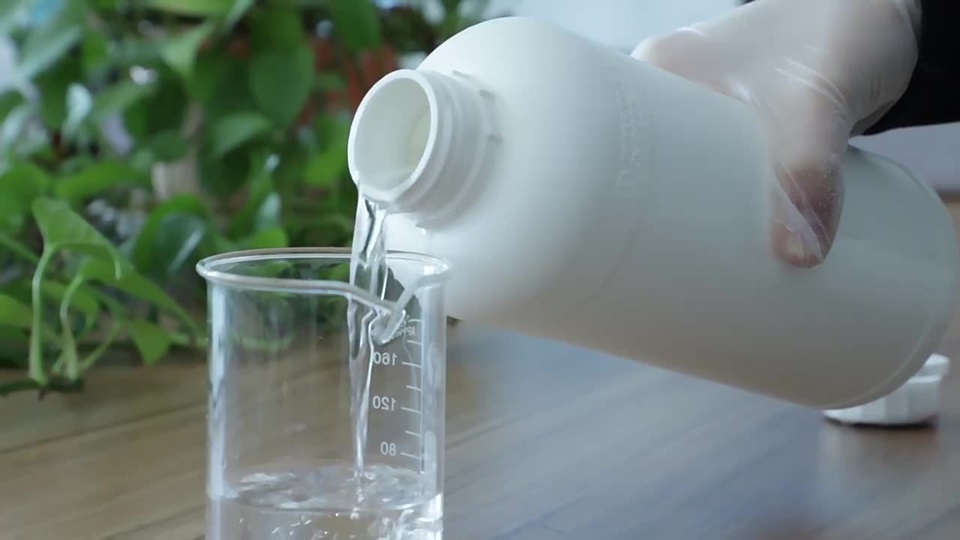
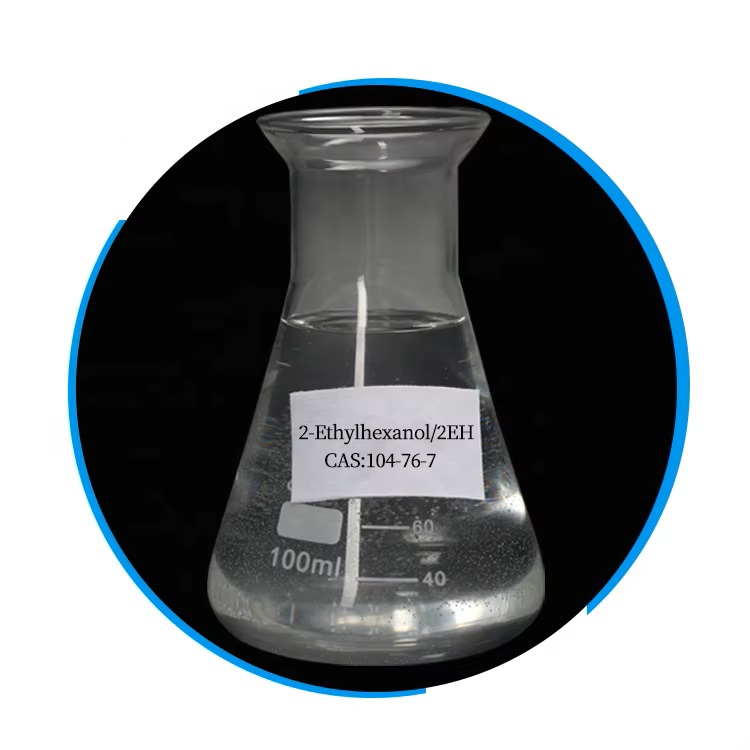
| Appearance | Clear, colorless liquid |
| Odor | Characteristic, slight oily odor |
| Physical State (20°C) | Liquid |
2-Ethylhexanol is a branched-chain primary alcohol. It is found naturally in trace amounts in plants such as grapes and honeysuckle, and has also been detected in yeast metabolism. The technical product is typically >99% purity. It serves as a key intermediate in the production of plasticizers (DOP, DOTP, DOA, DOZ), 2-ethylhexyl acrylate, UV absorbers (octocrylene, octyl methoxycinnamate), surfactants, and lubricant additives.
SECTION 2: SYNONYMS AND OTHER NAMES
| Type | Name |
|---|---|
| Common Names | 2-Ethylhexanol, 2-EH, 2-Ethyl-1-hexanol, 2-Ethylhexyl Alcohol |
| Trade/Technical Names | Isooctanol (isomer mixtures in technical grades), Octyl Alcohol (general) |
| CAS Number | 104-76-7 |
| EC Number | 203-234-3 |
| HS Code | 2905.16 |
| RTECS | MP0350000 |
SECTION 3: CHEMICAL STRUCTURE
3.1. Molecular Structure
2-Ethylhexanol is a branched primary alcohol with the hydroxyl group (-OH) attached to the terminal carbon of a branched C8 chain.
Structural Formula:
        CH₂OH
         |
   CH₃ - CH₂ - CH₂ - CH₂ - CH - CH₂ - CH₃
                        |
                       CH₃
Simplified Representation:
CH₃(CH₂)₃CH(C₂H₅)CH₂OH
3.2. Molecular Formula
C₈H₁₈O
3.3. Molecular Weight
130.23 g/mol
3.4. Key Structural Features
| Feature | Description |
|---|---|
| Functional Group | Primary alcohol (-OH) |
| Structure | Branched C8 chain (ethyl branch at C2) |
| Chiral Center | Carbon 2 (exists as R and S enantiomers) |
| Branched Nature | Provides lower viscosity and better low-temperature properties |
| Hydrophobicity | Long hydrocarbon chain provides oil solubility |
SECTION 4: PHYSICAL AND CHEMICAL PROPERTIES
| Property | Value |
|---|---|
| Appearance | Clear, colorless liquid |
| Odor | Characteristic, slight oily odor |
| Molecular Formula | C₈H₁₈O |
| Molecular Weight | 130.23 g/mol |
| Density (20°C) | ~0.833 g/cm³ |
| Melting Point | -76 °C (very low) |
| Boiling Point | 184 – 185 °C (at 760 mmHg) |
| Flash Point (Closed Cup) | 73 °C |
| Autoignition Temperature | ~290 °C |
| Vapor Pressure (20°C) | 0.1 mmHg (13 Pa) |
| Viscosity (20°C) | ~9 – 10 mPa·s |
| Water Solubility (20°C) | 0.07 g/100 mL (practically insoluble) |
| Solubility in Organic Solvents | Miscible with alcohols, ethers, ketones, aromatic hydrocarbons |
| pH | Neutral (no acidic/basic function) |
| Volatility (Evaporation Rate) | Low (butyl acetate = 1; 2-EH ~0.01) |
| Refractive Index (n20/D) | ~1.431 |
| Surface Tension (20°C) | ~30 mN/m |
| Log P (Octanol/Water) | ~2.7 |
SECTION 5: SOLUBILITY PROFILE
| Solvent | Solubility | Conditions |
|---|---|---|
| Water | Very low (0.07 g/100 mL) | 20°C |
| Alcohols | Miscible | All proportions |
| Ethers | Miscible | All proportions |
| Ketones | Miscible | All proportions |
| Aromatic Hydrocarbons | Miscible | All proportions |
| Aliphatic Hydrocarbons | Miscible | All proportions |
| Esters | Miscible | All proportions |
SECTION 6: CHEMICAL PROPERTIES AND REACTIVITY
| Property | Description |
|---|---|
| Chemical Character | Weakly acidic (primary alcohol) |
| Stability | Stable under normal storage conditions |
| Reactivity | Reacts with acids to form esters; with isocyanates to form urethanes |
| Esterification | Reacts with carboxylic acids to form esters (plasticizers) |
| Oxidation | Can be oxidized to 2-ethylhexanoic acid |
| Dehydration | Can be dehydrated to form 2-ethylhexene at high temperatures |
| Incompatible Materials | Strong oxidizers, strong acids, strong bases |
SECTION 7: REACTION EQUATIONS
7.1. Esterification (Plasticizer Production)
2-EH + R-COOH → 2-EH Ester + H₂O
7.2. DOP (Di-2-Ethylhexyl Phthalate) Synthesis
Phthalic Anhydride + 2 (2-EH) → DOP + H₂O
7.3. Oxidation to 2-Ethylhexanoic Acid
2-EH + [O] → 2-Ethylhexanoic Acid + H₂O
7.4. Dehydration
2-EH → 2-Ethylhexene + H₂O (at high temperature)
SECTION 8: PRODUCTION METHOD
2-Ethylhexanol is produced industrially by the aldol condensation of n-butyraldehyde followed by hydrogenation.
| Stage | Process | Description |
|---|---|---|
| 1 | Aldol Condensation | n-Butyraldehyde undergoes aldol condensation to form 2-ethylhexenal. |
| 2 | Hydrogenation | 2-Ethylhexenal is hydrogenated to 2-ethylhexanol in the presence of a catalyst (nickel or copper chromite). |
| 3 | Purification | The product is purified by distillation. |
| 4 | Stabilization | Antioxidants may be added to prevent oxidation during storage. |
Overall Reaction:
2 n-Butyraldehyde → 2-Ethylhexenal → 2-Ethylhexanol
SECTION 9: FUNCTIONAL PROPERTIES
| Property | Description |
|---|---|
| Plasticizer Alcohol | Esterifies with dibasic acids (phthalic, adipic, azelaic) to form high-performance plasticizers (DOP, DOA, DOZ, DOTP). |
| High Boiling Solvent | Provides long open time with low evaporation rate for resins, waxes, and coatings. |
| Defoamer / Antifoam Agent | Effective foam control agent, especially in drilling fluids and industrial processes. |
| Intermediate | Key raw material for 2-ethylhexyl acrylate, UV absorbers (octocrylene, octyl methoxycinnamate), surfactants, and lubricant additives. |
| Extraction Solvent | Used in metal separation and purification processes. |
| Low Toxicity & Non-HAP | Not listed as a Hazardous Air Pollutant (HAP); suitable for indoor applications. |
SECTION 10: APPLICATIONS AND INDUSTRIAL USES
10.1. Plasticizer Production (Largest Application)
| Application | Description |
|---|---|
| DOP (DEHP) | Di-2-ethylhexyl phthalate – general-purpose PVC plasticizer |
| DOTP | Di-2-ethylhexyl terephthalate – non-phthalate plasticizer |
| DOA (DEHA) | Di-2-ethylhexyl adipate – low-temperature plasticizer |
| DOZ (DEHZ) | Di-2-ethylhexyl azelate – low-temperature plasticizer |
| TOTM | Tri-2-ethylhexyl trimellitate – high-performance plasticizer |
10.2. PVC and Polymers
| Application | Function |
|---|---|
| Plasticized PVC | Provides flexibility to PVC through plasticizers (30-60 phr) |
| Cable Insulation | Low-temperature flexibility |
| Films and Sheets | Flexibility and durability |
| Flooring | Wear resistance and flexibility |
10.3. Drilling and Oil Field
| Application | Function |
|---|---|
| Defoamer | Foam control in drilling fluids (0.1-1.0%) |
| Low Volatility Solvent | Solvent for drilling fluid additives |
10.4. Paints, Varnishes, and Coatings
| Application | Function |
|---|---|
| Slow Evaporating Solvent | Improves flow and gloss (5-15% of total solvent) |
| Leveling Agent | Reduces brush marks and improves surface smoothness |
10.5. Inks and Printing
| Application | Function |
|---|---|
| Retarder Solvent | Slows drying in printing inks (2-8%) |
10.6. Cleaning Products
| Application | Function |
|---|---|
| Low Volatility Solvent | Oil and grease remover (3-10%) |
10.7. Cosmetics and Sunscreens
| Application | Function |
|---|---|
| UV Absorber Intermediate | Raw material for octocrylene and octyl methoxycinnamate |
| Ester Derivatives | Used in sunscreen formulations |
10.8. Metal Extraction
| Application | Function |
|---|---|
| Organic Phase Modifier | Purification of copper, zinc, and other metals (5-20%) |
10.9. Agriculture
| Application | Function |
|---|---|
| Emulsifier and Solvent Additive | Crop protection formulations (5-15%) |
10.10. Other Applications
| Application | Function |
|---|---|
| 2-Ethylhexyl Acrylate | Raw material for acrylate polymers |
| Surfactants | Raw material for anionic and nonionic surfactants |
| Lubricant Additives | Raw material for lubricant esters |
| Flotation Agents | Mining applications |
SECTION 11: EXAMPLE FORMULATIONS
11.1. DOP (Di-2-Ethylhexyl Phthalate) Synthesis
| Component | Quantity | Function |
|---|---|---|
| Phthalic Anhydride | 1.0 mol | Acid component |
| 2-Ethylhexanol | 2.2 mol (slight excess) | Alcohol component |
| Catalyst (Tetraalkyl Titanate) | 0.1-0.3% | Catalyst |
Process: React at 180-220°C, continuously removing water. Recover excess alcohol under vacuum.
11.2. Drilling Defoamer Concentrate
| Component | % Weight | Function |
|---|---|---|
| 2-Ethylhexanol | 60% | Active defoaming agent |
| Hydrophobic Silica | 10% | Surface active |
| Surfactant | 5% | Dispersant |
| Mineral Oil (Carrier) | 25% | Carrier |
Dosage: 0.1-0.5 L/m³ of drilling mud.
11.3. Slow-Drying Alkyd Varnish
| Component | Quantity | Function |
|---|---|---|
| Long Oil Alkyd Resin (70%) | 50 kg | Binder |
| Mineral Spirits | 15 kg | Solvent |
| 2-Ethylhexanol | 10 kg | Flow and gloss improver |
| Xylene | 25 kg | Solvent |
Benefit: 2-EH reduces brush marks and smooths the surface.
SECTION 12: ALTERNATIVES AND COMPARISON
| Alternative | Advantages / Disadvantages |
|---|---|
| n-Octanol (1-Octanol) | Higher melting point (-16°C) and less branching; ester low-temperature performance is worse than 2-EH. |
| Isooctanol (Mixture) | Similar properties in technical grades, but plasticizer performance may differ slightly. |
| 2-Propylheptanol (2-PH) | Higher molecular weight plasticizers (DPHP); much lower volatility, but slightly higher cost. |
| Butyl Diglycol (BDG) | Slower evaporation, water miscible; but does not form esters, not a plasticizer raw material. |
SECTION 13: GHS CLASSIFICATION
| Hazard Class | Category | H-Statement |
|---|---|---|
| Skin Irritation | Category 2 | H315 |
| Eye Irritation | Category 2 | H319 |
| Specific Target Organ Toxicity - SE | Category 3 | H335 |
Signal Word: WARNING
Hazard Pictograms: GHS07 (Exclamation Mark)
Hazard Statements (H-Codes):
| Code | Statement |
|---|---|
| H315 | Causes skin irritation. |
| H319 | Causes serious eye irritation. |
| H335 | May cause respiratory irritation. |
Precautionary Statements (P-Codes):
| Code | Statement |
|---|---|
| P261 | Avoid breathing dust/fume/gas/mist/vapors/spray. |
| P264 | Wash hands thoroughly after handling. |
| P271 | Use only outdoors or in a well-ventilated area. |
| P280 | Wear protective gloves/protective clothing/eye protection/face protection. |
| P302+P352 | IF ON SKIN: Wash with plenty of soap and water. |
| P304+P340 | IF INHALED: Remove person to fresh air and keep comfortable for breathing. |
| P305+P351+P338 | IF IN EYES: Rinse cautiously with water for several minutes. Remove contact lenses if present. |
| P312 | Call a POISON CENTER/doctor if you feel unwell. |
| P332+P313 | If skin irritation occurs: Get medical advice/attention. |
| P337+P313 | If eye irritation persists: Get medical advice/attention. |
| P362 | Take off contaminated clothing and wash it before reuse. |
| P403+P233 | Store in a well-ventilated place. Keep container tightly closed. |
| P405 | Store locked up. |
| P501 | Dispose of contents/container in accordance with local regulations. |
SECTION 14: FIRST AID MEASURES
| Route of Exposure | Action to Be Taken |
|---|---|
| Inhalation | Move to fresh air. If respiratory irritation persists, seek medical attention. |
| Skin Contact | Wash with plenty of soap and water. Remove contaminated clothing. If irritation persists, consult a physician. |
| Eye Contact | Rinse thoroughly with plenty of water for at least 15 minutes. Remove contact lenses. Seek medical attention. |
| Ingestion | Rinse mouth with water. Drink plenty of water. Do not induce vomiting. If large amount is swallowed, seek medical attention. |
SECTION 15: FIRE-FIGHTING MEASURES
| Parameter | Information |
|---|---|
| Fire Hazard | Combustible liquid (Flash point 73°C). |
| Suitable Extinguishing Media | Water spray, CO₂, dry chemical powder, alcohol-resistant foam. |
| Special Hazards | Thermal decomposition produces toxic fumes including carbon monoxide and carbon dioxide. |
| Protective Equipment | Self-contained breathing apparatus (SCBA), full protective clothing. |
SECTION 16: ACCIDENTAL RELEASE MEASURES
| Parameter | Information |
|---|---|
| Personal Protection | Protective goggles, chemical-resistant gloves, coverall. |
| Ventilation | Increase ventilation; use local exhaust in confined spaces. |
| Containment | Absorb with inert material (sand, vermiculite). |
| Cleaning Methods | Collect with absorbent material. Avoid washing with water (spread). |
| Environmental Precautions | Prevent entry into drains, sewers, and water bodies. |
| Waste Disposal | Dispose of in accordance with local regulations. |
SECTION 17: STORAGE AND SHELF LIFE
| Parameter | Information |
|---|---|
| Storage Conditions | Store in a cool, dry, and well-ventilated area at room temperature (15-25°C). |
| Temperature | Below 30°C. |
| Container Requirements | Keep tightly closed in original packaging. Stainless steel or HDPE containers recommended. |
| Materials to Avoid | Strong oxidizers, strong acids, strong bases. |
| Shelf Life | 24 months (in unopened original packaging under proper storage). |
| Stability Note | Not hygroscopic; stable under normal storage conditions. |
SECTION 18: PACKAGING OPTIONS
| Packaging Type | Quantity | Material |
|---|---|---|
| Steel Drum | 200 L | Carbon steel / Stainless steel |
| IBC Tank | 1000 L | Stainless steel / HDPE |
| Bulk Tanker | 20 – 30 tons | Stainless steel |
| Small Containers | 1 L, 5 L | HDPE / Aluminum |
SECTION 19: TRANSPORT INFORMATION
| Parameter | Information |
|---|---|
| UN Number | Not applicable (not classified as dangerous goods) |
| Hazard Class | Not classified as hazardous for transport |
| Packing Group | Not applicable |
| ADR/RID | Not regulated |
| IMDG Code | Not regulated |
| IATA (Air) | Not regulated |
| Marine Pollutant | No |
| Transport Temperature | Ambient temperature; protect from moisture. |
SECTION 20: REGULATORY INFORMATION
| Region / Authority | Status |
|---|---|
| European Union (REACH) | Registered; industrial chemical. |
| USA (TSCA) | Listed. |
| Turkey (KKDIK) | Registered under chemical registration regulations. |
| Hazardous Air Pollutant (HAP) | NOT LISTED (significant advantage). |
| EINECS | 203-234-3 |
SECTION 21: ENVIRONMENTAL INFORMATION
| Parameter | Information |
|---|---|
| Aquatic Toxicity | Low toxicity to aquatic organisms. |
| Biodegradability | Readily biodegradable (OECD 301). |
| Bioaccumulation | Low potential (Log P ~2.7). |
| Mobility in Soil | Moderate to high. |
| Vapor Behavior | Low vapor pressure; does not readily evaporate. |
| Surface Spreading | May spread on water surface; do not discharge into sewers or watercourses. |
| Waste Disposal | Incineration or disposal in accordance with local regulations. |
SECTION 22: FREQUENTLY ASKED QUESTIONS (FAQ)
Q1: Are 2-ethylhexanol and isooctanol the same?
A: Isooctanol generally refers to a mixture of branched C8 alcohols. Commercial isooctanol contains 2-ethylhexanol as the main component but may contain small amounts of other isomers. Technical grades can be considered equivalent.
Q2: What should I do if 2-EH gets into my eyes?
A: Immediately rinse with plenty of water for at least 15 minutes and seek medical attention. It has high eye irritation potential.
Q3: Which plasticizers are produced using 2-EH?
A: Mainly DOP (DEHP), DOTP, DOA, DOZ, TOTM. These plasticizers are used in PVC products such as cables, films, and flooring.
Q4: Does 2-EH mix with water?
A: Practically insoluble. Solubility is only 0.07 g/100 mL and it is less dense than water; it may form a thin film on the water surface.
Q5: Is the odor harmful?
A: The characteristic odor is not unpleasant, but high concentrations of vapors may cause respiratory irritation. Ventilation should be provided.
Q6: What is the shelf life of 2-EH?
A: More than 24 months in cool, dry, sealed packaging. Recommended to use within 6 months after opening.
Q7: Why is 2-EH preferred as a defoamer in drilling fluids?
A: Its high boiling point prevents evaporation in deep well high-temperature conditions; also, because it is insoluble in water, it maintains its spreading effect on foam for a long time.
Q8: What alternatives can be used?
A: For plasticizer production: 2-propylheptanol or isononanol. For solvent applications: butyl diglycol or low-odor glycol ethers. However, each offers different physical properties.
SECTION 23: QUICK REFERENCE TABLE
| Property | Value |
|---|---|
| CAS Number | 104-76-7 |
| EC Number | 203-234-3 |
| Molecular Formula | C₈H₁₈O |
| Molecular Weight | 130.23 g/mol |
| Appearance | Clear, colorless liquid |
| Odor | Slight oily |
| Density (20°C) | 0.833 g/cm³ |
| Melting Point | -76 °C |
| Boiling Point | 184 – 185 °C |
| Flash Point | 73 °C |
| Water Solubility | Very low (0.07 g/100 mL) |
| Viscosity (20°C) | ~9 – 10 mPa·s |
| Primary Uses | Plasticizers, solvents, defoamers, intermediates |
| Shelf Life | 24 months |
| UN Number | Not applicable |
| HAP Status | NOT LISTED |
SECTION 24: CRITICAL NOTICES AND BEST PRACTICES
CRITICAL NOTICES:
-
Hazardous Air Pollutant (HAP) Status: 2-Ethylhexanol is NOT listed as a Hazardous Air Pollutant, making it a preferred choice for indoor and environmental applications.
-
Eye Irritation: 2-EH is a serious eye irritant. Always use protective goggles when handling. In case of eye contact, rinse immediately with plenty of water for at least 15 minutes.
-
Skin Irritation: Prolonged or repeated skin contact may cause irritation. Use chemical-resistant gloves (nitrile, neoprene).
-
Vapor Exposure: At elevated temperatures, vapors may cause respiratory irritation. Use adequate ventilation.
-
Water Insolubility: 2-EH is practically insoluble in water and floats on water surfaces. Spills may spread on water; contain immediately to prevent environmental contamination.
-
Storage: Store in a cool, dry, well-ventilated area. Keep away from strong oxidizers, strong acids, and strong bases.
-
Compatibility: Compatible with most metals (carbon steel, stainless steel, aluminum). Use HDPE or stainless steel containers for long-term storage.
-
Plasticizer Applications: The branched structure provides excellent low-temperature flexibility to PVC plasticizers.
BEST PRACTICE RECOMMENDATIONS:
-
Storage: Store in a cool, dry, and well-ventilated area at room temperature (15-25°C). Keep containers tightly closed.
-
Handling: Use protective gloves, goggles, and appropriate clothing. Avoid prolonged skin contact.
-
Transfer: Use sealed transfer systems. Use stainless steel or HDPE equipment.
-
Ventilation: Ensure adequate ventilation, especially at elevated temperatures.
-
Spill Management: Absorb with inert material. Prevent entry into drains and watercourses.
-
Waste Management: Dispose of waste in accordance with local regulations. Incineration is recommended.
LEGAL DISCLAIMER:
This Technical Data Sheet (TDS) is for informational purposes only and is prepared based on available technical data. The user is solely responsible for determining the suitability of the product for their specific application and for complying with all local, national, and international regulations. For complete safety, storage, handling, transport, waste, and regulatory compliance information, the official Safety Data Sheet (SDS/MSDS) provided by the manufacturer/supplier must be consulted. This document does not substitute professional advice.