We unleash your business potential by maximize the business innovation.
Send EmailCalcium Sulfate Hemihydrate, Dicalcium Disulfate Hydrate, Gypsum Hemihydrate, 10034-76-1
General Description
-
Chemical Name: Calcium Sulfate Hemihydrate
-
CAS No: 10034-76-1
-
Formula: CaSO₄·½H₂O
-
Other Names: Plaster of Paris, Paris Plaster, Calcined Gypsum
-
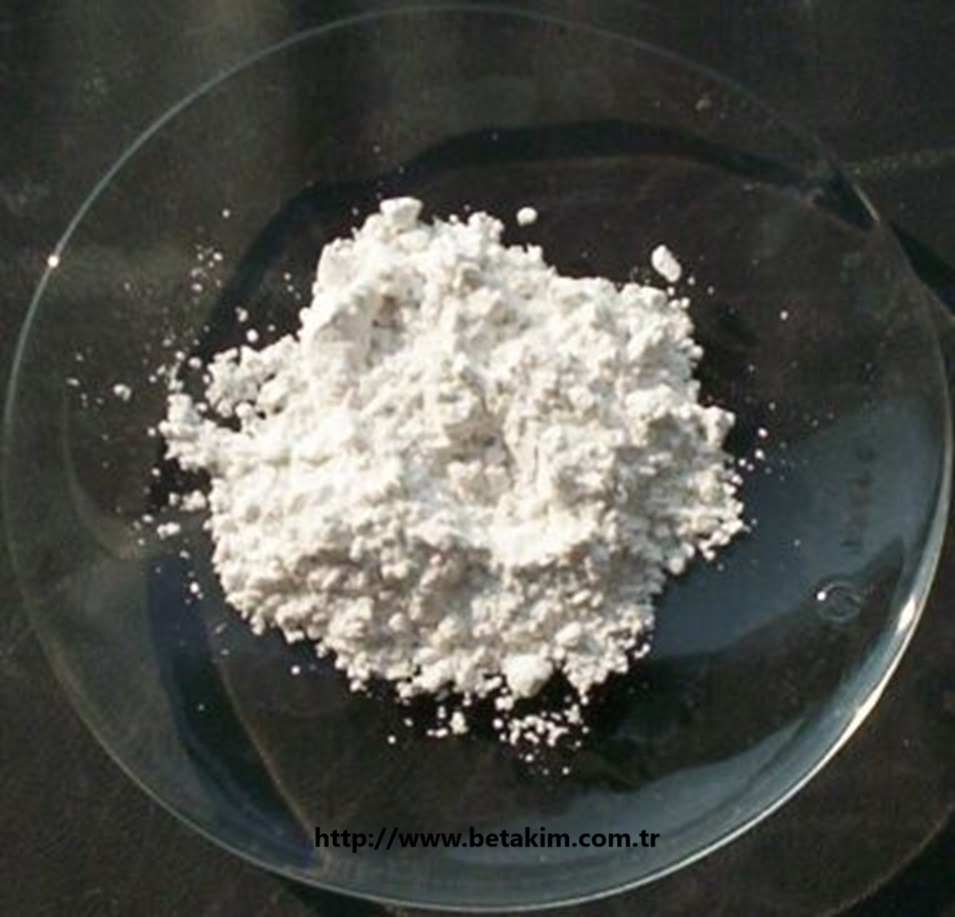
Appearance: White crystalline powder
-
Purity: Technical grade 85–95%, laboratory grade ≥98%
-
Key Property: Slightly soluble in water, fast-setting, ideal for molding and filler applications
⚙️ Technical Properties
| Property | Value |
|---|---|
| Density | 2.96 g/cm³ |
| Melting Point | ~1450°C |
| pH (aqueous solution) | 6–8 |
| Packaging | 1–25 kg PE bags / HDPE containers |
🧪 Applications
-
Dentistry & Medical → Prosthetic casting, orthopedic plaster, dental modeling
-
Laboratory → Desiccant in desiccators, reagent carrier, filler in analytical chemistry
-
Construction → Plaster of Paris for wall repair, decorative coatings, fire-resistant panels
-
Ceramics & Glass → Mold casting, surface leveling, porcelain and tile production
-
Agriculture → Soil conditioner, calcium source, sodium reduction in saline soils
-
Pharmaceuticals & Cosmetics → Tablet binder (limited use), filler, dermatological masks
-
Pigments & Dyes → Carrier in pigment dispersions, viscosity control, color stabilization
-
Non-food Additives → Paper, cardboard, plastics, rubber, adhesives, and putties as filler
🔄 Alternatives
-
Calcium Sulfate Dihydrate (CaSO₄·2H₂O): Slower setting, gypsum stone form
-
Calcium Sulfate Anhydrite (CaSO₄): Water-free form, used as a drying agent
-
Magnesium Sulfate (MgSO₄): Agricultural alternative, different ionic profile
-
Sodium Sulfate (Na₂SO₄): Used in detergents and textiles as a carrier
🏭 Production
-
Source: Natural gypsum (CaSO₄·2H₂O)
-
Process: Heating dihydrate at 150–180°C → hemihydrate form
-
Producers: Sasol, Merck, Brenntag, Ataman Kimya, Anhydritec
🧩 Sectoral Suitability
| Sector | Suitability | Notes |
|---|---|---|
| Dentistry / Medical | ✅ Essential | Standard for molds and prosthetics |
| Construction | ✅ Essential | Core material as Plaster of Paris |
| Laboratory | ✅ Essential | Desiccant and reagent carrier |
| Ceramics / Glass | ✅ Suitable | Mold and surface leveling |
| Agriculture | ⚠️ Limited | Soil conditioner, calcium source |
| Food | ❌ Not suitable | Food additive uses dihydrate form (E516) |
| Pharmaceuticals | ⚠️ Limited | Binder in some formulations |
🎯 Summary
Calcium Sulfate Hemihydrate is a fast-setting, detail-preserving material widely used in dentistry, construction, laboratories, and ceramics. It plays a critical role in mold-making and plaster applications. While useful in agriculture and pharmaceuticals, its use is limited in those sectors. It is not suitable for food applications, where the dihydrate form is preferred.
📌 General Description
-
Chemical Name: Calcium Sulfate Hemihydrate
-
CAS No: 10034-76-1
-
Formula: CaSO₄·½H₂O
-
Other Names: Plaster of Paris, Calcined Gypsum
-
Appearance: White crystalline powder
-
Purity: Technical grade 85–95%, laboratory grade ≥98%
-
Key Property: Slightly soluble in water, fast-setting, ideal for molding and filler applications
🦷 1. Dentistry & Medical
-
Application: Prosthetic casting, dental modeling, orthopedic plasters.
-
How to Use: Mix powder with water to form a paste; sets quickly and captures fine details.
-
Typical Amounts:
-
Dental models: 100–200 g powder / 70–100 ml water per mold.
-
Orthopedic casts: 2–5 kg powder / 1–2 L water per limb.
-
-
Note: High-purity hemihydrate is required for dental use; dihydrate is unsuitable due to slower setting.
🧪 2. Laboratory & Analytical Chemistry
-
Application: Desiccant in desiccators, reagent carrier, filler.
-
How to Use: Place powder directly in desiccator trays or mix into analytical formulations.
-
Typical Amounts:
-
Desiccators: 200–500 g per unit.
-
Reagent carrier: 5–15% of mixture.
-
-
Note: Anhydrite is stronger as a drying agent, but hemihydrate offers balanced moisture absorption.
🏗️ 3. Construction & Restoration
-
Application: Plaster of Paris for wall repair, decorative coatings, fire-resistant panels.
-
How to Use: Mix with water, apply to surfaces; sets in 5–10 minutes.
-
Typical Amounts:
-
Wall repair: 1–2 kg per m².
-
Decorative plaster: 3–5 kg per m².
-
Fire panels: 20–30% filler content.
-
-
Note: Prepare in small batches due to rapid setting.
🏺 4. Ceramics & Glass
-
Application: Ceramic molds, porcelain casting, glass surface leveling.
-
How to Use: Mix with water, pour into mold forms.
-
Typical Amounts:
-
Ceramic molds: 2–4 kg per mold.
-
Porcelain casting: 10–15% additive.
-
-
Note: Fine-ground hemihydrate ensures high detail transfer.
🌱 5. Agriculture
-
Application: Soil conditioner, calcium source, sodium reduction in saline soils.
-
How to Use: Apply directly to soil or dissolve in irrigation water.
-
Typical Amounts:
-
Soil conditioning: 200–500 kg per hectare.
-
Calcium supplementation: 50–100 kg per hectare.
-
-
Note: Dihydrate is more common in agriculture; hemihydrate dissolves faster but has shorter effect.
💊 6. Pharmaceuticals & Cosmetics
-
Application: Tablet binder, filler, dermatological masks.
-
How to Use: Blend into formulations as binder or filler.
-
Typical Amounts:
-
Tablets: 2–5% binder.
-
Cosmetic masks: 10–20 g per application.
-
-
Note: Not used as food additive; dihydrate (E516) is approved for food.
🎨 7. Pigments & Dyes
-
Application: Pigment carrier, viscosity control, color stabilization.
-
How to Use: Add to pigment dispersions.
-
Typical Amounts:
-
Pigment mixtures: 10–25% additive.
-
-
Note: Improves stability and reduces production costs.
📦 8. Non-Food Industrial Additives
-
Application: Paper, cardboard, plastics, rubber, adhesives, putties.
-
How to Use: Incorporated as filler or hardness regulator.
-
Typical Amounts:
-
Paper/Cardboard: 5–15% filler.
-
Plastics/Rubber: 10–20% additive.
-
Adhesives/Putties: 15–25% additive.
-
Summary
-
Essential Sectors: Dentistry, construction, laboratory, ceramics.
-
Limited Use: Agriculture, pharmaceuticals, cosmetics.
-
Not Suitable: Food applications (dihydrate form is used instead).
-
Typical Usage Range: 5–30% additive or 100 g–500 kg depending on sector.