İş inovasyonunu en üst düzeye çıkararak iş potansiyelinizi ortaya çıkarıyoruz.
Eposta GönderParatoluen Sülfonik Asit, Para Toluene Sulfonic Acid, Paratoluenesulfonic Acid, Metilbenzenesülfonik Asit, Tosylic acid, Tosic acid, TsOH, PTSA, 104-15-4, 6192-52-5
PARA TOLUENE SULFONIC ACID (PTSA)
p-Toluenesulfonic Acid / Tosic Acid / Tosyl Acid / TsOH
CAS Numbers: 104-15-4 (Anhydrous), 6192-52-5 (Monohydrate)
EC Numbers: 203-180-0 (Anhydrous), 228-149-4 (Monohydrate)
1. IDENTIFICATION INFORMATION
| Property | Information |
|---|---|
| Chemical Name (IUPAC) | 4-Methylbenzenesulfonic Acid |
| Other Names | p-Toluenesulfonic Acid, Tosic Acid, Tosylic Acid, Tosyl Acid, TsOH, PTSA, 4-Methylbenzene-1-sulfonic acid |
| Chemical Formula | C7H8O3S |
| Molecular Weight (Anhydrous) | 172.20 g/mol |
| Molecular Weight (Monohydrate) | 190.22 g/mol |
| CAS Number (Anhydrous) | 104-15-4 |
| CAS Number (Monohydrate) | 6192-52-5 |
| EC Number (Anhydrous) | 203-180-0 |
| EC Number (Monohydrate) | 228-149-4 |
| Appearance | White crystalline solid |
| Odor | Slight characteristic |
| Structure | CH3-C6H4-SO3H |
2. PHYSICAL PROPERTIES
| Property | Anhydrous (CAS 104-15-4) | Monohydrate (CAS 6192-52-5) |
|---|---|---|
| Physical State (20°C) | Solid (crystalline) | Solid (crystalline) |
| Appearance | White crystalline solid | White crystalline solid |
| Molecular Weight | 172.20 g/mol | 190.22 g/mol |
| Melting Point | 106-107°C | 96-99°C (loses water) |
| Density (20°C) | 1.55 g/cm³ | 1.45 g/cm³ |
| pKa | -0.4 to -0.6 | -0.4 to -0.6 |
| Solubility in Water (20°C) | 100 g/100 mL | 150 g/100 mL |
| Solubility in Methanol | High | High |
| Solubility in Ethanol | High | High |
| Solubility in Acetone | High | High |
| Solubility in DMSO | High | High |
| Solubility in Ether | Low | Low |
| pH (1% aqueous solution) | 1.0 | 1.0 |
| Hygroscopicity | High (absorbs moisture) | Low (more stable) |
| Vapor Pressure | Low | Low |
| Autoignition Temperature | Above 400°C | Above 400°C |
3. CHEMICAL PROPERTIES
| Property | Information |
|---|---|
| Chemical Formula | C7H8O3S |
| Molecular Weight (Anhydrous) | 172.20 g/mol |
| Structure | CH3-C6H4-SO3H |
| Chemical Class | Organic sulfonic acid |
| Functional Group | Sulfonic acid (-SO3H) |
| Acidity (pKa) | -0.4 to -0.6 (very strong organic acid) |
| Stability | Stable under normal conditions |
| Hygroscopicity | Anhydrous form is highly hygroscopic; monohydrate is more stable |
| Reaction with Water | Anhydrous form dissolves easily in water, slightly exothermic |
| Reaction with Alcohols | Esterification (forms tosylate esters) |
| Reaction with Amines | Forms salts and sulfonamides |
| Reaction with Bases | Forms tosylate salts |
| Incompatible Materials | Strong bases, strong oxidizers, ignition sources |
Acid Dissociation Reaction:
CH3-C6H4-SO3H ⇌ CH3-C6H4-SO3- + H+
Esterification Reaction (Tosylate Production):
CH3-C6H4-SO3H + R-OH → CH3-C6H4-SO3R + H2O
Salt Formation (with Base):
CH3-C6H4-SO3H + NaOH → CH3-C6H4-SO3Na + H2O
Sulfonamide Formation (with Amine):
CH3-C6H4-SO3H + R-NH2 → CH3-C6H4-SO2-NH-R + H2O
4. ANHYDROUS VS MONOHYDRATE COMPARISON
| Property | Anhydrous (CAS 104-15-4) | Monohydrate (CAS 6192-52-5) |
|---|---|---|
| Molecular Formula | C7H8O3S | C7H8O3S·H2O |
| Molecular Weight | 172.20 g/mol | 190.22 g/mol |
| Melting Point | 106-107°C | 96-99°C |
| Appearance | White crystals | White crystals |
| Hygroscopicity | High | Low |
| Stability | Cakes upon exposure to moisture | Stable in air |
| Storage | Tightly closed, away from moisture | Standard conditions |
| Industrial Use | Very common | Moderate |
| Laboratory Use | Common | Very common |
| Cost | Lower | Higher |
| Primary Use | Industrial scale catalyst, synthesis | Laboratory reagent, analytical chemistry |
Conversion:
Anhydrous + H2O → Monohydrate
5. AVAILABLE FORMS AND SPECIFICATIONS
| Form | Purity | Description | Applications |
|---|---|---|---|
| Anhydrous Technical | ≥98.0% | White crystals | Industrial catalyst, synthesis |
| Anhydrous High Purity | ≥99.5% | White crystals | Pharmaceutical synthesis, sensitive reactions |
| Monohydrate Technical | ≥98.0% | White crystals | Laboratory, analytical chemistry |
| Monohydrate High Purity | ≥99.5% | White crystals | Titration, standard solutions |
Typical Specifications (Anhydrous Technical Grade):
| Parameter | Specification | Test Method |
|---|---|---|
| Assay (C7H8O3S) | 98.0% - 99.5% | Titration |
| Appearance | White crystalline powder | Visual |
| Melting Point | 104-107°C | DSC |
| Water Content (Anhydrous) | ≤1.0% | Karl Fischer |
| Sulfuric Acid | ≤0.5% | Titration |
| Ash Content | ≤0.1% | Gravimetric |
| Color (APHA) | ≤10 | Colorimetric |
| Iron (Fe) | ≤10 ppm | ICP |
Typical Specifications (Monohydrate Technical Grade):
| Parameter | Specification | Test Method |
|---|---|---|
| Assay (C7H8O3S·H2O) | 98.0% - 99.5% | Titration |
| Appearance | White crystalline powder | Visual |
| Melting Point | 96-99°C | DSC |
| Water Content (Monohydrate) | 9.0% - 10.0% | Karl Fischer |
| Sulfuric Acid | ≤0.5% | Titration |
| Ash Content | ≤0.1% | Gravimetric |
6. APPLICATIONS
6.1. Pharmaceutical Industry – Largest Use
| Application | Function | Usage Intensity |
|---|---|---|
| API Synthesis | Esterification catalyst | High |
| Acetylation Reactions | Acylation catalyst | High |
| Intermediate Synthesis | Pharmaceutical intermediate | High |
| Tosylate Salts | Drug salt formulations | Medium |
| Antibiotic Synthesis | Production of certain antibiotics | Medium |
6.2. Agrochemicals
| Application | Function | Usage Intensity |
|---|---|---|
| Pesticide Synthesis | Catalyst, intermediate | Medium-High |
| Herbicide Production | Sulfonation reactions | Medium-High |
| Fungicide Synthesis | Esterification catalyst | Medium |
| Plant Growth Regulators | Intermediate | Low-Medium |
6.3. Polymer and Coating Industry
| Application | Function | Usage Intensity |
|---|---|---|
| Epoxy Resins | Curing catalyst | Medium |
| Phenolic Resins | Polymerization catalyst | Medium |
| Polyester Resins | Esterification catalyst | Medium |
| Adhesives | Acid catalyst | Low-Medium |
| Coating Formulations | Catalyst | Low-Medium |
6.4. Textile and Dye Industry
| Application | Function | Usage Intensity |
|---|---|---|
| Azo Dyes | Synthesis catalyst | Medium |
| Pigment Production | Sulfonation agent | Medium |
| Color Fixation | pH regulator | Low-Medium |
| Textile Auxiliary Chemicals | Intermediate | Low |
6.5. Detergents and Surfactants
| Application | Function | Usage Intensity |
|---|---|---|
| Alkylbenzene Sulfonate Production | Sulfonation agent | Medium |
| Sulfated Surfactants | Intermediate | Low-Medium |
| Specialty Detergents | pH regulator | Low |
6.6. Cosmetic Industry
| Application | Function | Usage Intensity |
|---|---|---|
| pH Regulator | Acidity adjustment | Low |
| Surfactant | Emulsion stabilization | Low |
| Specialty Formulations | Niche applications | Low |
6.7. Paper Industry
| Application | Function | Usage Intensity |
|---|---|---|
| pH Regulator | Acidity control | Low |
| Catalyst | Specialty paper treatments | Low |
| Resin Modification | Limited use | Low |
6.8. Analytical Chemistry
| Application | Function | Usage Intensity |
|---|---|---|
| Titration Reference | Strong acid standard | Low |
| pH Calibration | Buffer solutions | Low |
| Laboratory Reagent | Various analyses | Low |
7. CAS NUMBER USAGE PREFERENCES
| CAS No. | Form | Suitability | Usage Intensity | Usage Description |
|---|---|---|---|---|
| 104-15-4 | Anhydrous | Very high | High | Esterification catalyst in pharmaceutical synthesis; polymer production (epoxy, phenolic resins); pesticide/herbicide synthesis in agrochemicals; azo pigment production in textile dyes |
| 6192-52-5 | Monohydrate | High | Medium-High | More stable as laboratory reagent; strong acid reference in analytical chemistry titrations; pH adjuster in cosmetic formulations; limited catalyst use in paper industry |
Summary:
-
CAS 104-15-4 (Anhydrous): Most preferred form on industrial scale. Widely used in pharmaceutical, agrochemical, polymer and textile sectors.
-
CAS 6192-52-5 (Monohydrate): More stable, laboratory-friendly form. Preferred in analytical chemistry, cosmetics, and paper sectors.
8. USAGE INTENSITY SUMMARY TABLE
| Industry | Suitability | Usage Intensity | Usage Description |
|---|---|---|---|
| Pharmaceutical | Very high | High | Esterification and acetylation catalyst; intermediate in active pharmaceutical compound synthesis |
| Agrochemicals | High | Medium-High | Catalyst in pesticide and herbicide production; sulfonation reactions |
| Polymer/Coatings | High | Medium | Catalyst in epoxy and phenolic resin production; adhesive and coating formulations |
| Textile and Dyes | Medium-High | Medium | Azo dye and pigment synthesis; color fixation processes |
| Detergents | Medium | Medium | Sulfonation agent in alkylbenzene sulfonate production |
| Paper | Medium | Low | pH regulator and catalyst; limited use in specialty paper treatments |
| Cosmetics | Medium | Low | pH adjuster and surfactant; niche formulations |
| Analytical Chemistry | Medium | Low | Strong acid reference in titrations and laboratory tests |
9. STORAGE AND HANDLING
| Parameter | Information |
|---|---|
| Storage Conditions | Cool (15-25°C), dry, well-ventilated area |
| Container Requirements | Tightly closed HDPE or glass containers |
| Protect from | Moisture (critical for anhydrous form), heat, strong bases, strong oxidizers |
| Shelf Life | 12-24 months (unopened, proper storage in dry containers) |
| Hygroscopicity | Anhydrous form high; monohydrate form low |
| Incompatible Materials | Strong bases, strong oxidizers, ignition sources |
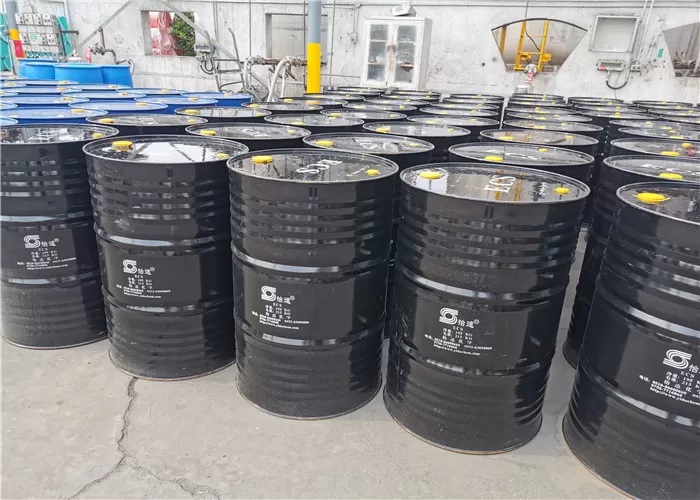
| Packaging Options | 25 kg bag, 25 kg drum, 500 kg FIBC, 1000 kg FIBC |
Handling Notes:
-
Anhydrous form is highly hygroscopic; use quickly or reseal tightly after opening
-
Monohydrate form is more stable in air, preferred for long-term storage
-
When preparing solutions, add slowly to water (dissolution is slightly exothermic)
-
Use stainless steel or glass equipment; avoid aluminum or carbon steel
-
Avoid inhalation of dust and skin/eye contact
-
Keep away from heat and ignition sources
10. SAFETY AND HEALTH INFORMATION (GHS CLASSIFICATION)
| Hazard Class | Category |
|---|---|
| Skin Irritation | Category 2 (H315) |
| Serious Eye Damage | Category 1 (H318) |
| Respiratory Tract Irritation | Category 3 (H335) |
| Skin Sensitization | Category 1 (H317) |
| Target Organ Toxicity (Single exposure) | Category 3 (H335) |
11. HAZARD STATEMENTS (H-CODES)
| Code | Statement |
|---|---|
| H315 | Causes skin irritation |
| H317 | May cause an allergic skin reaction |
| H318 | Causes serious eye damage |
| H335 | May cause respiratory irritation |
12. SAFETY STATEMENTS (P-CODES)
| Code | Statement |
|---|---|
| P261 | Avoid breathing dust/fumes |
| P280 | Wear protective gloves, protective clothing, eye protection, face protection |
| P302+P352 | IF ON SKIN: Wash with plenty of water |
| P305+P351+P338 | IF IN EYES: Rinse cautiously with water for several minutes. Remove contact lenses if present and easy to do. Continue rinsing |
| P310 | Immediately call a POISON CENTER or doctor |
| P312 | Call a POISON CENTER or doctor if you feel unwell |
| P333+P313 | If skin irritation or rash occurs: Get medical advice/attention |
13. TOXICOLOGICAL INFORMATION
| Parameter | Value |
|---|---|
| Oral LD50 (rat) | ~2,480 mg/kg |
| Dermal LD50 (rabbit) | >2,000 mg/kg |
| Skin Irritation | Irritating |
| Eye Irritation | Causes serious eye damage |
| Skin Sensitization | May be sensitizing |
| Mutagenicity | Negative |
| Carcinogenicity | Not classified |
Health Effects:
| Exposure | Effect |
|---|---|
| Acute (Inhalation) | Respiratory tract irritation, coughing, shortness of breath |
| Acute (Skin Contact) | Redness, irritation, allergic dermatitis |
| Acute (Eye Contact) | Serious irritation, corneal damage |
| Acute (Ingestion) | Stomach discomfort, nausea, vomiting |
| Chronic | Possible skin sensitization |
14. FIRST AID MEASURES
| Exposure Route | Action |
|---|---|
| Inhalation | Remove to fresh air. Give oxygen if breathing difficulty. Seek medical attention. |
| Skin Contact | Remove contaminated clothing. Wash with soap and plenty of water for at least 15 minutes. Seek medical attention. |
| Eye Contact | Rinse immediately with plenty of water for at least 15 minutes. Remove contact lenses. Seek immediate medical attention. |
| Ingestion | Do NOT induce vomiting. Rinse mouth. Drink water. Seek immediate medical attention. |
15. FIRE FIGHTING MEASURES
| Parameter | Information |
|---|---|
| Fire Hazard | Combustible |
| Extinguishing Media | Water spray, CO2, dry chemical powder, foam |
| Special Hazards | When heated, decomposes and releases toxic gases (SOx, CO, CO2) |
| Protective Equipment | Self-contained breathing apparatus (SCBA), full protective clothing |
16. ENVIRONMENTAL INFORMATION
| Parameter | Information |
|---|---|
| Aquatic Toxicity | May be toxic to aquatic organisms |
| Biodegradability | Readily biodegradable |
| Bioaccumulation | Low potential |
| Mobility in Water | High (very soluble) |
| Waste Disposal | Dispose according to local regulations. Controlled incineration after neutralization recommended. |
17. TRANSPORT INFORMATION
| Parameter | Information |
|---|---|
| UN Number | 2585 |
| Hazard Class | 8 (Corrosive substance) |
| Packing Group | III |
| Proper Shipping Name | ALKYLBENZENESULFONIC ACID (p-Toluenesulfonic acid) |
| Marine Pollutant | No |
| ADR/RID Label | 8 |
| EMS | F-A, S-B |
18. REGULATORY INFORMATION
| Region | Status |
|---|---|
| EU | REACH registered; approved for industrial use |
| Türkiye (KKDIK) | Mandatory compliance; registration required |
| USA (TSCA) | Listed |
| Canada (DSL) | Listed |
| Australia (AICS) | Listed |
| Japan (ENCS) | Listed |
| Korea (KECL) | Listed |
| China (IECSC) | Listed |
19. OTHER NAMES AND SYNONYMS
| Name |
|---|
| 4-Methylbenzenesulfonic Acid |
| Tosic Acid |
| Tosylic Acid |
| Tosyl Acid |
| TsOH |
| PTSA |
| p-Toluenesulfonic Acid Monohydrate |
| Benzenesulfonic acid, 4-methyl- |
| 4-Methylbenzene-1-sulfonic acid |
Database Identifiers (Anhydrous - CAS 104-15-4):
| Database | Identifier |
|---|---|
| CAS | 104-15-4 |
| EC | 203-180-0 |
| MDL | MFCD00007569 |
| PubChem CID | 7730 |
| RTECS | XT6300000 |
| UN | 2585 |
Database Identifiers (Monohydrate - CAS 6192-52-5):
| Database | Identifier |
|---|---|
| CAS | 6192-52-5 |
| EC | 228-149-4 |
| MDL | MFCD00149216 |
| PubChem CID | 20409 |
20. SUMMARY AND IMPORTANT WARNINGS
SUMMARY:
p-Toluenesulfonic acid (PTSA, TsOH, C7H8O3S) is a very strong organic acid with a pKa value of -0.4 to -0.6 (close to sulfuric acid). It is a white crystalline solid commercially available in two CAS-numbered forms: anhydrous (104-15-4) and monohydrate (6192-52-5). It shows high solubility in water, methanol, ethanol, acetone, and DMSO. Its most common industrial use is as a strong acid catalyst in esterification and acetylation reactions for pharmaceutical synthesis, as well as in polymer production (epoxy, phenolic, polyester resins), agrochemical synthesis, and textile dye production.
Key Properties:
| Property | Anhydrous | Monohydrate |
|---|---|---|
| Appearance | White crystalline solid | White crystalline solid |
| Chemical Formula | C7H8O3S | C7H8O3S·H2O |
| Molecular Weight | 172.20 g/mol | 190.22 g/mol |
| Melting Point | 106-107°C | 96-99°C |
| pKa | -0.4 to -0.6 | -0.4 to -0.6 |
| Water Solubility | 100 g/100 mL | 150 g/100 mL |
| Hygroscopicity | High | Low |
| Primary Use | Industrial catalyst | Laboratory reagent |
Main Application Areas:
| Industry | Applications | Intensity |
|---|---|---|
| Pharmaceutical | API synthesis, esterification catalyst, acetylation | High |
| Agrochemicals | Pesticide, herbicide, fungicide synthesis | Medium-High |
| Polymer/Coatings | Epoxy, phenolic, polyester resins | Medium |
| Textile/Dyes | Azo dyes, pigment synthesis, color fixation | Medium |
| Detergents | Alkylbenzene sulfonate production, surfactants | Medium |
| Cosmetics | pH regulator, surfactant | Low |
| Analytical Chemistry | Titration reference, laboratory reagent | Low |
Key Safety Points:
-
CORROSIVE: Causes skin irritation and serious eye damage (H315, H318)
-
SENSITIZER: May cause allergic skin reaction (H317)
-
RESPIRATORY IRRITANT: May cause respiratory irritation (H335)
-
HYGROSCOPIC: Anhydrous form is highly hygroscopic; protect from moisture
-
USE PPE: Protective gloves, safety goggles, face shield, dust mask
-
STORAGE: Keep in a dry, cool place away from moisture
IMPORTANT WARNINGS:
Strong Organic Acid: PTSA has a pKa of -0.4 to -0.6, making it one of the strongest organic acids available, with acidity close to sulfuric acid. This property makes it an ideal catalyst for esterification, acetylation, and other acid-catalyzed reactions.
Anhydrous vs Monohydrate Selection: For industrial-scale production, the anhydrous form (104-15-4) is preferred due to cost effectiveness. For laboratory applications and where storage stability is important, the monohydrate form (6192-52-5) is preferred. The monohydrate is more stable in air and does not cake.
Tosylate Formation: PTSA reacts with alcohols to form tosylate esters. Tosylates are excellent leaving groups in nucleophilic substitution reactions.
Hygroscopicity Warning: Anhydrous PTSA is highly hygroscopic. It cakes upon exposure to moisture and converts to the monohydrate. Tightly closed containers must be used during storage.
Sulfonamide Formation: PTSA reacts with amines to form sulfonamide compounds. This reaction is used in pharmaceutical and agrochemical synthesis.
Phthalate Alternative: PTSA is being evaluated as an alternative to phthalates in some plasticizer applications.
Role in Pharmaceutical Industry: PTSA is an important catalyst and intermediate in the synthesis of certain antibiotics and other pharmaceutical compounds. Tosylate salts are used in drug formulations.
Role in Polymer Industry: PTSA serves as a catalyst in epoxy resin curing, phenolic resin polymerization, and polyester resin esterification.
Analytical Chemistry: PTSA is used as a strong acid reference in titrations and pH calibration. The monohydrate form is preferred for these applications.
Solution Preparation: When dissolving PTSA in water, slight heat is released. Always add slowly to water, never add water to PTSA. The anhydrous form may release more heat upon dissolution.
Important Disclaimer: This Technical Data Sheet (TDS) is for informational purposes only. For complete safety, handling, storage, and regulatory compliance information, always refer to the official Safety Data Sheet (SDS) provided by the manufacturer/supplier. Pay special attention to protecting the anhydrous form from moisture. Use appropriate personal protective equipment when working with PTSA.